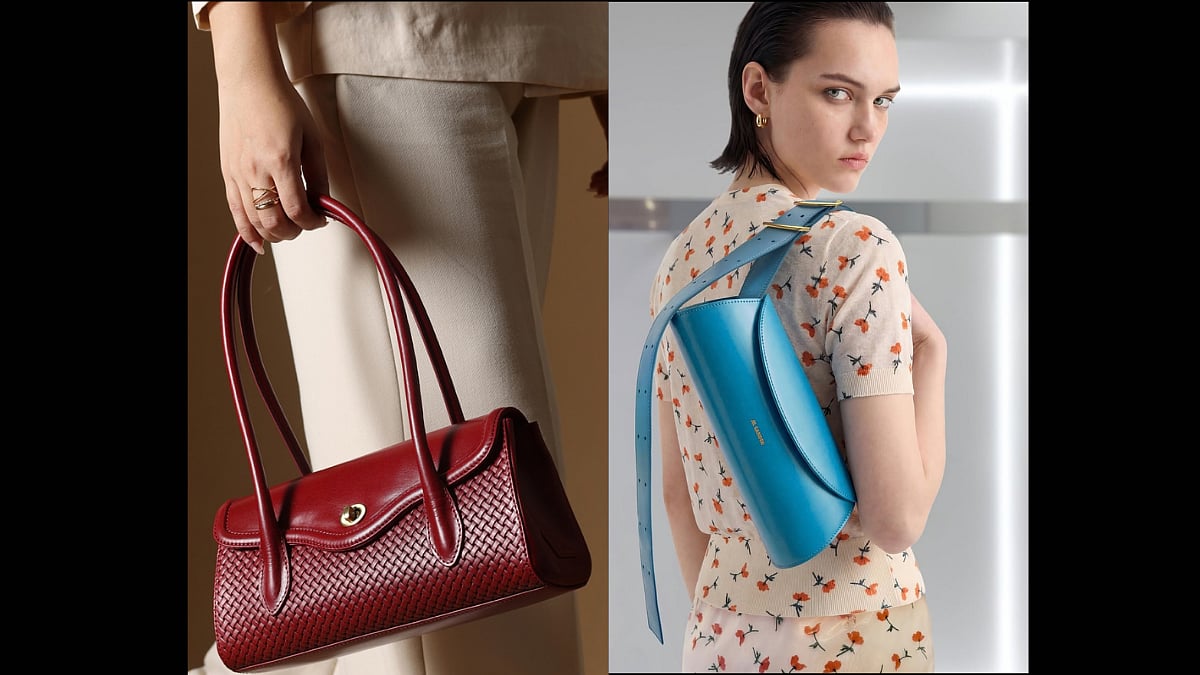
By now, you’ve probably seen the long, horizontal bag silhouette being carried everywhere – from the arms of your favourite celebrities, including Bella Hadid and Kaia Gerber, to that work bestie who somehow manages to fit everything from a tiffin to project files inside hers. Such is its versatility. Yes, the east-west bag has firmly made its way back into the fashion conversation. To be honest, though, the shape is hardly a new invention. Its current resurgence is less a case of fashion discovering something entirely new and more a reminder of how often the industry returns to what already works.
The current generation of east-west bags includes some of the season's most recognisable names. Alaïa's Le Teckel, with its distinctive elongated body, has become a contemporary It-bag in its own right. Hermès' Shoulder Birkin stretches the proportions of one of fashion's most recognisable handbags, while Bottega Veneta has explored the horizontal format through its relaxed, softly structured designs, including the Andiamo Clutch.
Across different houses, materials and price points, the appeal of the east-west shape goes further than its current popularity. The case is the same for Indian homegrown bags.
Shape that keeps returning
Look back through handbag history and the horizontal silhouette appears with surprising regularity. “The ‘East-West’ bag is popular because it feels familiar yet fresh. Its elongated shape draws from the 1990s, but its current interpretation is more refined than a straightforward Y2K revival. Since consumers are already familiar with shoulder bags, baguettes, bowling bags and top-handles, the east-west proportion offers a new silhouette without changing the function,” confirms Samriddha Bakshi, founder of Daiquiri Fashion Index, a trend intelligence studio for fashion and lifestyle brands.
Well, the luxury bag brands of the West are providing strong validation for this silhouette, with styles such as the Prada Bonnie Medium Handbag, Alaïa Medium Le Click East-West Bag, and Jil Sander Cannolo Leather Shoulder Bag, but in India, brands such as Outhouse, Tin & Tah, Hidesign, Behno and more are interpreting the shape through different aesthetics as well. “There’s embellished and jewellery-like to artisanal and minimal. The appeal is not limited to one aesthetic or consumer segment – it's becoming a flexible design language that brands can reinterpret according to their own identity,” she adds.
Speaking to homegrown Indian brands, founders agree that there has been a definite shift towards east-west, elongated bag silhouettes. “The east-west shape is interesting because it changes the way a bag sits on the body. Rather than standing away from you, it follows the natural line of the shoulder and creates a sense of ease. I think that is what is making the silhouette resonate right now. We are moving towards accessories that feel considered without feeling overly constructed. There is a certain effortlessness to an elongated bag; it has presence, but it doesn't need to announce itself,” explains Shruti Mangla, creative director of homegrown accessories brand, Perona.
When function becomes the trend
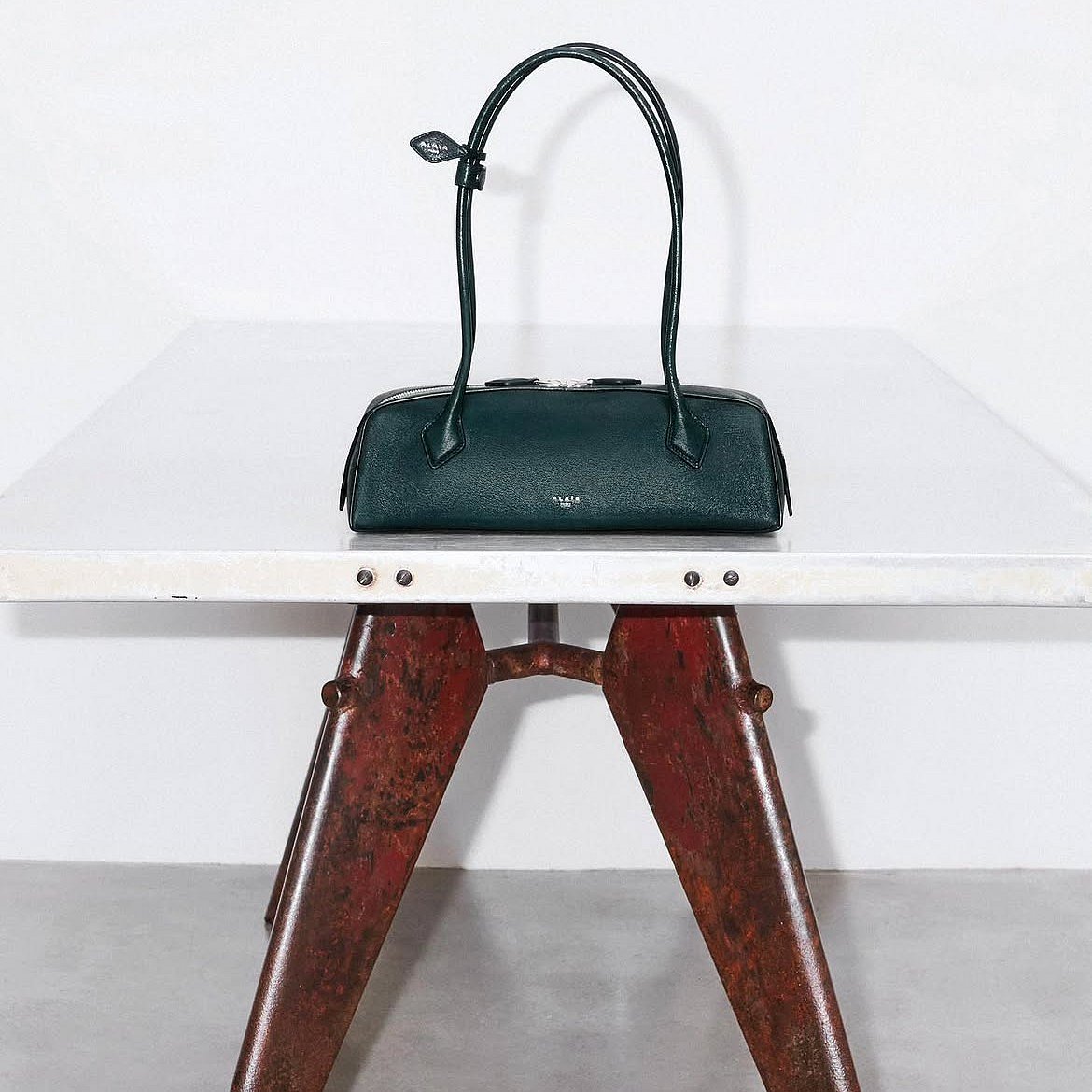
Something is telling about the longevity of bags that prioritise function. The tote solved the need for capacity. The crossbody solved the need for hands-free movement. “I think consumers are moving away from extremes, though not necessarily abandoning them. Micro bags are expressive, while oversized totes are practical, but a mid-sized bag fits more naturally into everyday life. Today’s customer is increasingly asking, ‘How often will I actually use this?’ That is making versatility just as important as visual appeal,” shares Dr Zaenab Imaduddin, co-founder of accessories brand House of Kiyaara. “The momentum may be trend-driven, but the shape itself has lasting value. A silhouette becomes a staple when it is both recognisable and useful, and the east-west bag is genuinely both. The proportions may evolve from season to season, but the format itself is likely to endure.”
The versatility may also explain why it is being interpreted so differently across fashion houses. There is no single east-west bag. It can be soft and slouchy, sharply structured, minimal and logo-free, covered in hardware or pared back to almost nothing. Its proportions provide the common thread, while the design language changes around it. “For designers, that elongated surface also becomes a natural canvas for colour, print, texture, and detail,” she adds.
Moreover, something is refreshing about the space in between for the east-west bag. A bag doesn't necessarily need to be oversized to be useful, nor does it need to be miniature to feel fashionable. “The mid-sized silhouette allows you to carry what you need while still allowing the bag itself to have a strong point of view,” shares Shruti.
Additionally, the bag’s functionality can elevate an outfit, too. Its proportions alter the visual line of a look without overpowering it. Slung beneath a tailored blazer, tucked against a long coat or paired with a simple summer dress, its horizontal silhouette acts as an almost graphic punctuation. “Against long skirts, streamlined trousers and elongated outerwear, the horizontal bag creates a strong visual contrast and helps balance the overall look,” adds Samriddha.
East-west bag shopping edit
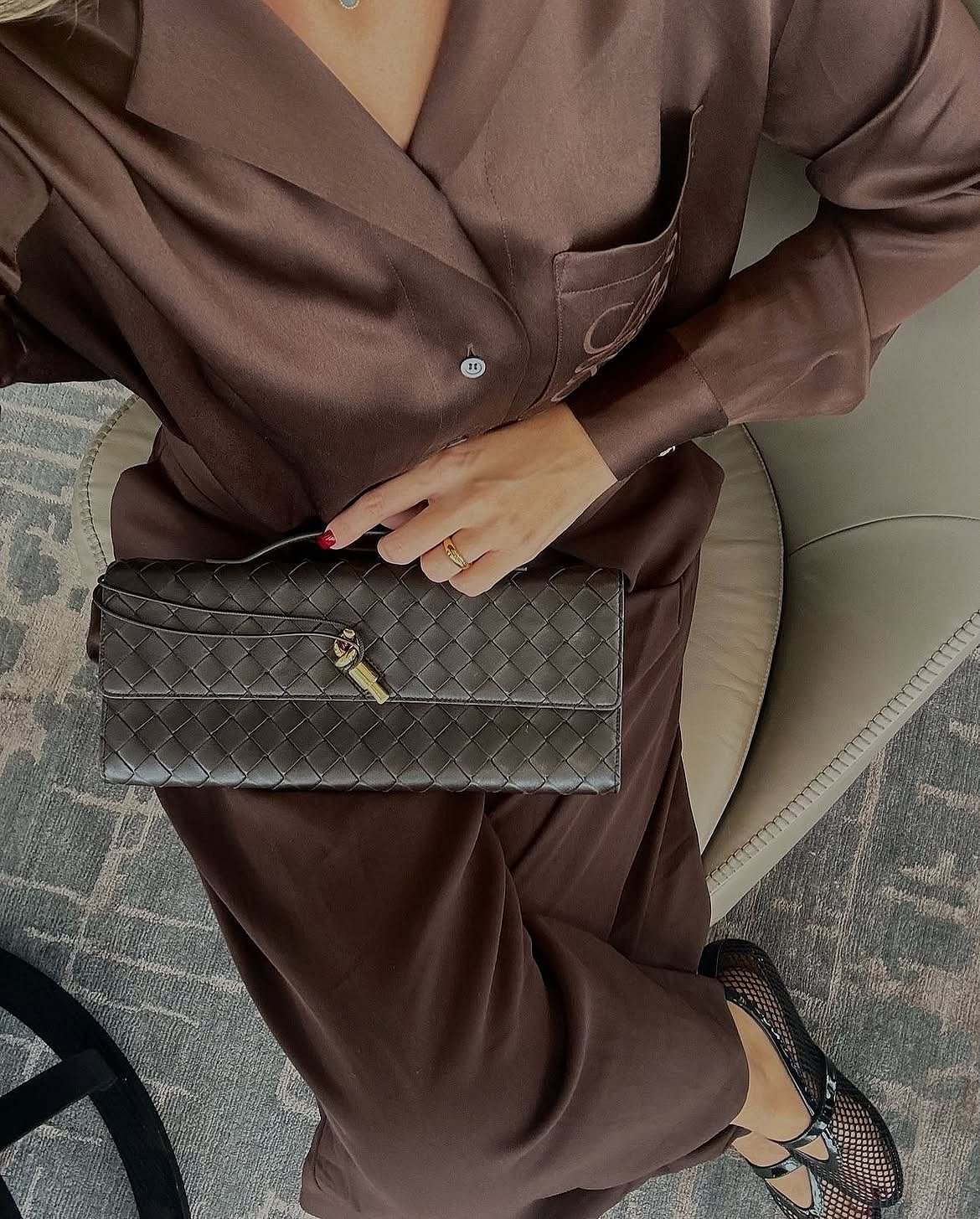
For those looking to invest in the shape, the current market offers an unusually broad selection. More interestingly, Indian brands are taking the east-west silhouette and translating it through a distinctly local design vocabulary, rather than simply replicating the pared-back versions seen at international luxury houses. “Globally, the appeal has largely been about proportion: elongated, horizontal shapes, clean construction and a very minimal aesthetic. In India, however, we are seeing more experimentation with texture, craft, detailing and proportion,” Samriddha points out.
Perona’s Tania Mini offers a softer, more fluid interpretation of the east-west silhouette, with minimal detailing that allows its proportions to do the talking. Tan & Loom’s Seville Satchel, for instance, uses a basket-weave treatment to bring craft and materiality into the silhouette, while Nappa Dori’s Valerie Shoulder Bag uses striped detailing and restrained hardware to give the shape more personality. Some brands are pushing the idea further through chunkier, more sculptural constructions and unconventional shapes.

The Indian influence, however, need not come through an obvious ethnic reference; it can be expressed through material, craftsmanship, colour or construction. There is also a strong commercial consideration at play. Even when a bag is purchased as a fashion statement, Indian consumers tend to assess whether it offers enough utility to justify the investment. “The opportunity is in creating something that is visually distinctive enough to make an outfit, but functional enough to become part of everyday life,” she highlights.
That is why this particular silhouette keeps returning. The east-west bag makes a compelling case for practicality, in a shape that not only looks good but feels particularly of-the-moment, too.

