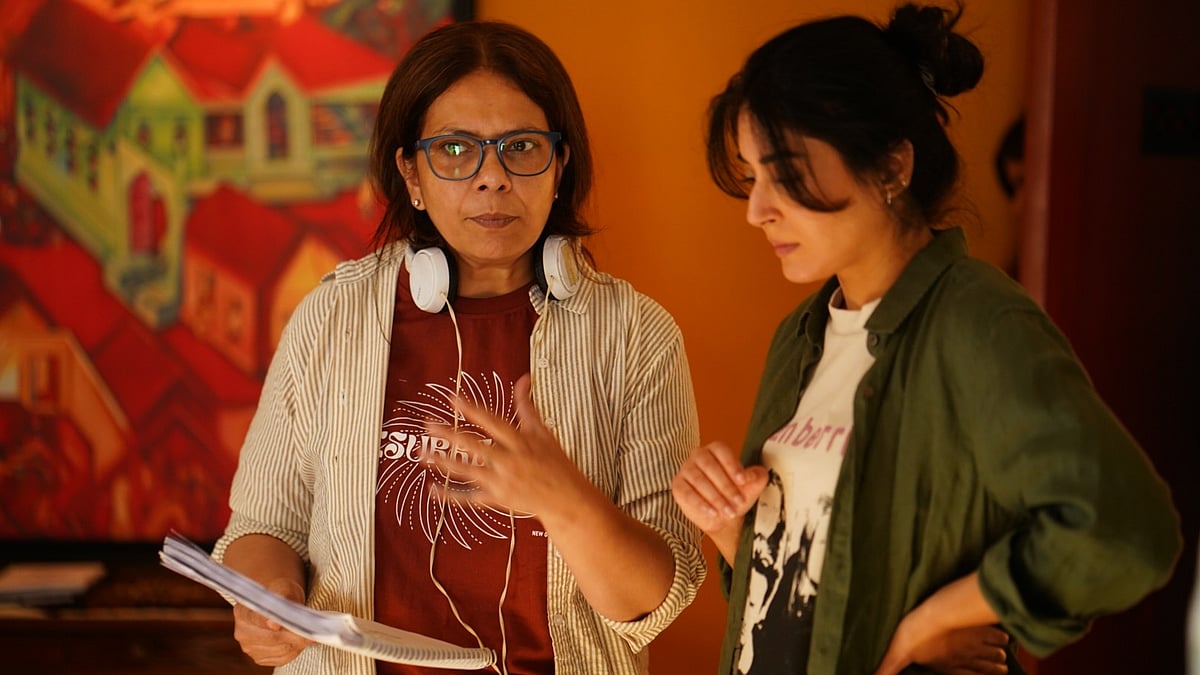
When actor Aamir Khan-backed Peepli Live burst onto the global stage in 2010—satirising farmer suicides, media sensationalism, and political apathy with rare wit—it marked the arrival of a filmmaker unafraid to interrogate uncomfortable truths. Co-directed by Anusha Rizvi and Mahmood Farooqui, the film went on to become India’s official entry to the Oscars, an extraordinary feat for a debut that traded melodrama in favour of sharp, lived-in realism and black humour. And then, almost paradoxically, Rizvi disappeared from the feature-film spotlight.
Fifteen years later, The Great Shamsuddin Family arrives (on Netflix in December 2025) not as a comeback engineered for noise, but as a quiet, confident return—one that feels entirely in sync with Rizvi’s temperament as a storyteller. “I wrote the story for The Great Shamsuddin Family about eight years ago,” says Rizvi, 47, matter-of-factly. “But it took a while getting green-lit.”
The delay, however, was not idle time. Rizvi used the intervening years to develop a series set in Tihar Jail, another on the 1971 war, and a three-part documentary on the slain Punjabi singer Sidhu Moosewala—projects that remain in various stages of development.
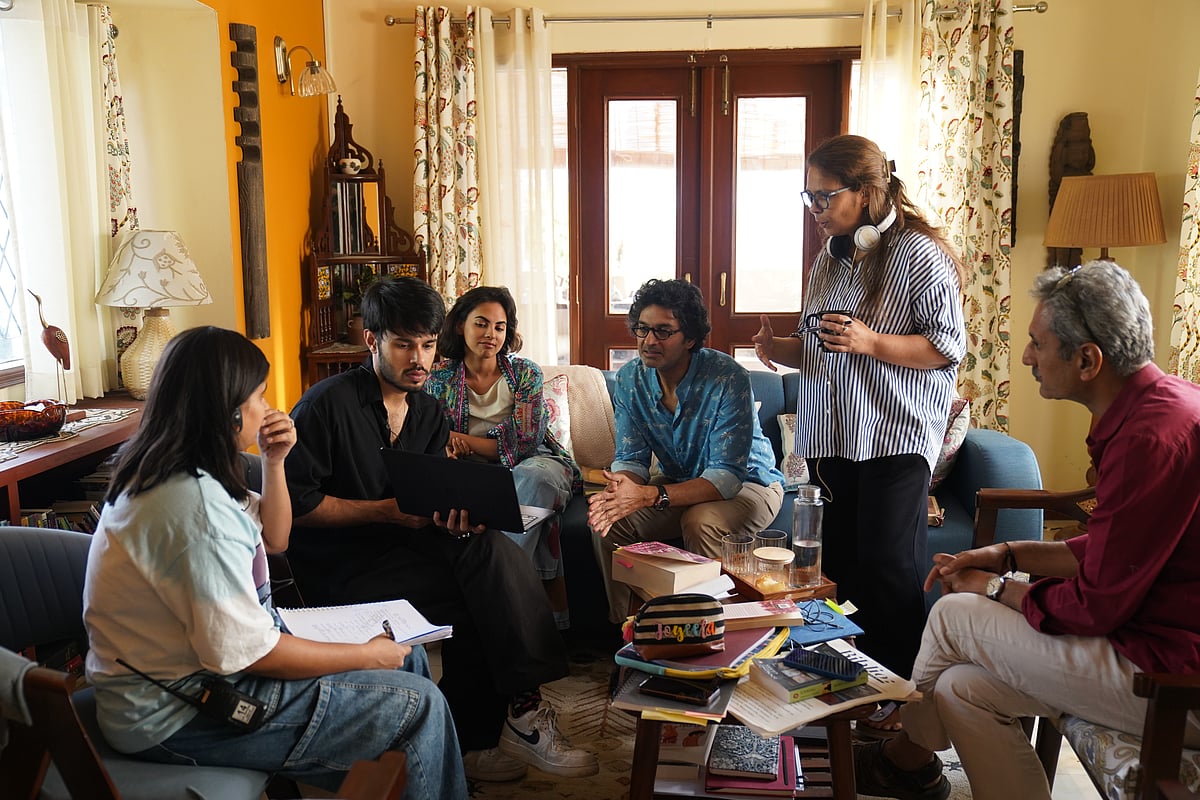
That oscillation between fiction and documentary has always been central to Rizvi’s practice. Before Peepli Live, the director spent years as a journalist and documentary filmmaker, training her eye on the everyday, the overlooked, the unvarnished.
It is a sensibility that continues to shape her work. “Realism attracts me,” she says. “I am always trying to match reality to my fiction, and it is a very difficult job because you can’t ever really capture reality in all its glory.” When that gap between life and representation feels too wide, she admits she turns back to documentary—to recalibrate, to remind herself of the texture of truth.
Family, Not a Symbol
That commitment to realism finds its most assured expression in The Great Shamsuddin Family, a film that resists easy categorisation. Set within a Muslim household, it refuses both exoticisation and victimhood. Instead, Rizvi presents a family brimming with contradictions—loving yet petty, aspirational yet constrained, deeply rooted in tradition while quietly pushing against it. There are generational conflicts, bruised egos, small triumphs, and unspoken disappointments. Faith exists, but it does not define every frame; identity is present, but never reduced to a thesis statement.
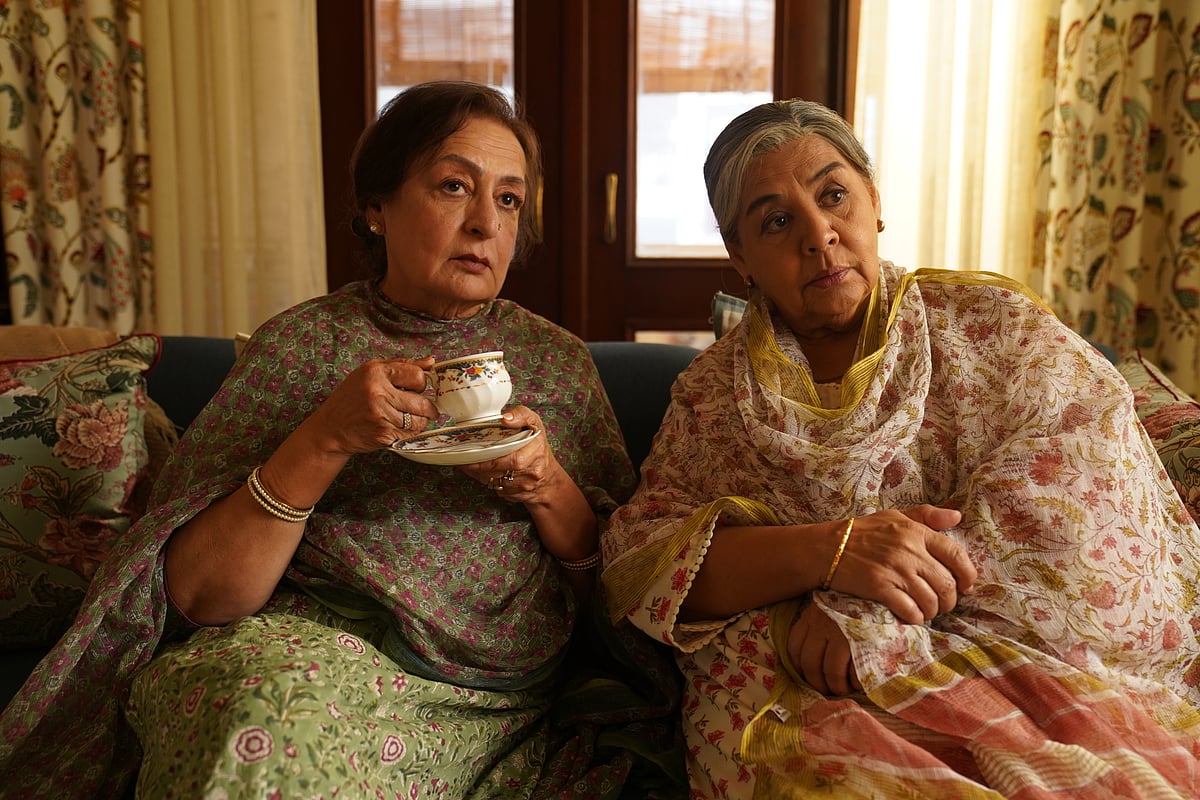
The film unfolds through small, observational moments—arguments over money, negotiations around marriage, fleeting silences that speak louder than dialogue. Performances feel organic as though the camera has simply wandered into a real home and stayed. Humour surfaces organically, often in the midst of tension, and the film’s emotional power lies precisely in this understatement. By the time it ends, the Shamsuddins feel less like characters and more like people you might know, or have known all along.
The film’s authenticity is amplified by its casting, which Rizvi describes as one of the most critical aspects of her process. “Casting is one of the key decisions that either makes or breaks the film,” she says. To avoid missteps, she relied on extensive auditions, allowing actors to surprise her—and themselves. She is quick to credit casting director Dilip Shankar for assembling a cast that fits the film “so aptly and beautifully.”
Film That Found Its Way
What surprised Rizvi most, however, came after the film’s release. The Great Shamsuddin Family had no marketing budget, no publicity blitz, no festival-fuelled hype machine. And yet, it found its audience. Quickly. Quietly. “I was really surprised at how much and how fast the film found its audience,” she says. Word of mouth did what billboards could not, carrying the film into smaller cities and towns. Messages began arriving from viewers who watched it with their families—some even making it part of their New Year’s Eve viewing. “That made our new year very special,” Rizvi says, with a smile audible in her voice.
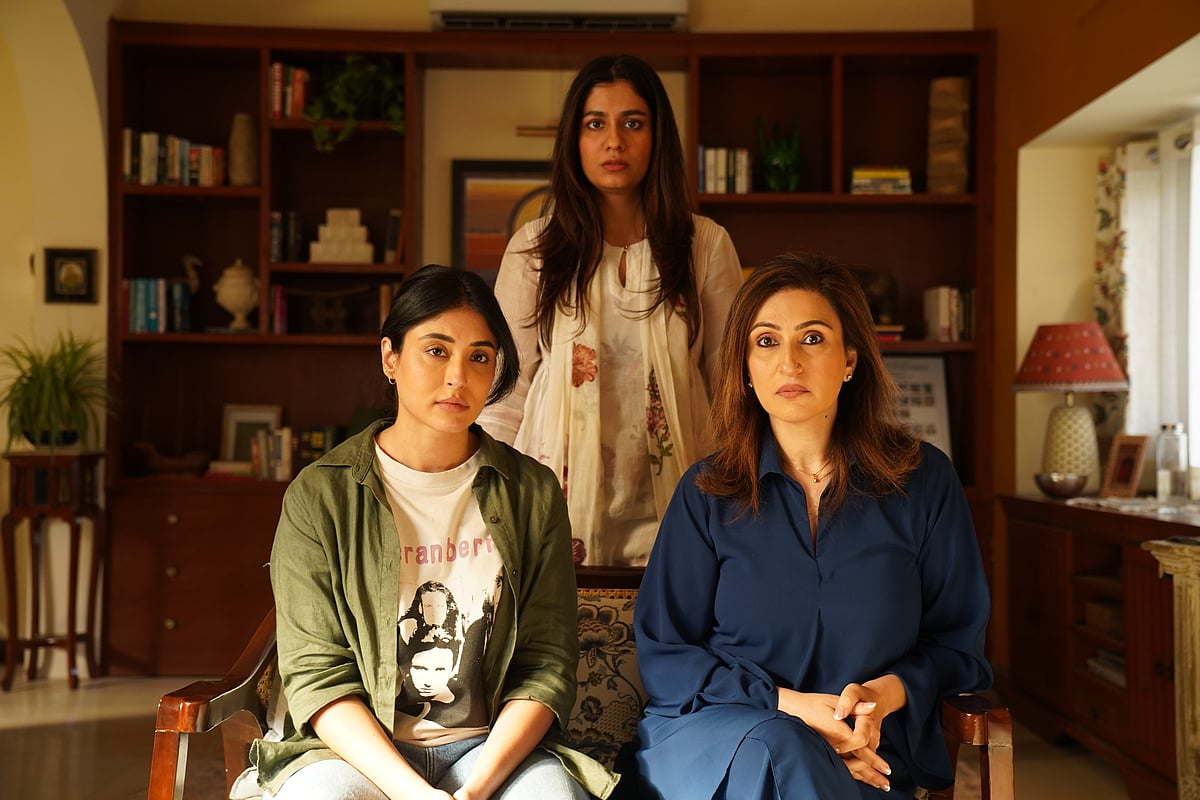
The speed of the film’s final journey contrasts sharply with its long gestation. Once greenlit, production moved swiftly—from February 2025 to a December 2025 release. The efficiency suggests a filmmaker who knew exactly what story she wanted to tell, and how to tell it, once the moment arrived.
The Long View
In an industry increasingly driven by algorithms, opening-weekend numbers, and loud narratives, Rizvi remains committed to the long view. Her films are not built for virality; they are built for longevity. Like Peepli Live, which continues to resonate years after its release, The Great Shamsuddin Family trusts its audience to lean in, observe, and reflect.
Rizvi may not be prolific in the conventional sense, but her work carries a rare integrity—one shaped by patience, political awareness, and an unwavering belief in realism as both an aesthetic and an ethical choice. In a cinematic landscape crowded with spectacle, her quiet films feel almost radical. And perhaps that’s why, when they finally arrive, they stay.
(Neeta Lal, formerly Senior Editor with some of India's leading mainline publications (TOI, India Today and The Asian Age), is a SOPA-nominated independent journalist exploring the intersections of art, culture, travel & lifestyle in South Asia and beyond)

