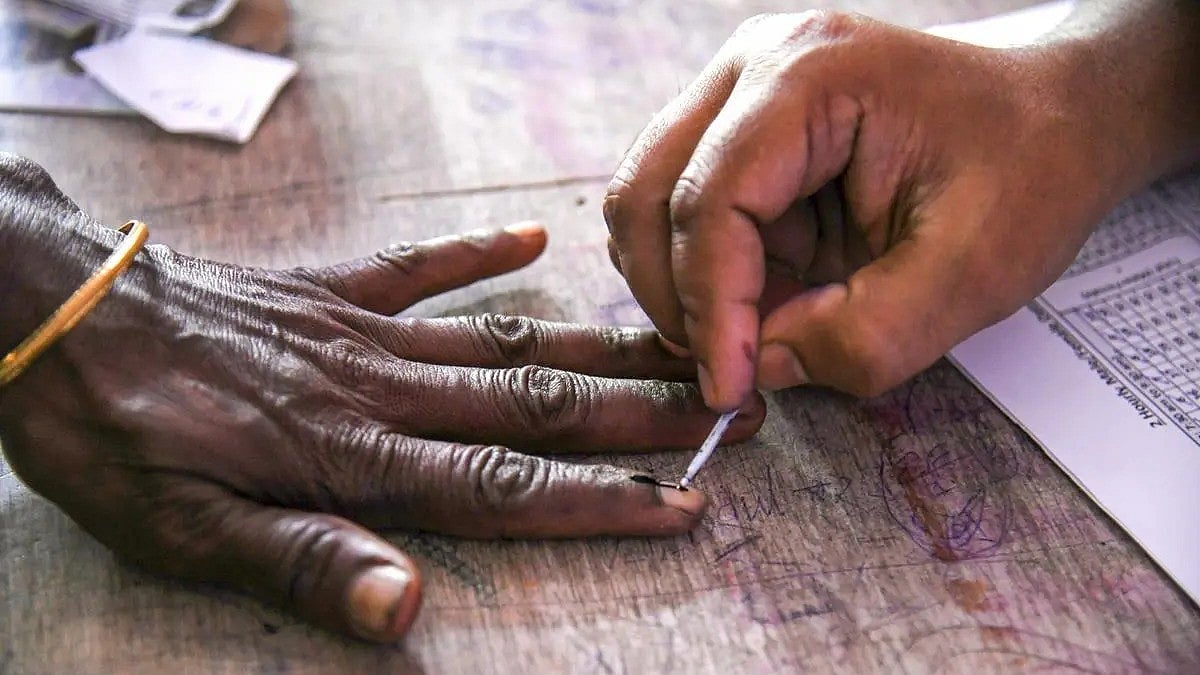
With the Election Commission extending the Special Intensive Revision (SIR) process until August 8, the use of AI-assisted voter verification has come under scrutiny. While supporters argue that it can make electoral rolls more accurate and streamline verification, critics fear errors and exclusions. As Maharashtra’s voters watch closely, Satya Tirtharaj Ghosal moderates a debate on a key question: Can technology safeguard democracy without compromising voter access?
Vincent De Souza, Associate Consultant, at Pitchfork Partners

The idea of using artificial intelligence in electoral processes is not inherently alarming. For my generation that has grown up with technology, AI offers the promise of greater accuracy and efficiency in voter verification compared to traditional manual systems, which is often vulnerable to human error. The ability to process large amount of data quickly and consistently makes technology an attractive tool for managing something as complex as electoral rolls in a country the size of India.
At the same time, concerns remain about the possibility of bias within AI systems. Technology is only as reliable as the data and programming behind it, and any embedded prejudice or flaw can have consequences on a much larger scale.
The reason why human involvement remains essential. Democracy is fundamentally about people, and the decisions affecting voting rights should not be left entirely to AI automated systems.
Another challenge lies in the way technological solutions are often implemented. There is a tendency to focus on achieving results without first establishing the infrastructure, safeguards, and accountability mechanisms needed to support them. When this happens, systems may fail to deliver the outcomes they were originally designed to achieve.
A balanced approach that combines AI with human supervision offers the most practical solution. Technology can improve efficiency and help identify inconsistencies, while human review can provide context and prevent wrongful exclusions.
Public trust will depend on transparency, security, and safeguards against tampering. Ultimately, accessibility should remain the highest priority, followed by efficiency and inclusion, ensuring that every eligible citizen has the opportunity to participate in the democratic process.
Shashikant Sawant, Writer and Winner of Shramajeevi Lifetime Achievement Award

Artificial Intelligence has the potential to improve administrative processes, including electoral roll verification, but it should always be used with caution and responsibility. Familiarity with technology and developments in AI, including systems such as AlphaZero, demonstrates how powerful these tools can be when applied effectively. However, their usefulness must not blind society to the risks of misuse or manipulation.
India's electoral system is uniquely complex, shaped by a wide range of social, cultural, linguistic, and political realities. Sociologist M. N. Srinivas observed in the 1950s that caste played a significant role in Indian politics and electoral behaviour, a reality that continues to influence many constituencies today. In several regions, voting patterns are closely linked to local caste and community demographics, while religion, language, and regional identities also shape political preferences.
These are deeply human and context-specific factors that may not be easily captured through data alone.
The digital transition also presents challenges, particularly for older citizens who may not be comfortable navigating technology-driven systems. Rather than expecting people to adapt immediately, authorities should invest in awareness, training, and public education. Citizens must understand both the advantages and limitations of AI if trust is to be maintained.
Technical errors can also have serious consequences. An eligible voter may be wrongly flagged or omitted from electoral rolls, but accountability should always rest with people, not machines.
While stricter verification measures may cause temporary inconvenience, change often comes with a period of adjustment. Much like a train making noise while changing tracks, every new system encounters problems before it settles. The key is not to resist innovation but to ensure it is implemented carefully.
Artificial Intelligence can be a valuable support tool, but it should never become the sole authority. Human intelligence, supervision, and accountability must remain at the centre of any process that affects democratic rights.
Udit Kumar, Master’s Student at Tata Institute of Social Sciences, Mumbai

Artificial intelligence can play a valuable role in improving the overall efficiency of electoral roll verification, but it must remain a tool that supports, rather than replacing human decision-making. In a country as vast and diverse as India, marked by linguistic, cultural, and socio-economic differences, technology alone cannot fully account for the realities of voters' lives. Decisions that may affect an individual's right to vote should always involve informed human review and local-level verification.
One of the main concerns surrounding AI-assisted voter verification is its potential impact on vulnerable communities. Migrant workers, tribal populations, elderly citizens, homeless individuals, and people living in remote areas often have incomplete documentation or frequently change their residence. If AI systems rely solely on available data, eligible voters could be wrongly flagged or excluded. Concerns around algorithm bias, data quality, privacy, and transparency further reinforce the need for caution.
A balanced approach is therefore essential. AI can help identify records requiring verification, but final decisions should be reviewed by Election Officials with an understanding of local realities. Institutions such as Booth Level Officers and local governance bodies can provide critical context that AI systems may overlook.
These challenges also differ across regions. Rural voters may face issues related to digital literacy, connectivity, and documentation, while urban voters often encounter difficulties linked to migration and changing addresses. A one-size-fits-all verification process is unlikely to be effective.
Ultimately, technology should strengthen electoral integrity without creating barriers to participation. Transparency, regular audits, human oversight, and accessible grievance redressal mechanisms are crucial to ensuring that every eligible citizen retains their constitutional right to vote.

