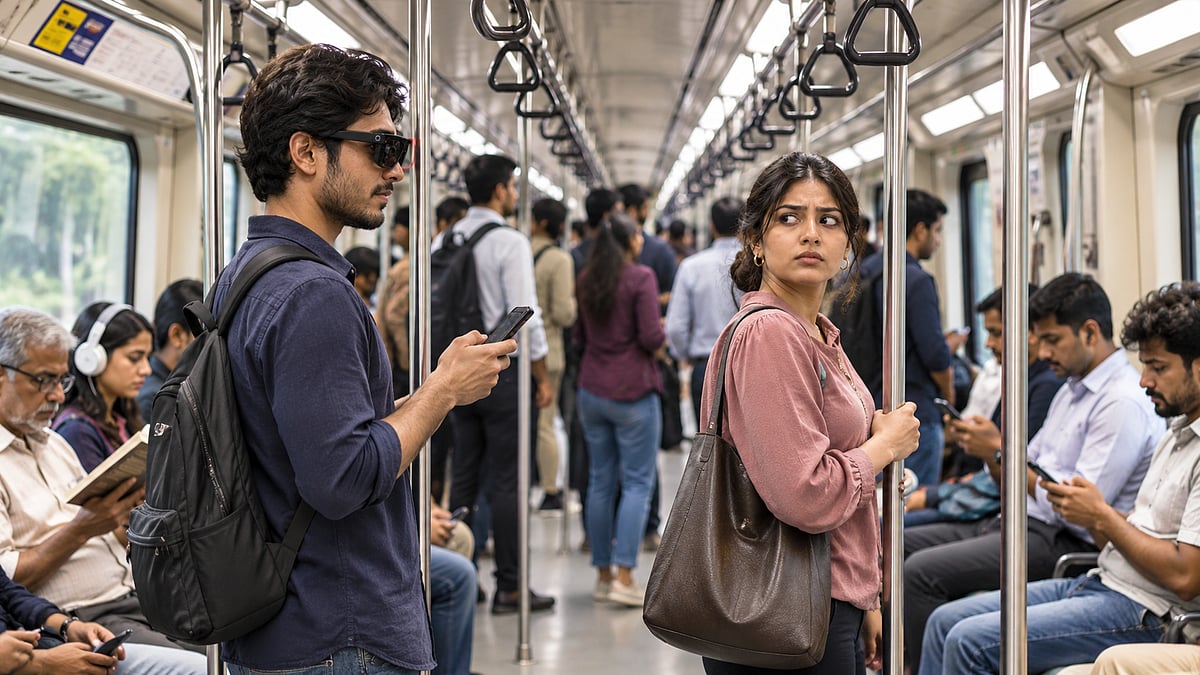
A pair of stylish glasses may soon become an invisible camera, turning everyday spaces into places where privacy is uncertain. From lifts and metro coaches to offices and cafés, the possibility of being recorded without consent is raising serious concerns. As smart glasses gain popularity, are our laws and safeguards keeping up with technology? Satya Tirtharaj Ghosal moderates a debate
Sristi Mukhopadhyay, Advocate at Calcutta High Court

Smart glasses worry me, even though I love good design. The camera hides inside fashion, so unlike a raised phone, there is no warning and no chance to object. In a lift, on the metro or over coffee, I would never know. Recording lights are tiny, poorly understood and easy to cover.
In my profession, I see many PoSH cases (cases related to sexual harassment of women at workplace) being registered every day and due to these glasses the number is going to increase enormously as the camera is well hidden inside the glasses and it would be harder for the victim of the PoSH cases to detect and prove it.
Most wearers are simply curious, not malicious. But women already plan their safety daily, choosing where to stand, whom to sit near and which route to take. Glasses add one more worry, especially in lifts, offices and trains. Even without actual recording, making people self-monitor in public has a social cost.
If this happened to me, I would stay calm and take it step by step. First, I would collect proof: the names of anyone who saw it, the time and place, and any CCTV footage. I would also tell the person in writing not to delete the recording.
If it were a stranger, I would call the police or building security right away. I would also file a formal complaint on the national cybercrime portal and ask the platform to remove anything that was shared. I would not stay silent, even if the footage seemed harmless, because it is often not the first time.
Workplaces need clear policies that define recording devices, ban them from washrooms, changing areas and private meetings, require permission, and link breaches to conduct and harassment codes.
Existing laws on voyeurism, privacy and obscenity help only partly. They were not written for wearable cameras, they protect women recorded in public weakly, and enforcement lags far behind how fast footage spreads. We need clearer consent rules, visible indicators, faster platform action and better-trained police and committees.
Sneha Roy, Social Media Executive at Excelsior Leathers

Smart glasses concern me. We already stay alert to our surroundings, and now an ordinary-looking pair of glasses could be recording us. The scary part is that we might never realise it is happening.
Unlike a phone or a visible camera, smart glasses are hard to notice. Someone could capture a conversation or footage without raising suspicion, and without solid evidence, proving it happened would be very difficult.
I wouldn't want to become paranoid, but I would naturally be more conscious around people wearing them, especially in lifts and on public transport, where we expect a certain level of privacy.
If it happened to me, I would first gather evidence and understand exactly what had been recorded. If it involved a colleague, I would report it to HR or the appropriate authority. If it were a stranger, I would seek help and consider filing a police complaint. I would not let it slide, especially if the footage was being shared.
Workplace policies must evolve with technology. Organisations should clearly define where camera-enabled smart glasses can and cannot be used, and make sure employees know the rules, so that everyone's privacy and safety are protected.
India has laws on voyeurism, privacy violations and the circulation of explicit content, but the bigger concern is how well they work when new technology is involved. Because smart glasses make recording so discreet, identifying the person responsible and gathering evidence is challenging. We need stronger awareness, quicker action and clearer regulations to keep pace.
Yash Parnani, Employee

I think it is an invasion of privacy, even in public. Being seen is very different from being recorded and stored. Still, I would not assume every wearer is malicious. Intent matters, but consent matters more.
As a man, I can't dismiss the concern just because I haven't felt it myself. Women already plan routes and seating for safety, this adds another worry. I would challenge the idea that it is exaggerated, since the burden of proof falls unfairly on them.
Wearers should inform others, at least in close settings like lifts, offices and public transport. A clear signal or verbal notice is a small effort that protects dignity. But rules must be practical, or they will exist only on paper.
For me, the line is consent. Using glasses to navigate or capturing my own experiences is convenient but recording someone unaware is misuse. Even Virat Kohli objected strongly in 2022 when his hotel room video was shared online, saying celebrities deserve privacy too. If a public figure has that right, so does everyone else.

I would not make a scene, as that could escalate. I would first check on the woman, then calmly ask the wearer to stop or delete the footage, involving security or police if needed.
Men should absolutely speak up. Calling it harmless fun is how such behaviour gets normalised. We hear these jokes where women aren't present, so we are best placed to say, "That's not okay." Speaking up costs us little, staying silent costs women their sense of safety.

