
First Act, Deepa Bhatia’s six-episode series on Amazon Prime, is a journey with child actors. Deeply empathetic and disturbingly enlightening, it explores the eco-system in which they work, the challenges they face, and most importantly, their equation with their parents, many of whom are living out their dreams through them. Deepa’s husband, writer-filmmaker Amole Gupte, who has worked with many small wonders in commercials and films like Taare Zameen Par (writer-creative director), Stanley Ka Dabba, Hawa Hawaai and Sniff, describes such parents—so eager, anxious and fearful of producers—as “slave traders of their own children” in Sunanda Mehta and Suchitra Iyer’s meticulously researched and insightful book. Behind The Big Screen: The Untold Stories of Bollywood’s Child Actors, to quote National Award-winning producer-director Prakash Jha who has written the foreword, “reminds us that the magic of cinema is built on human experiences—fragile, fleeting and profoundly real”.
Since both writers are senior journalists with over three decades of experience, they remain impartial observers, simply painting a word picture of a 15-year-old Daisy Irani in the first chapter. The teen is dressed in a sari by her mother, Perin, sponge cones stuffed into her blouse, and dropped her off at a producer’s office. As he starts pawing her, Daisy removes the sponge cones and wordlessly hands them over to the fuming man. The dark humour poignantly underlines the predicament of one of Hindi cinema’s most adorable stars, who spent her childhood surrounded by wolves—from producers and directors to dance masters and make-up men—who would prey on her despite her mother always being around, then pat her on the head in front of others and say, “Oh, she is like our child.”
It takes courage, even audacity, for a star to shine and Naeem Sayyed had plenty of it. While shooting Suhaag Raat, when co-star Mehmood didn’t invite him to a party to celebrate daughter Ginny’s birth, the 12-year-old actor invited himself over. At the mansion, changing into a lungi and vest, he danced to his idol’s Gumnaam chartbuster, Hum kale hain to kya hua dilwale hain. After the electrifying performance, Mehmood himself walked up to Naeem, and putting a head on his hand, tying a thread around his wrist, ordained him Junior Mehmood.
The boy wonder went on to work in 265 films, including the six Marathi films he directed. His favourite was Ghar Ghar Ki Kahani, and Devendra Goyal, one of the jury members, told Junior Mehmood, that he had a good chance of winning the National Award for Best Child Actor that year. “But then the award went to Chintu Kapoor saab for Mera Naam Joker. That’s fine. Until he expired, Chintu bhai and I were friends,” Junior Mehmood recounts in the book.
Stardom is spectacular and short-lived, as many of these child actors discovered in the course of their star trek. Master Alankar Joshi had been working in films since he was four, and hadn’t known a time when he wasn’t famous. The downslide began when he was around 15. Two years later, he was preparing to leave for college one morning when his father casually asked him if he was still being mobbed when he stepped out on the road. When the teenager shrugged in response, his father asked for the car keys, saying that from the next day, Alankar could walk to the bus stop, take bus 315, and walk to college like everyone else. The child star describes it as “the most traumatic day of my life”, but is glad for his dad’s tough love that prevented him from developing starry airs and saved him from the torture of having to live without them.

So, what’s life like beyond the spotlight? For some, it’s emotional turmoil and psychotic breakdown; a cocktail of depression, drugs and alcohol. For some, it’s diversifying into celebrity management (Master Raju Shreshtha now manages MS Dhoni, Salman Khan and Sachin Tendulkar), writing children’s books and practising Nichiren Buddhism (jugal Hansraj), saving the environment (Baby Guddu). Sachin Pilgaonkar is a rare child actor who has made it as an adult actor and believes the main difference between child actors then and now is the quantum leap in technology. “What we were taught face to face, they now learn from mobiles. Even their upbringing is electronic,” he points out.
Behind the Big Screen doesn’t end there. It talks about loopholes in labour laws, the new NCPCR (National Commission for Protection of Children’s Rights) guidelines and even reminds us of Jackie Coogan, one of Hollywood’s first child stars who moved court against his mother and stepfather, but after a long legal battle, only got back $1, 26,000 of the approximately $4 million he had earned. This Bloomsbury publication is an eye-opener!
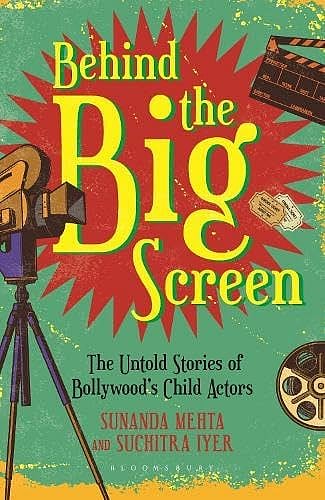
Book: Behind the Big Screen: The Untold Stories of Bollywood's Child Actors
Authors: Suchitra Iyer, Sunanda Mehta
Publisher: Magic Mouse Publishing
Pages: 250
Price: Rs 416

