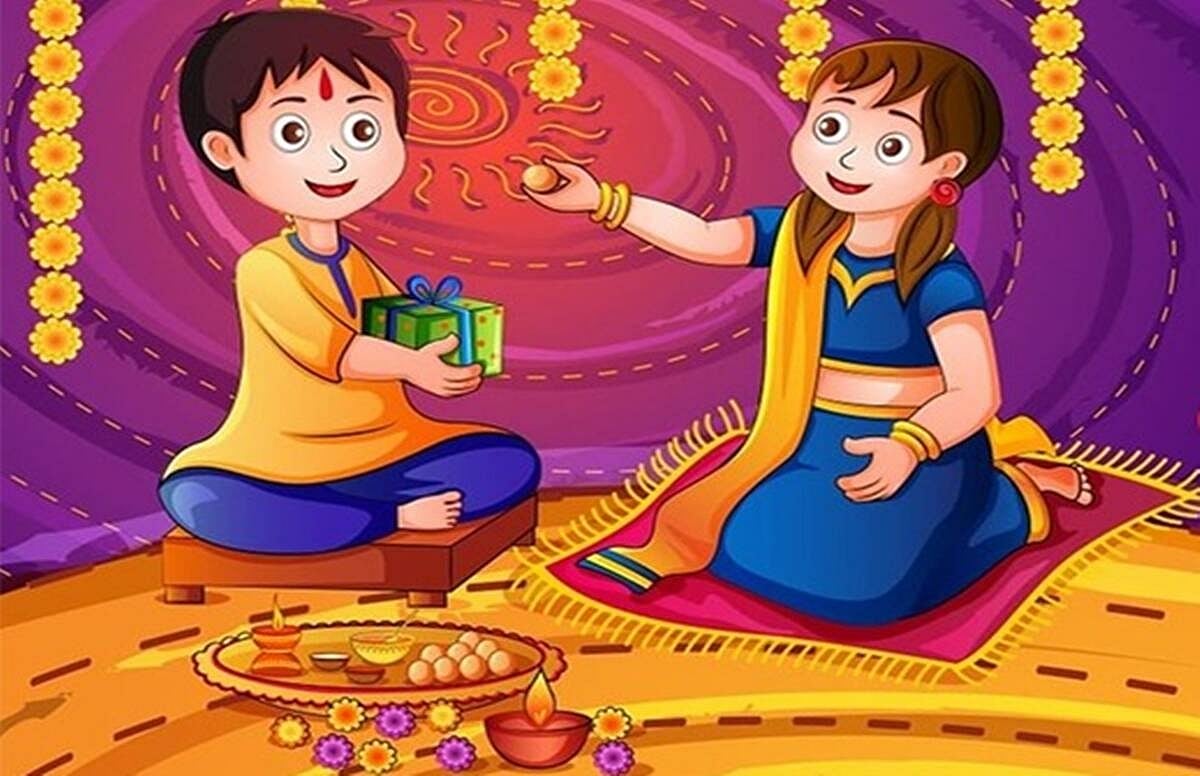
As Diwali joy fills the air around the world, we're gearing up for upcoming celebrations like Bhai Dooj and Chhath Puja. Bhai Dooj, observed on November 14 and November 15, this year, aligns with the second lunar day of Shukla Paksha in the Vikram Samvat Hindu calendar, or the Shalivahan Shaka calendar month of Kartika.
The festival that beautifully symbolizes the bond between brothers and sisters is also known as Bhaubeej, Bhai Tika, or Bhai Phonta. Traditionally, siblings come together on this day to celebrate their love. Sisters pray for the long and happy lives of their brothers by applying 'Tika' on their foreheads, and both exchange gifts and sweets to mark the occasion.
Significance
Legend has it that Goddess Yamuna fed her brother Yamraj at her own home on Kartik Dwitiya, leading to the recognition of this day as Yama Dwitiya in Hindu mythology. Various ancient Hindu scriptures mention Bhai Dooj as a celebration of the enduring love between brothers and sisters, with tales revolving around figures like Lord Krishna and Yamraj.
Rituals
While Bhai Dooj and Raksha Bandhan share similarities, such as celebrating the bond between siblings, the rituals differ. Unlike Raksha Bandhan, sisters on Bhai Dooj do not tie a thread or Rakhi on their brothers' wrists. Instead, they apply tilak to their brothers' foreheads and engage in other rituals like fasting and puja to wish them a prosperous life. In return, brothers express their love by giving gifts and promising to always protect their sisters. This festival encapsulates the essence of familial love and the sacred bond between brothers and sisters.
Mahurat
Shubh Mahurat timings for the festival will start on November 14 at 2:36 pm and end on November 15 at 01:47 pm.

