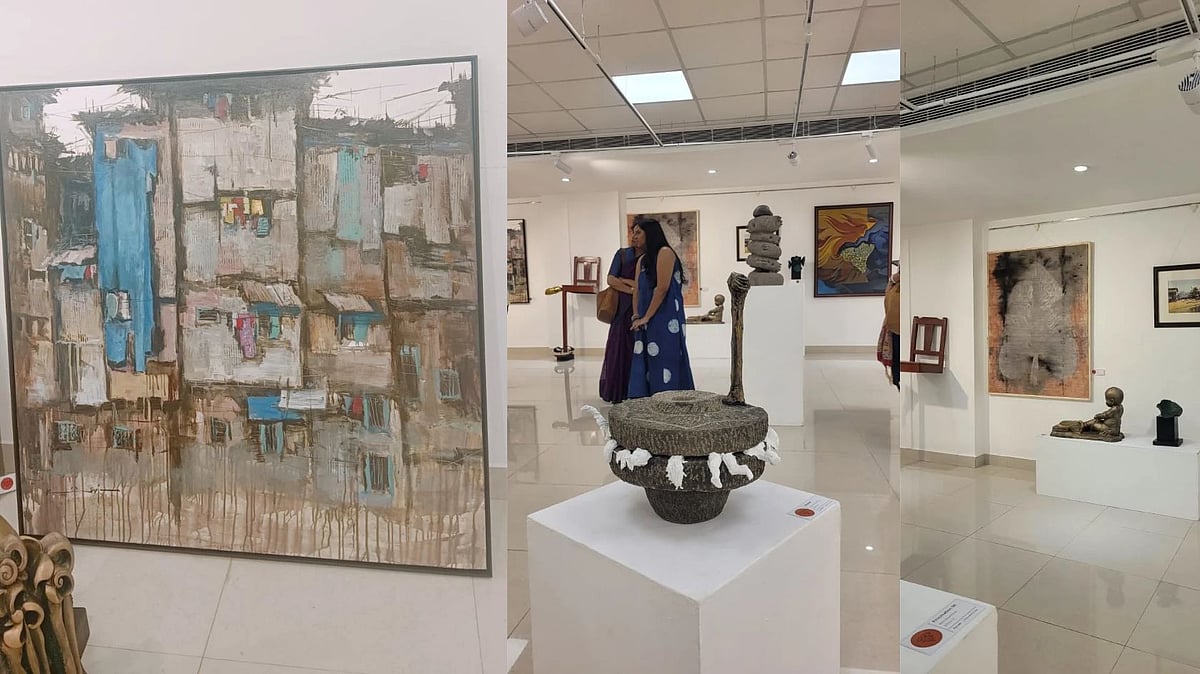
Mumbai moves fast, and in the chase for our dreams, many of us forget to pause. The Art Gallery at the P. L. Deshpande Maharashtra Kala Academy in Prabhadevi gave visitors a reason to do exactly that. ARPANAM, organised by the Progressive Sculptors Association (PSA), ran from November 5 to 18 and brought together artworks exploring the place of women in society, the gap between the rich and the poor, nature, love and the search for inner peace.
Bharad |
Bharad
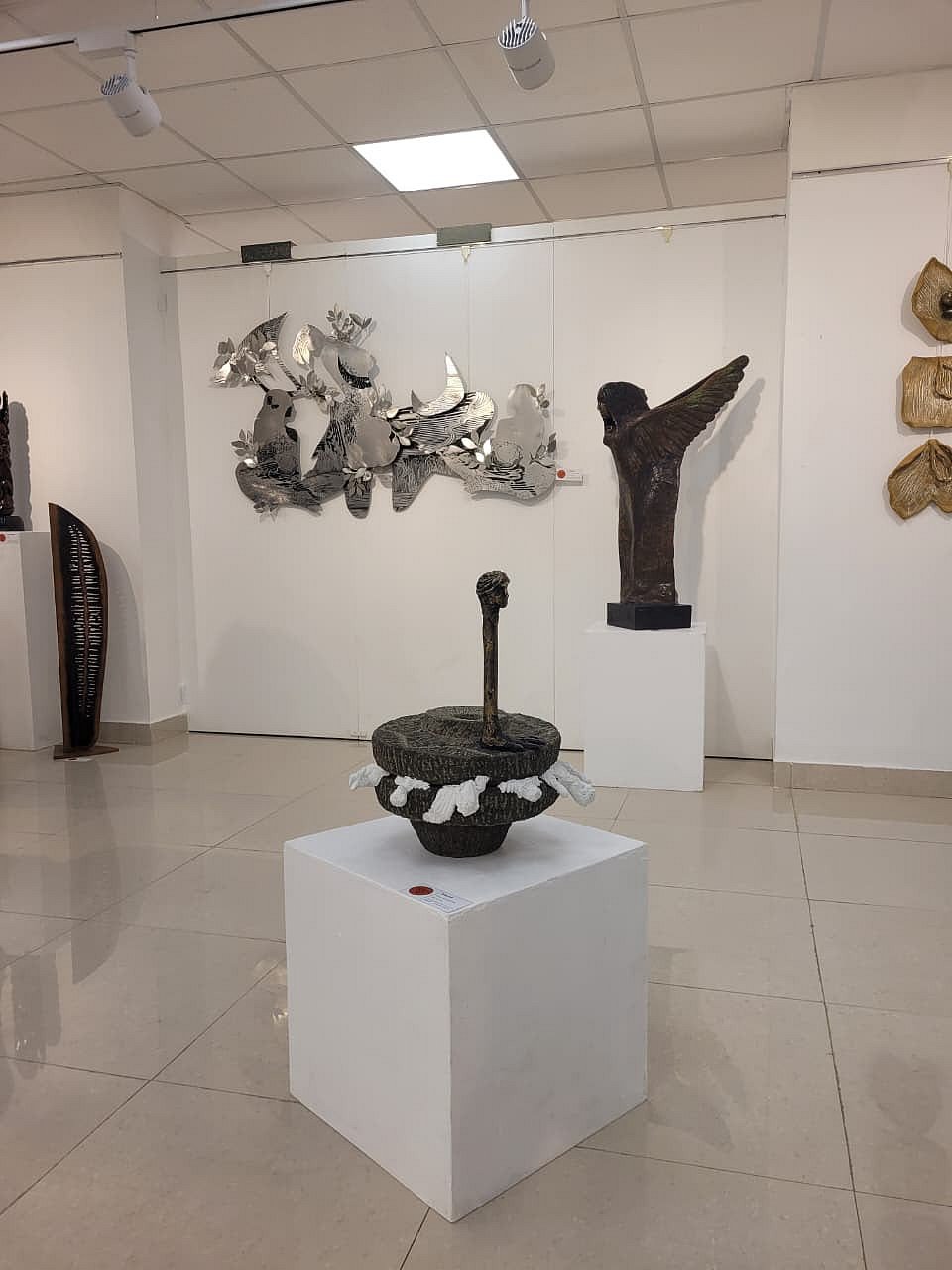
The most openly political piece was Bharad, a sculpture carved from a single block of Basalt. In Marathi, a bharad is the result of coarse grinding (crushed or cracked grain) from a millstone, and artist Prashant Godambe uses its two wheels as a metaphor for the state. This sculpture shows a perception of the current state of affairs in the country, where the lower caste system is a symbol of the judiciary, which is the foundation of democracy.
“The lower wheel remains stationary, like our Constitution. All the laws and rules remain fixed within it,” he says. The upper wheel represents politics and those who operate it, including judges, government officers and the police. Caught between the two stones is the public, represented by figures symbolising women, farmers and Gen Z. Rice, wheat and trees are also carved into the work, with the trees representing those being uprooted.
Godambe's view is blunt. “Politicians make laws according to their own interests,” he says, adding that the system grinds ordinary people down."
Hierarchy |
Hierarchy
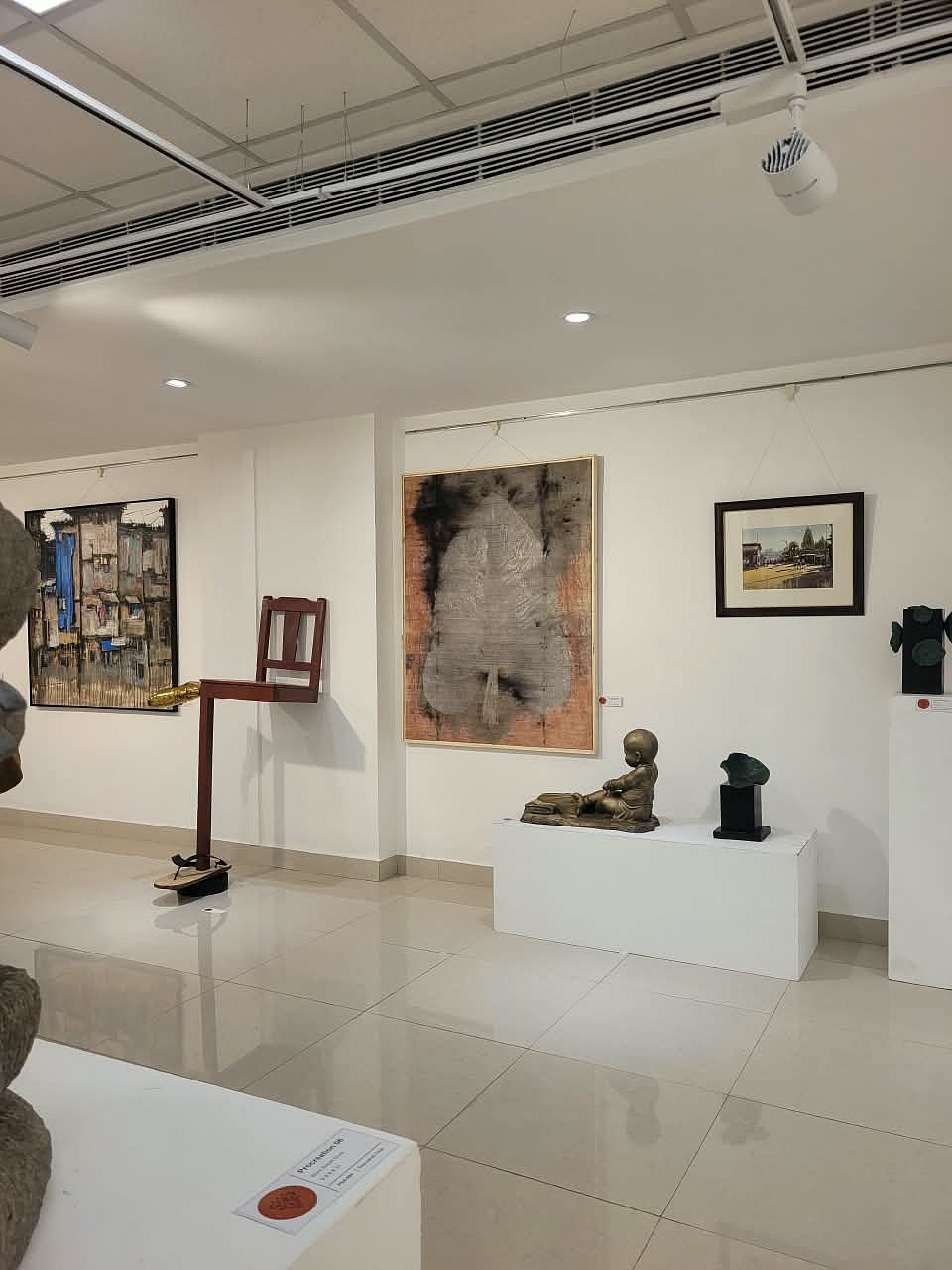
Shailesh Patne's Hierarchy makes a related point about class through a few carefully chosen objects. A chair holds a golden shoe, representing people from high society. Below it is a giant slipper made from sharp tools and wood, symbolising the lower-middle and working classes, including “farmers or labourers” who depend on their tools for a living.
The chair has only one leg, and this is deliberate. It represents instability and highlights the divide between social classes.
Elegance in Silence |
Elegance in Silence
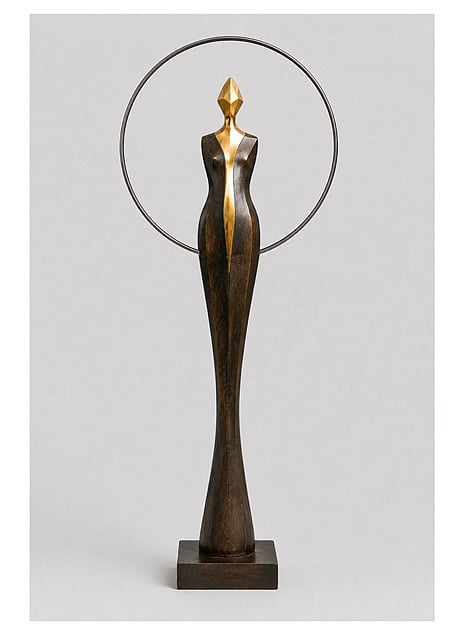
Nilesh Powalkar's Elegance in Silence is a tribute to women who give up their dreams for their loved ones. The face is made of polished brass, buffed until it reflects “like a mirror”, symbolising the image women are expected to maintain.
“Every woman has to maintain a shining image in society, clear like a mirror,” says, Nilesh.
The body is made of rosewood, whose grain represents beauty. Steel rings around it symbolise the boundaries society places on women. At the base, melted brass petals lie scattered, each representing a dream that has been given up. For Powalkar, the elegance lies in the silence. “She lives in peace and still shows elegance,” he says.
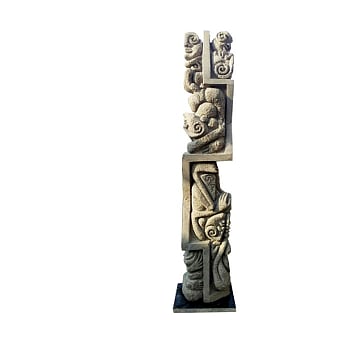
Spiritual Reality |
Spiritual Reality
Vaibhav Giakwad's basalt sculpture is part of a theme he calls An Imagination of Love. The work is abstract by design, but each section represents a particular emotion or experience, such as a first kiss, a first hug or the birth of a child.
The central challenge was finding a way to represent several emotions in a single artwork. The solution was a curved element running through the sculpture, separating the different feelings while also connecting them. “If I remove it, then the feelings will no longer remain separate,” the artist says. The work began with a feeling and a conversation, and the discussions that took place during its creation became part of the piece itself.
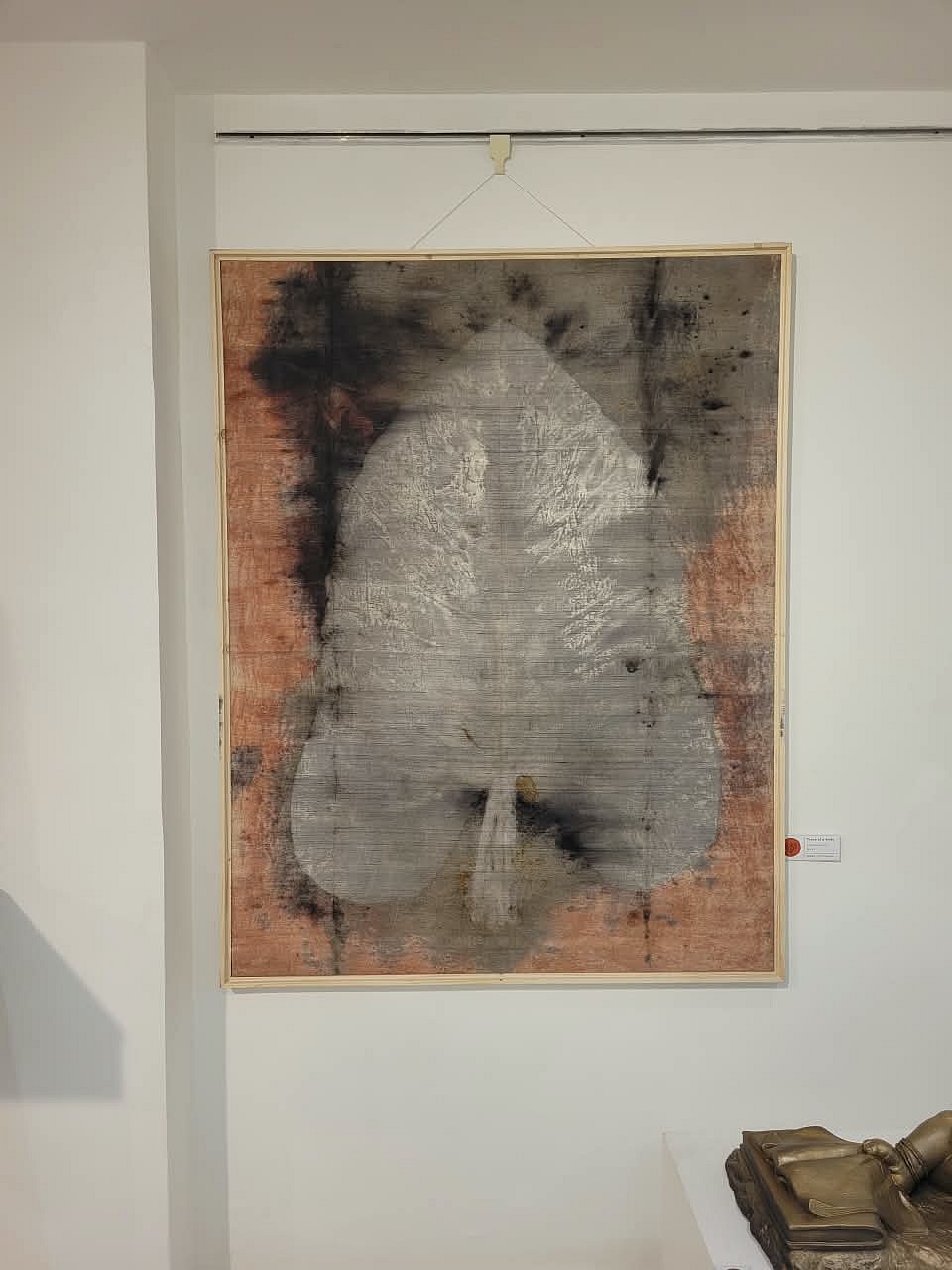
Trace of a Body |
Nature, Memory And The Sea
Trace of a Body by textile designer Palvi Prashant Godambe is subtle, yet carries a message of its own. She works on raw silk without using a canvas, creating colours from Ayurvedic powders such as amla, harda and manjishtha, along with leaves and marigolds. The patterns are created using the bundle-dyeing technique.
“My work is chemical-free and sustainable,” she says. Making natural colours is becoming a dying art, and she is trying to keep the practice alive. Part of her Memory Lane series, the work connects personal memories with nature. Its message is simple: “We feel fresh when we go to nature. But we shouldn't pollute it.”
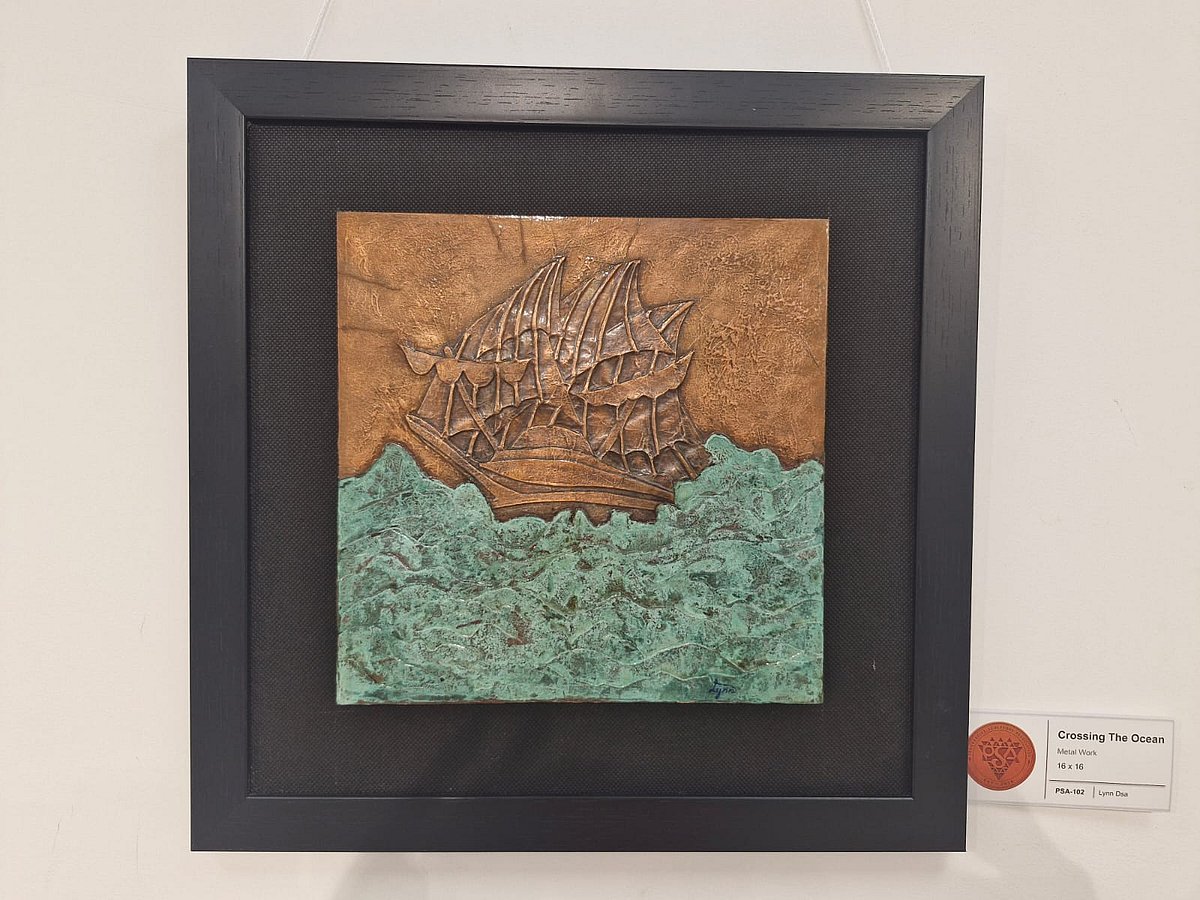
Crossing the ocean |
Crossing the Ocean by Lindsey, offers a lighter take on a profound subject. The ship represents us, while the water symbolises everything we go through in life. It serves as “a reminder that you should not take everything so seriously and just sail through life.”
The artwork is made on copper foil, with the sea coloured using blue patina and the ship oxidised with salt. The subject is also personal, as Lindsey's father is a marine engineer.
Thoughts That Arrive From Anywhere
Not every sculpture was placed where one would traditionally expect it to be. Through Frozen Thoughts and Formation of Thoughts, sculptor Swapnil Pednekar deliberately breaks a basic convention of sculpture.
“Normally, a sculpture sits on a pedestal. I intentionally broke that rule and placed it to the side,” he says, “to show that thoughts can come from anywhere.”
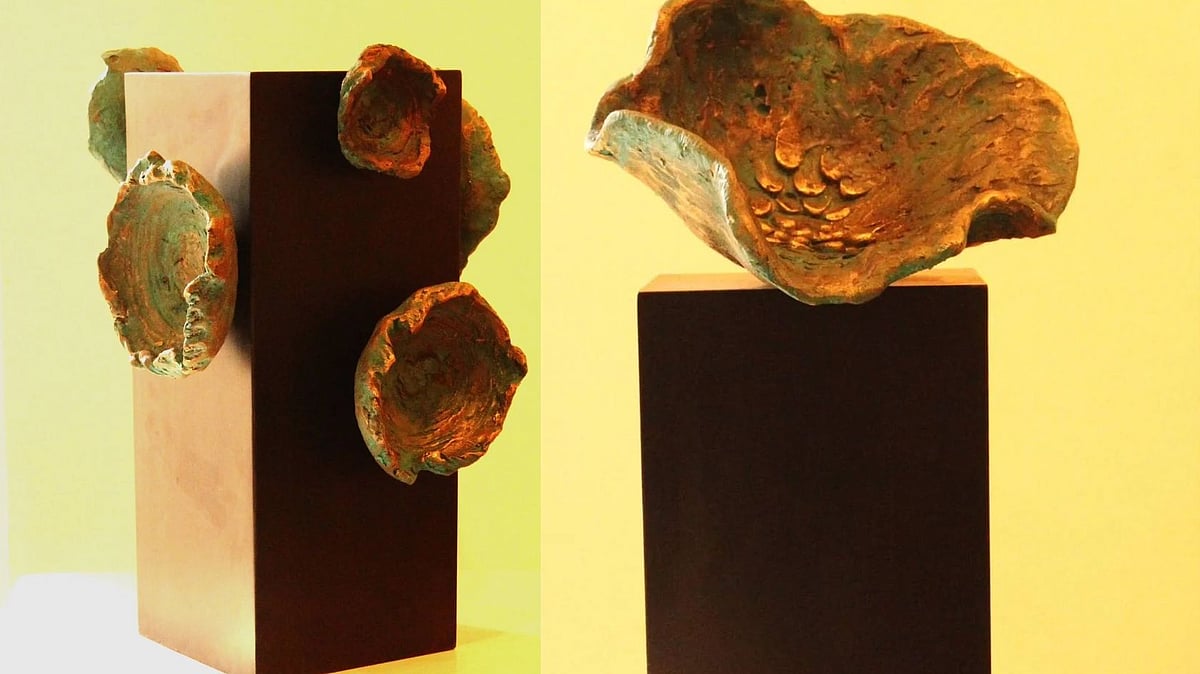
Frozen Thoughts and Formation of Thoughts |
The shapes are inspired by fungi, which have fascinated Pednekar, who is also an educator, since childhood. Frozen Thoughts is cast in bronze, while Formation of Thoughts is made of wood and features a cluster of bubbles, “like the bubbles you get when you boil water”.
The wooden cuboid represents a frozen or inactive mind, while the organic forms emerging from it symbolise thoughts that cannot be contained. They represent the different ideas, memories, questions and imaginations that constantly emerge from our minds.

The Language Of Form, The Power Of Expression
Vijay Gurav's Self Talk explores a conversation most people have every day without even realising it. “We are always talking to ourselves,” Gurav says.
The sculpture captures different states of mind, from relaxed to restless, through a figure repeated across the artwork. He describes it as a simplified “inner form”, reflecting what happens within us when we sit alone.
His reason for creating the work is also a reminder to make time for ourselves. “We should make time to talk to ourselves,” he says, adding that many people never do because they are “so lost in the outside world.”
Level up your brain the fun way. Play daily games and quizzes on FPJ Smart!

