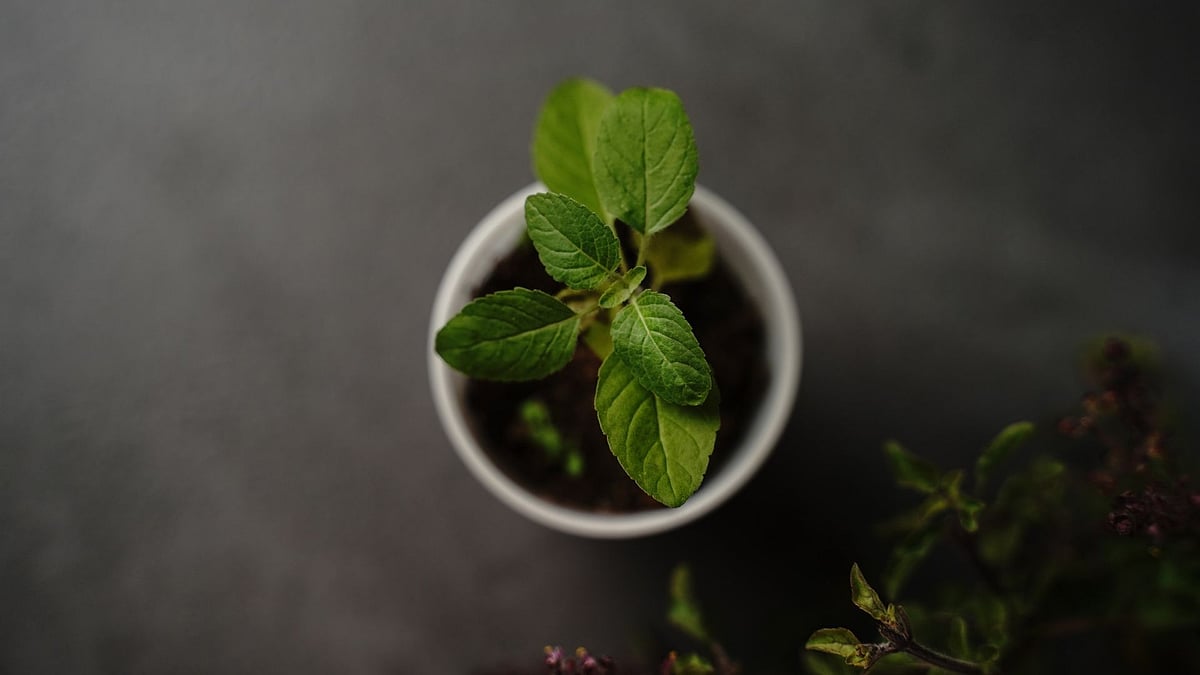
Worried about Vastu, unrest at home, or chaos around you? Acharya Balkrishna, co-founder of Patanjali Ayurved, has the answers. He considers Vastu a science where both problems and solutions are explored—though at times, the cost of remedies can feel intimidating.
For simpler solutions, he suggests turning to our scriptures. Tulsi is the answer. Revered as a form of the divine, this Ayurvedic plant is also known as Vrinda, Bhutagni, Bahumanjari, Soumya, Surasa, and Vatsalya. It is regarded as a sacred medicine, deeply rooted in our culture, traditions, and spiritual beliefs.
Acharyaji urges everyone to plant Tulsi in the ground if space permits; if not, grow it in a pot—wherever possible. Once planted, he says, it brings a sense of relief from worries.With changes in season or weather come a host of unseen, almost demon-like threats—cold, cough, allergies, asthma, and pollution. This is the reasoning behind the name Bhutagni. Every unknown virus or bacterium can feel like an invisible presence, something we cannot see. To guard against these, tulsi plays an essential role. It is also called Surasa for its value in Ayurvedic medicine, and Devapriya as it is considered dear to the gods.
In Sanatana culture, devotees visiting Vrindavan, Mathura, or Kashi during religious festivals often wear a tulsi mala around their neck. How did our ancestors know this? In essence, tulsi is associated with treating ailments related to the ENT region—the neck, nose, ears, and even the brain. This is why tulsi is traditionally worn around the neck.

Tulsi effect
With changes in season or weather come a host of unseen, almost demon-like threats—cold, cough, allergies, asthma, and pollution. This is the reasoning behind the name Bhutagni. Every unknown virus or bacterium can feel like an invisible presence, something we cannot see. To guard against these, tulsi plays an essential role. It is also called Surasa for its value in Ayurvedic medicine, and Devapriya as it is considered dear to the gods.
In Sanatana culture, devotees visiting Vrindavan, Mathura, or Kashi during religious festivals often wear a tulsi mala around their neck. How did our ancestors know this? In essence, tulsi is associated with treating ailments related to the ENT region—the neck, nose, ears, and even the brain. This is why tulsi is traditionally worn around the neck.
Tulsi consumption
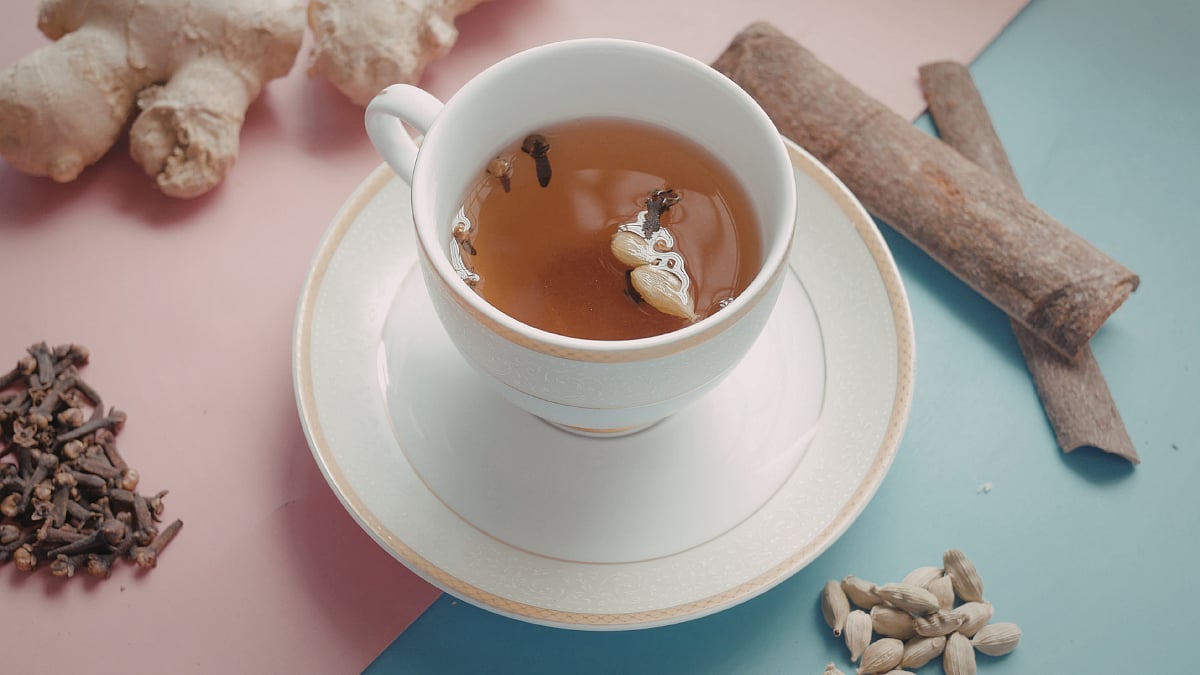
While consuming tulsi, it is traditionally advised not to chew the leaves. Despite their nutritional value, they are believed to contain mineral elements that may affect the teeth, particularly calcium. Many may not be aware of this reasoning; when framed as a religious caution, it is more likely to be followed.
Instead, tulsi can be boiled in water and consumed, or ground into a paste and swallowed. If needed, chew as little as possible. For children, it can be mixed with honey in water. Elders can consume tulsi as part of tea, kadha, or in medicinal preparations.
Tulsi as a practice
Keeping tulsi at home is believed to improve Vaastu; keeping it nearby is said to positively influence planetary energies. Consuming it supports the body, wearing it around the neck is thought to purify thoughts, and when added to food, it is believed to sanctify the meal and please the divine. This reflects our culture, tradition, and collective wisdom.
In winters, especially in North India, tulsi tends to dry quickly. A simple solution is to separate its clusters so their potency is preserved, or store them in a small cloth bundle to retain them for longer periods.
Among the many offerings from Patanjali Ayurved, Patanjali Tulsi Panchang Juice (500 Ml) supports overall well-being by aiding immunity and digestion, helping fight infections, and supporting respiratory and heart health.
Tulsi Mala Super Premium 8.0 MM is believed to bring peace, positivity, strength, and good health. You may also opt for Patanjali Basil (Tulsi) Drink (200 Ml) valued for its antioxidant properties and benefits for immunity.
Once you understand tulsi’s essence, it becomes a meaningful addition to health, daily life, and Vaastu.
