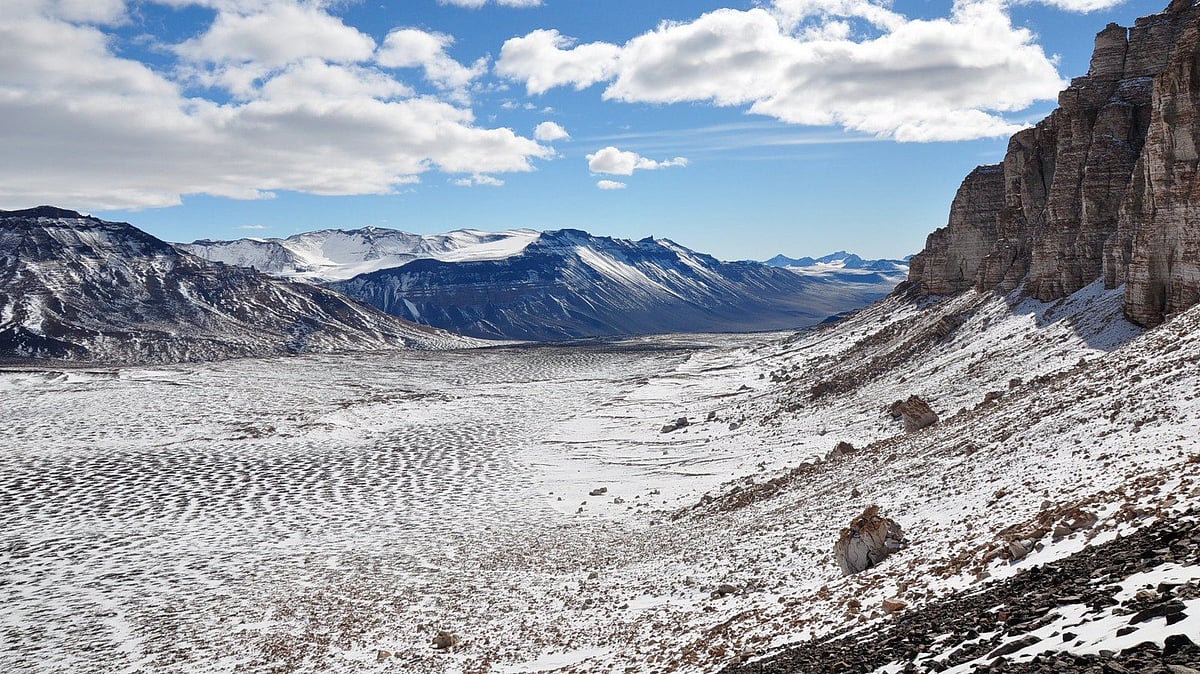
Antarctica is Earth's southernmost continent, which is situated almost entirely south of the Antarctic Circle, and it is surrounded by the Southern Ocean, which is also known as the Antarctic Ocean. The white desert (Antarctica) is the fifth-largest continent on the blue planet and is about 40 per cent larger than Europe. It has an area of 14,200,000 km². Antarctica is the coldest, windiest, and least populated of the world's continents.
As large as the landscape of Antarctica in the South Pole region, it contains a lot of mystery. Did you know that a region in Antarctica called McMurdo Dry Valleys haven't experienced rainfall for over two million years? If that fact already caught your attention, then keep on reading to know further about the landscape and some of the lesser-known facts you weren't aware of.
No rainfall has recorded in the McMurdo Dry Valleys nearly 2 million years
The McMurdo Dry Valleys in Antarctica have not experienced significant rain for nearly 2 million years. This is due to the hyper-arid climate caused by the surrounding mountains blocking moisture. The Transantarctic Mountains block coastal moisture from entering the valleys. Another factor that is responsible for the lack of rainfall is Katabatic Winds.
They are cold and dense air flows down from the high polar plateau, reaching high speeds that remove moisture and prevent ice or snow from settling. The katabatic winds in the region can reach speeds of up to 320 km per hour, evaporating all moisture before it can accumulate. The winds are so strong and dry that they cause sublimation, turning snow directly into vapour. These are the combination factors that are responsible for the lack of rainfall in the region.
About McMurdo Dry Valleys
The McMurdo Dry Valleys are a series of largely snow-free desert valleys that are located on the coastline of Victoria Land in Antarctica. The Dy Valleys are the coldest and driest desert on Earth. Despite Antarctica being covered with ice sheets, this region is a snow-free region; all you can find are rocky valleys and plains. As a result, the Valleys have become a friendly place for scientific research in the Antarctic region.
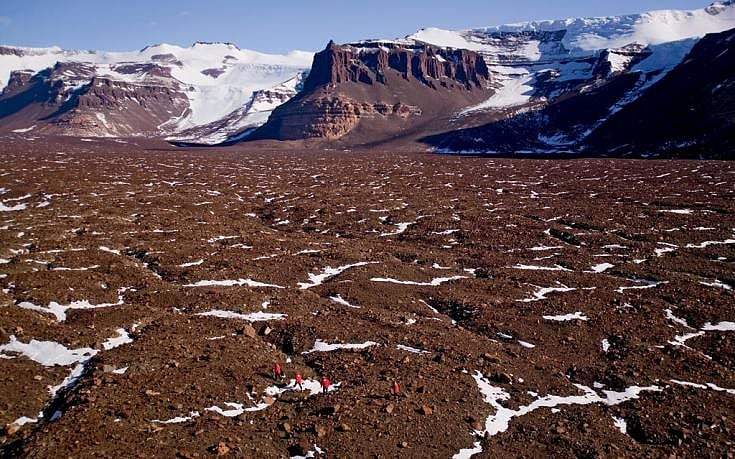
McMurdo Dry Valleys |
Why are the McMurdo Dry Valleys a free ice region?
The McMurdo Dry Valleys are one of the most unique regions in Antarctica, due to their unique climate. The driest place on Earth was discovered in 1903 by the British explorer Robert Falcon Scott. The McMurdo Dry Valleys consist of the Transantarctic Mountains, a mountain range of uplifted rock. These mountain divides East Antarctica and West Antarctica. These regions are almost completely free of ice. This is due to powerful katabatic winds that scour away snowfall and humidity across the region.
McMurdo Dry Valleys: The surface conditions are like Mars
Scientists find these valleys fascinating because they are extremely dry and cold. The environment of it closely resembles the surface conditions of Mars. As a result, space agencies like NASA study dry valleys to better understand how life might survive on Mars. The barren land, salt lakes, and frozen soil offer valuable insights into planetary exploration. The dry valley covers about 4,800 square kilometers, and its climate and atmosphere continue to intrigue researchers from around the world.

