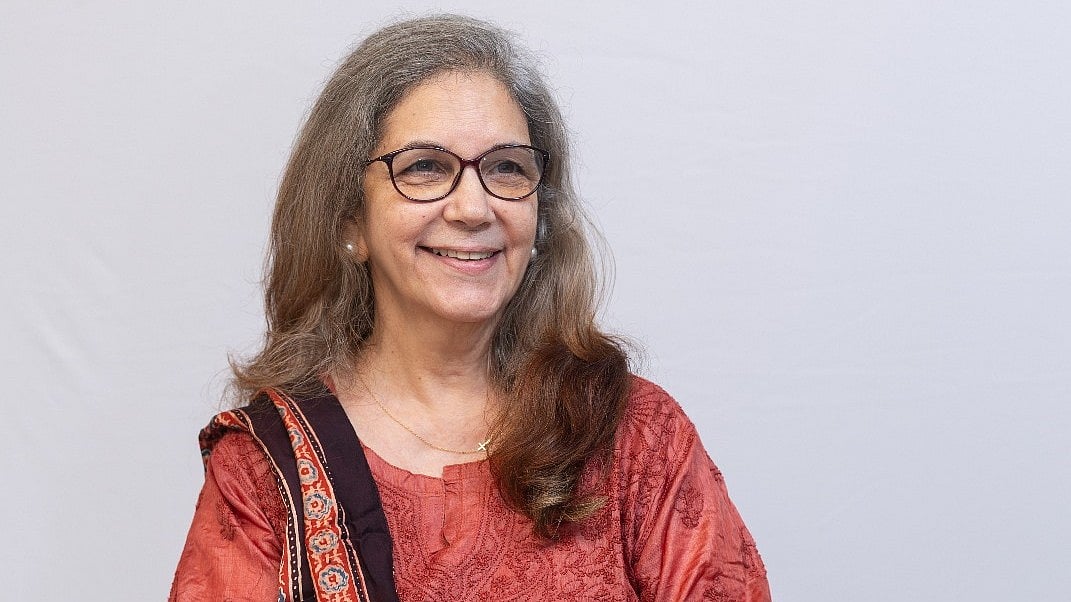
Books may be changing with the times, but the joy of a good story remains the same. For 17 years, Godrej Literature Live! The Mumbai Litfest has brought writers and readers together to share ideas, discover new voices and discuss the issues that matter. From getting children interested in books through The Little Festival to exploring topics such as AI and the environment, the festival has grown with its audience. Amy Fernandes, Co-Director of the festival, talks about changing reading habits, the role of technology in discovering books and why literature continues to bring people together.
The festival is on from October 23 to 25, 2026, at NCPA, Mumbai.
Excerpts from the interview:
How has Godrej Literature Live! The Mumbai Litfest evolved over the years, and how has the literary scene in India changed during this time?
The literary scene in India has been vibrant long before any literary festivals including ours, came along. What literary festivals have done is to create platforms for writers and readers to come together, to discuss and debate. And readers and audiences who attend literary festivals come away much more informed and engaged than before. While it’s true that people’s waking hours are divided between working, sleeping, scrolling and reading, the last is consumed in many forms, hard copy, aural and visual.
With 17 years behind us, changes have been many. Every year is a brand new year and we have realised that evolution is dependent on changing reading habits and preoccupations of readers and writers, so our sessions and panels are reflective of them. For instance, we realised some years ago, that it was imperative for us to include children in the festival, given that there are so many distractions today that take them away from the pleasure of reading a book. And so The Little Festival was born; today it is a thriving three day affair.
What is the main theme of this year’s festival, and how does it reflect the issues and conversations shaping our world today?
As a Festival, we generally avoid getting into a regimented theme, but we have found over the years, that conversations are shaped around particular topics. So one year, we discovered that there was a plethora of books on the Partition and we couldn’t ignore that. Another year titles revolved around Mumbai and one year it was about Happiness. This year we find that AI and the environment are conversations that need to be had, and you will find them in our sessions.
Is there a session, author or conversation you are particularly excited about?
I am excited about the Festival on the whole. And we have some great names attending: Kaushik Basu, Javed Akhtar, Jerry Pinto, Ramchandra Guha, Gulzar, Pavan Varma, Shashi Tharoor, Ria Chopra, Ratna Pathak Shah, Shefali Shah …and so many more. To really feel giddy with excitement please log on to www.litlive.in !
Book clubs and social media platforms such as BookTok have changed how people discover books. Has this influenced the way you plan the festival?
I love that book clubs are growing in numbers. It shows that people are reading, exchanging ideas, discussing and when authors they’ve read come to their city, I love that they come in large numbers, to meet them.
How do you ensure that the festival represents India’s diverse literary voices, including regional-language writers and authors who may not get enough mainstream attention?
You have just to see the range of topics that make up our programme, from AI to poetry, from a session on Gandhi to India’s heartland. From a panel on paralympics to regional news gathering. From the LGBT community to the Kolis of Mumbai. DEI is not something we just bandy, we work it into our sessions.
Are literary festivals helping create new readers, or are they mainly bringing book lovers together? How do you measure the festival’s impact?
When we started out we saw many familiar faces each year but as our numbers have increased we find the demographic profile has changed. While thankfully, the familiar faces still attend, we see tons of young people attending: students, young professionals, podcasters, influencers. When readers find that there is a session or engagement that matches their interest, they come in good numbers.
How are audiobooks, e-books and AI changing the way we read, write and discover stories? What role do you see these technologies playing in the future of literature?
I am grateful that audiobooks and e-books are around. Of course, the sheer pleasure of turning a page cannot be underscored enough, but pragmatically speaking, space in homes are shrinking; books occupy spaces and people opt for e-books. Audiobooks help people with visual disabilities to stay connected with books. Instagram influencers of books lead readers to several new writers and create online book clubs. Technology here has played a positive role.
Mumbai is known for its cinema, theatre and arts. What makes it a unique city for literature, and how does the city influence the stories writers tell?
Cinema, theatre, the arts and literature lead to one platform: culture. And Mumbai is a wonderful canvas for actors and artists to tell their stories. We have had many fabulous sessions based on art, cinema, and theatre. This year itself is a fine example. Naman Ahuja has a session on soft power in the arts. We have sessions on Mumbai: the old and the new. Shefali Shah, the film actor, has her story to tell. In the past too, we have had the legendary Naseeruddin Shah performing Manto, and Usha Uthup, who burst into song and dance at her session. There’s a fabulous cross-pollination that happens when artists, writers and actors tell their stories at the Festival.
Has your own understanding of literature or reading changed through your work with the festival?
Absolutely. I generally devour fiction, but over the years, when I listen to sessions on current affairs and non-fiction, I find myself converted.
What do you think literary festivals will look like ten years from now? What would success mean to you?
I cannot say. Right now, the buzz is that AI is set to kill us within the next ten years. If that’s true, we need to find a way to survive this disembodied being, to stay relevant and to keep reading non-AI-generated content.

