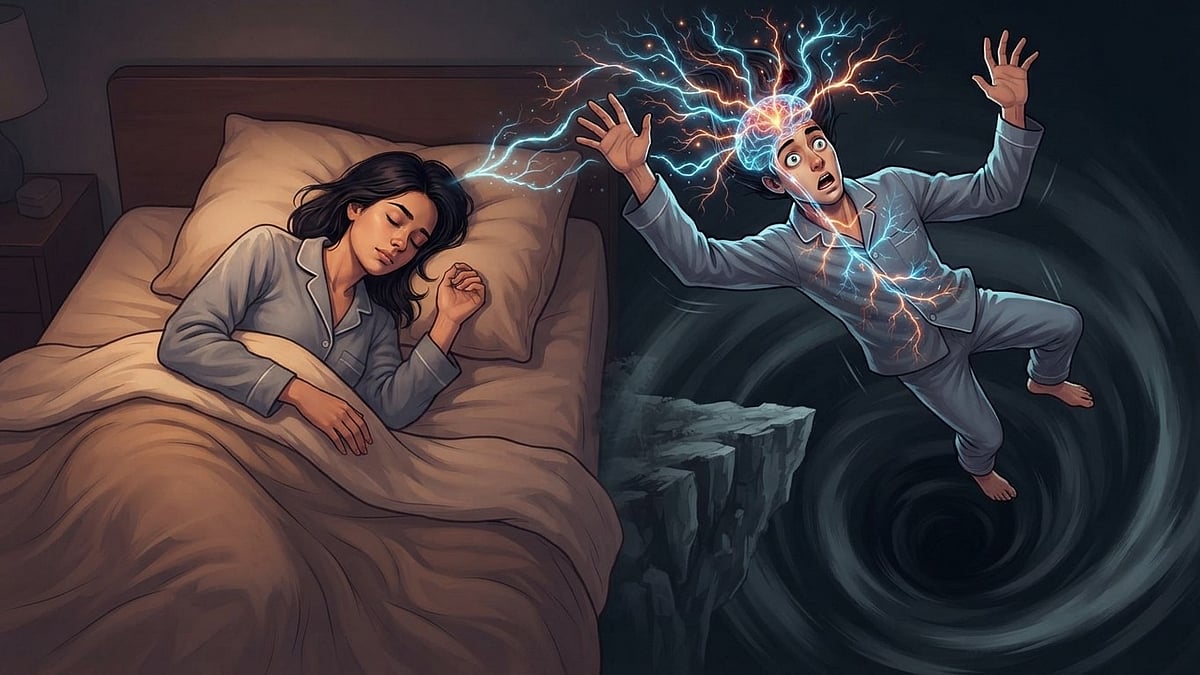
Every night, millions of people experience a sudden, involuntary muscle twitch just as they drift off—a phenomenon scientists call a hypnic jerk (or sleep start). Affecting up to 70% of people, this startling reflex is a completely normal, harmless quirk of the transition between wakefulness and sleep. As your body powers down, your muscles rapidly relax. Sometimes, an overstimulated or exhausted brain misinterprets this sudden drop in muscle tone as physically falling and fires a quick burst of nerve signals to "catch" you. Driven by everyday triggers like late-day caffeine, high stress, evening workouts, or sleep deprivation, this brief neurological misfire offers a fascinating glimpse into how carefully the nervous system manages the nightly handover to rest.
What happens?
As you fall asleep, your nervous system shifts control from your awake brain (which keeps muscles active) to your sleep-regulating brain regions (which relax muscles and slow heart rate). Sometimes, this handover isn't smooth:
The misfire: As your muscles rapidly relax, your brain's reticular activating system misinterprets the sudden loss of muscle tone as physically falling.
The reflex: In response, your brain fires a quick burst of nerve signals to "catch" yourself, causing your arms, legs, or whole body to twitch violently—often accompanied by a brief dream fragment of tripping or stepping off a ledge.
More than a twitch
A hypnic jerk isn't always purely physical; it often blends with early-stage dream imagery known as hypnagogic hallucinations. Alongside the muscle spasm, you might experience:
A vivid mental flash of tripping over a curb, missing a step, or falling through the air.
A sudden rush of adrenaline, rapid heartbeat, or quick intake of breath.
A brief sensory phantom, such as hearing a loud bang, seeing a bright flash of light, or feeling a sudden sensation of floating.

Common triggers
While anyone can get them randomly, hypnic jerks happen more frequently when your nervous system is overstimulated or exhausted:
High caffeine or stimulants: Consuming caffeine, nicotine, or certain medications too late in the day keeps motor pathways wired even as you try to sleep.
Sleep deprivation: Being overly tired forces your brain to drop into sleep stages too abruptly, increasing the chance of a sloppy transition.
Evening workouts: Vigorous exercise close to bedtime elevates adrenaline and body temperature, delaying muscle relaxation.
Stress and anxiety: Elevated cortisol keeps your fight-or-flight response partially active during the sleep transition.

