Indore (Madhya Pradesh): A recent leopard sighting near Devgudariya Hills, on the night of December 10, has prompted the Forest Department to intensify patrols and launch a sophisticated early warning initiative. The incident has once again highlighted the growing conflict between humans and wildlife across Indore’s rapidly developing peri-urban edge.
Divisional forest official Pradeep Mishra, IFS, suggested that the conflict was primarily structural, stemming from human expansion into established wildlife corridors rather than the animals’ presence itself.
The official detailed a two-pronged strategy to manage the interface, focusing on both waste management and a technological solution. He explained that a critical factor pushing leopards toward habitation is the proliferation of feral dogs—natural prey for the big cats—which in turn are attracted by unattended solid waste. The department plans a coordinated initiative with urban local bodies to clear open refuse near the hills and reduce dog clusters, a measure expected to significantly reduce the attraction for leopards.
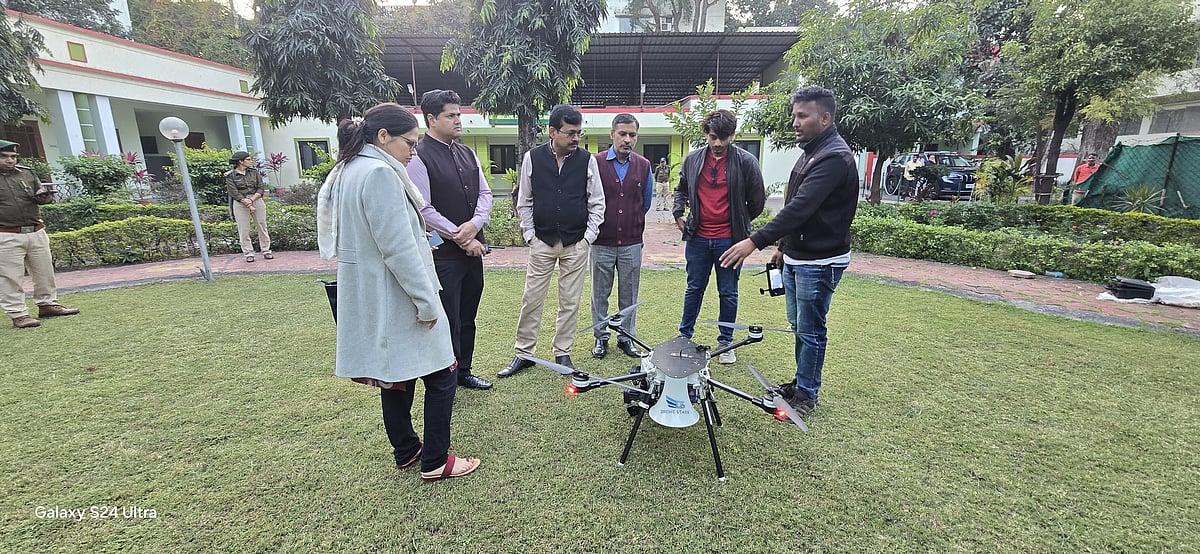
Mishra said the department was developing a first-of-its-kind monitoring model utilising thermal photometry drone technology. He stated: “This system will help build a predictive movement model, strengthening preventive action rather than relying only on rescue operations.”
He further shared that the plan includes night-time detection of leopard movement using thermal drones, which will allow for the mapping of frequently used routes, the identification of high-risk zones, and the provision of real-time alerts to field teams and local communities.
Field staff has already received specialised training in the use of M-STrIPES for geo-referenced documentation, which includes measuring pugmarks, interpreting gait, and exaamining kill sites. This training ensures accuracy in distinguishing leopard tracks from those of other canids and felines, a detail Mishra considers essential for rapid assessments.
The department underlined that public cooperation remains paramount for success. Residents around Devgudariya are advised to avoid dumping food or poultry waste in open areas and to report feral dog hotspots. They were also urged to follow departmental advisories issued during active movement alerts and to remain indoors during late-night patrol hours.

