Udaygarh (Madhya Pradesh): The tribal farming belt of Aalirajpur and Jhabua was once known for its mixed and organic farming, where maize, urad, tur, jowar, sesame and fodder crops grew together in the same field.
Farming was not just about grain production but also maintained a balance between livestock, soil health and the rural economy.
Then came soybean in the 1980s, bringing cash income, market access and economic strength to farmers. But four decades later, this cash crop is now posing serious challenges to soil health, crop diversity and sustainable farming.
Soybeans spread rapidly across Aalirajpur and Jhabua from the 1980s, giving farmers their first major source of cash income.
Living standards improved, spending on children's education increased and the rural economy gained new momentum.
Farmers embraced soybean wholeheartedly. However, over time, weather uncertainty, rising pest attacks and costly seeds, fertilisers and pesticides have eaten into profits. Production has stagnated in many areas while farming costs keep rising.
The region's urad crop, once famous for its quality in markets as far as South India, has been pushed aside by the growing spread of soybean.
Along with this, cow dung and organic manure were gradually replaced by urea and chemical fertilisers, reducing soil nutrients, harming biological activity and increasing problems like yellow mosaic disease.
Traditionally, farmers began deep ploughing after the Bhagoria festival, which destroyed pests, eggs and disease-causing elements under the sun. This practice has now nearly disappeared, increasing chemical dependency.
Growing soybeans on the same field year after year has reduced organic matter, caused nutrient imbalance and lowered water retention capacity.
Weeds once removed by hand are now treated with herbicides, even on standing crops, harming soil quality.
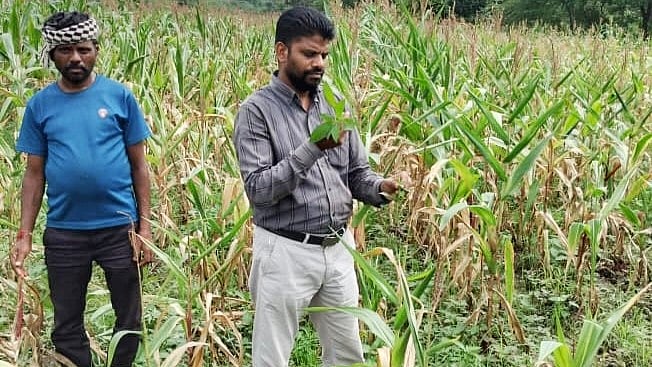
Farmers are now spraying pesticides three to five times a season, raising costs further. Problems like fall armyworm in maize have also grown sharply.
Senior Agriculture Officer Sandeep Rawat said soil testing, balanced fertiliser use, organic manure and crop diversification are the only effective ways to protect soil fertility long-term.
Under Krishi Varsh 2026, farmers were informed about organic farming through a Krishi Rath for 10 days, yet many remain reluctant to fully adopt it.