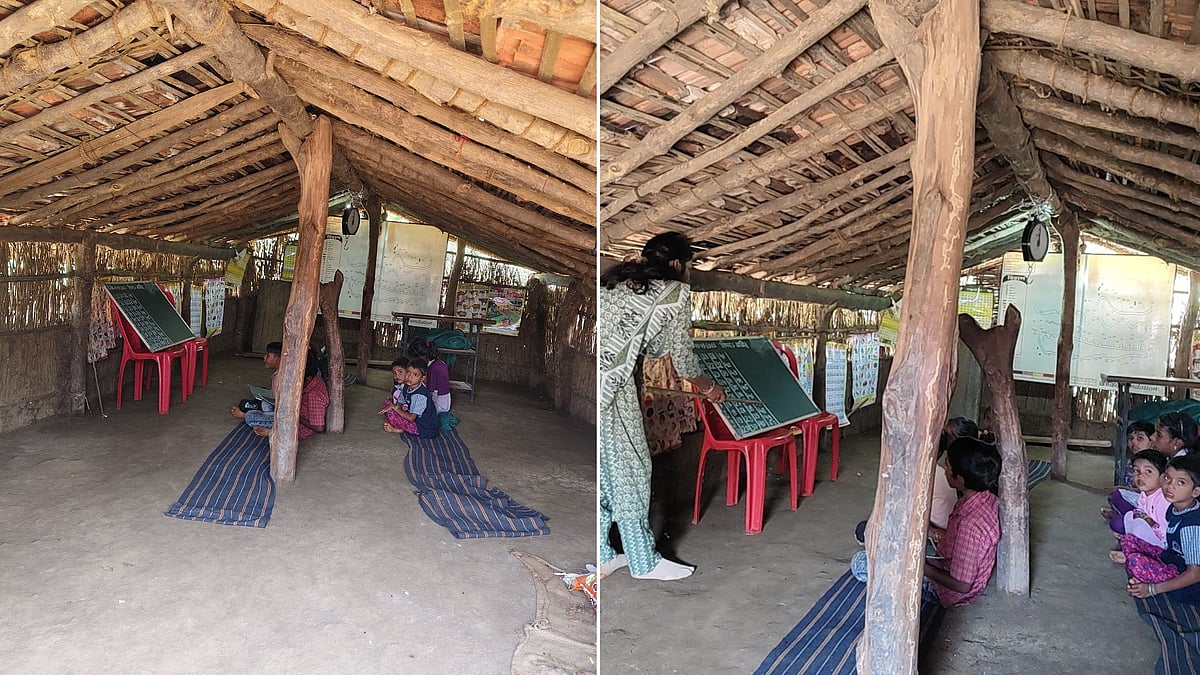
Khetia (Madhya Pradesh): Despite government claims of improving education facilities in rural areas, a primary school in the Tribal-dominated Karanpura panchayat continues to operate from a makeshift hut, even more than 25 years after its approval.
The primary school serving Dozer Amba and Mokser hamlets in Khetia under Barwani district has yet to receive a permanent building.
More than 23 students are reportedly attending classes regularly this academic session, with a teacher conducting lessons in the hut.
Apart from the lack of a school building, students and villagers also face shortages of basic facilities, including drinking water and proper access to the school.
Villagers said there is no proper road connecting the school, making commuting difficult, particularly during the monsoon.
Teacher Anita Dudwa said the issue of the school building had been brought to the attention of senior officials, but a permanent solution was yet to be found.
Resident Sandeep Dudwe said villagers had repeatedly approached elected representatives and concerned officials regarding the construction of a school building, but no work had begun so far.
He said children in the village also dream of studying, becoming officers and building better futures.
The situation has raised questions over the implementation of education development schemes in remote rural areas.
.jpg)

