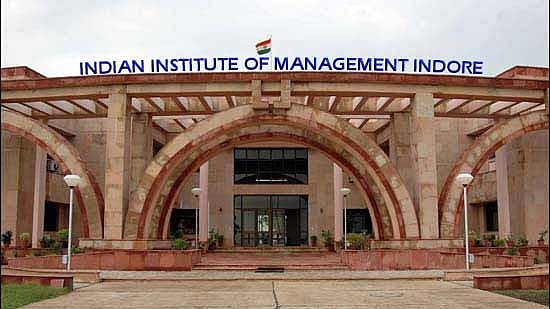
Indore (Madhya Pradesh): A new study by researchers at the Indian Institute of Management (IIM) Indore has shed light on the complex relationship between social media use and academic performance, challenging the idea that platforms like Facebook are purely harmful to students.
Published in the Journal of Global Information Management, the study led by Prashant Salwan examines how online media habits influence students grades, communication styles and overall engagement with university life in developing countries such as India and Russia.
The research, based on surveys of over 470 university students across the two countries, finds that heavy use of social media can negatively affect academic performance and reduce face-to-face interaction. However, the picture is far from straightforward.
Drawing on the concept of time displacement theory the idea that time spent on one activity reduces time available for another the study confirms that excessive online engagement can interfere with studying and in-person communication. But it also highlights two key factors that can offset these effects: multitasking ability and a student s level of interest in their university experience.
Students who are better at multitasking were found to manage digital distractions more effectively, maintaining both their academic performance and communication skills despite high levels of online activity. Similarly, those who showed greater interest and engagement in university life tended to use social media more productively for collaboration, coordination and academic support.
Social media is not inherently detrimental, the study suggests. Its impact depends on how students integrate it into their learning routines.
The research also revealed notable gender differences. Female students outperformed male students in academic performance, multitasking ability and face-to-face communication in both India and Russia. Researchers attribute this to broader social and behavioural patterns that may encourage stronger time-management skills among women.
Cross-country comparisons added another layer to the findings. In Russia, social media use showed a stronger negative link to academic outcomes, while in India the effect was less pronounced. The authors suggest that this may be due to differences in how deeply platforms like Facebook are integrated into daily life.
Importantly, the study reframes social media not just as a personal habit, but as part of a larger information ecosystem. Features like constant notifications and fragmented content streams can shape attention spans and learning behaviours, influencing how students allocate their time and mental resources.
The researchers argue that instead of discouraging social media use outright, educational institutions should focus on helping students use these platforms more effectively. This includes integrating digital tools into learning environments and training students to manage attention and multitasking more efficiently.
As universities continue to adapt to an increasingly digital world, the study underscores a key takeaway: the academic impact of social media is not fixed; it depends on the user, the context and the way the technology is used.

