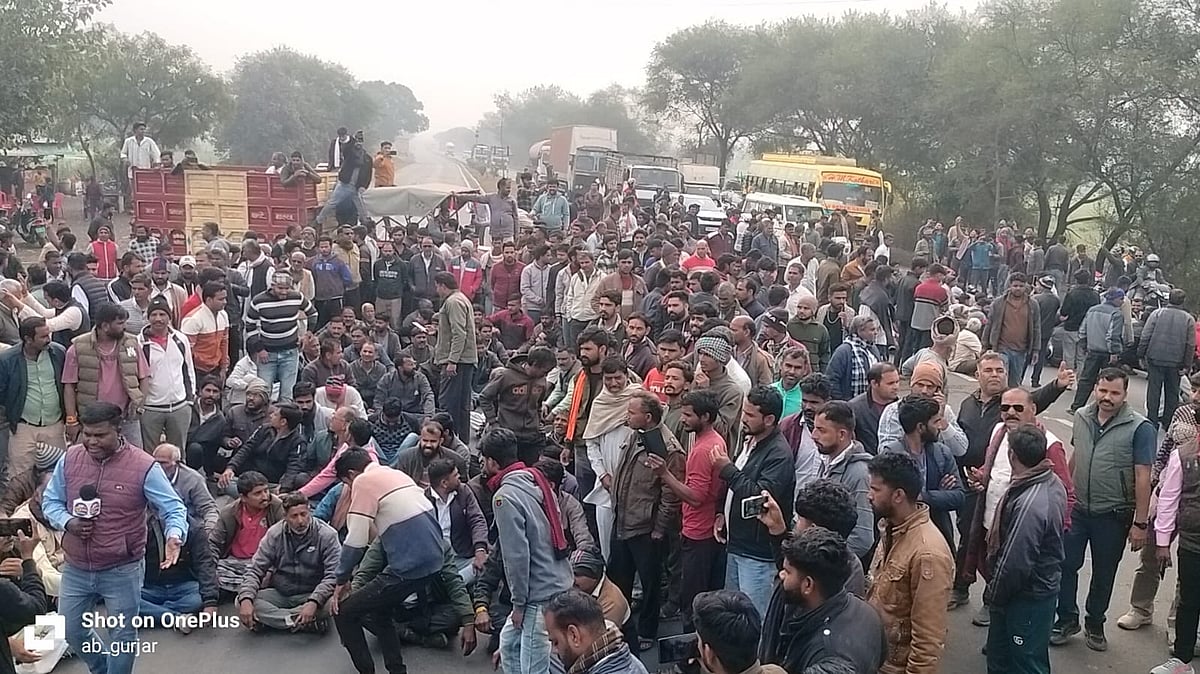
Neemuch (Madhya Pradesh): Hundreds of farmers from over 20 villages of Neemuch district brought traffic to a standstill on the Neemuch-Mhow-Nasirabad highway on Monday during a protest to seek immediate compensation for the crops destroyed by rain and hailstorm.
Several areas in Neemuch were affected by heavy rain and hailstorm on Sunday. The unseasonal rain and hailstorm flattened crops including opium, wheat, mustard, ashwagandha and chia within minutes. The unfavourable weather conditions completely destroyed farmers' hard work across villages including Bhanwrasa, Palsoda, Melki-Mewar and Manasa Khurd.

Starting at around 9 am, the farmers gathered at Bhanwrasa junction and first blocked the highway at 10.35 am. Following a 20-minute heated argument between the police and protesters, the blockade was temporarily lifted at 10.55 am. However, farmers resumed their protest at 11.25 am and blocked the highway.
Additional Collector BL Kalesh, ASP Nawal Singh Sisodia, CSP Kiran Chauhan and other senior officials arrived with heavy police deployment to pacify the protesters.
Later, Congress district president Tarun Baheti and other party leaders joined the protest, further intensifying tensions.
A sharp confrontation erupted between ASP Sisodia and Congress leader Rajendra Singh Tomar over the use of a microphone. The ASP appealed against politicising the issue, while Tomar responded aggressively which escalated the standoff.
Farmers openly expressed anger toward Neemuch MLA Dilip Singh Parihar and praised Manasa MLA Anirudh Madhav Maru for personally assessing field damage and informing authorities.
The blockade created two-kilometre-long vehicle queues on both sides. Traffic from Neemuch was diverted toward Malhargarh via Jeeran, while commuters heading towards Mandsaur remained stranded for hours.
The ASP appealed for the road to be cleared and urged against politicising the issue.
After much persuasion by Additional Collector Kalesh and Congress leaders, the blockade ended at 12.30 pm. Subsequently, the administration, public representatives, and farmers jointly visited the fields and assessed the damage to crops including opium, wheat, mustard, ashwagandha and chia. The administration promised to complete the survey within seven days and to process the compensation immediately.
