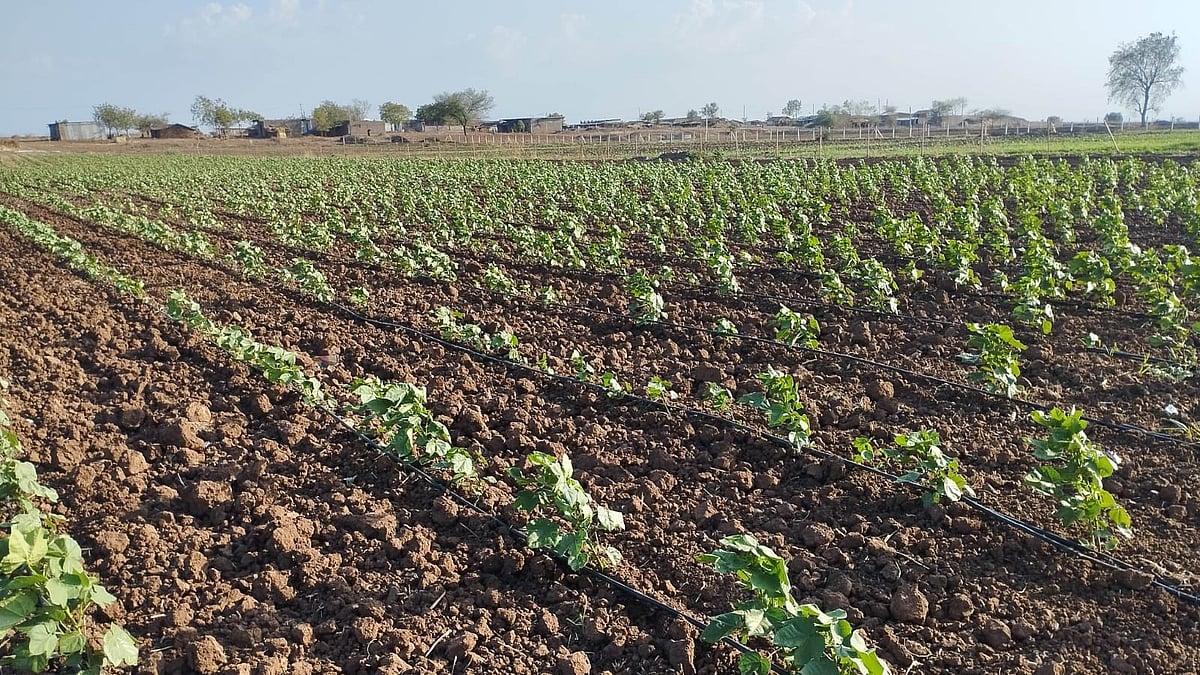
Khargone (Madhya Pradesh): A delayed monsoon and rising temperatures have sparked concern among farmers in Khargone district, with cotton, maize and the region's key cash crop, chilli, showing signs of severe stress.
In several areas, crop growth has stalled and plants have started withering due to the prolonged dry spell.
Arvind Patidar, a farmer from Gavsan, said nearly 8,000 of the 24,000 chilli plants sown across his three-acre farm dried up, forcing him to replant them, significantly increasing cultivation costs.
Kamlesh Patidar of Ubdi said the lack of rainfall is turning chilli plants yellow and stunting their growth.
Ramchandra Kumravat of Tanda Barud village said nearly 50% of the cucumber crop has been damaged. Cotton, maize and bottle gourd crops are also suffering due to moisture stress.
The irrigation crisis has deepened as several tube wells and open wells have dried up, while rivers and streams in the region are running dry.
Farmers warned that if adequate rainfall does not arrive in the coming days, chilli, cotton and maize crops could suffer heavy losses, severely impacting the livelihoods of thousands of families.
They fear that a serious water crisis could grip the Nimar region if the monsoon does not reach the area within the next four to eight days.
The situation is particularly worrying as cotton and chilli grown in the region are exported to international markets. The monsoon usually arrives by June 15 and this year's delay has heightened anxiety among farmers.
Agricultural activity has slowed considerably, while labourers and tribal farmers in hilly areas, who depend entirely on monsoon rainfall, are also anxiously awaiting the rains.