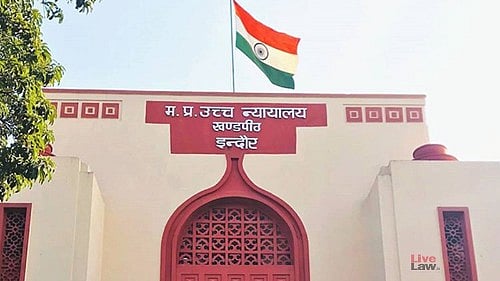
Indore (Madhya Pradesh): Terming the petition a “sheer misuse of the process of the court”, the Indore bench of the Madhya Pradesh High Court dismissed a habeas corpus plea filed by a man seeking the recovery of his “missing” son.
A division bench of Justice Subodh Abhyankar and Justice Alok Awasthi imposed a cost of Rs 5,000 on petitioner Rajesh Sharma after police records revealed that his son was not unlawfully detained but had flown to Ahmedabad after allegedly eloping with a girl.
Sharma had approached the High Court claiming that his son had gone missing on March 10, 2025. However, records showed that Sharma lodged a missing person report only on May 6, 2025, nearly two months after the alleged disappearance.
During the proceedings, Government Advocate Harish Singh Rathore presented findings from the case diary. He pointed out that the girl had also gone missing around the same period, on April 29, 2025, leading her father to file a separate habeas corpus petition before the Gwalior bench.
Police investigation subsequently revealed that Sharma’s son had taken the girl on a flight from Gwalior to Ahmedabad. Following this, an FIR was registered at Morar Police Station in Gwalior against the son, along with his uncle and aunt.
The State argued that Sharma filed the writ petition to build a legal defence for his accused son while suppressing facts about the alleged elopement. Petitioner’s counsel Abhishek Mantri submitted that Sharma was merely a father unaware of his son’s actions or whereabouts.
Unconvinced by the defence, the bench observed that the extraordinary constitutional remedy was being misused.
Justice Abhyankar noted that given the nearly two-month delay in filing the police complaint and omission of material facts, the petition lacked merit. Dismissing the plea, the court directed Sharma to deposit Rs 5,000 in the account of the High Court Employees Union within two weeks.


