Indore (Madhya Pradesh): Amid the historic lanes of old Indore, where the grandeur of Rajwada still reflects the city’s royal past, a centuries-old tradition continues to narrate the story of heritage, devotion and harmony — the magnificent “Holkar Sarkar Ka Tajia”.
More than a religious symbol, the royal Tajia stands as a remarkable chapter of Indore’s cultural history.
The tradition of Tajia-making in Indore began in the early 18th century near Tejpur Gali, close to Nandlalpura. After the Marathas arrived in Malwa, the art of creating Tajias continued to develop.
However, it was during the Holkar era that this tradition received royal recognition and transformed into a grand public celebration.
In the early 19th century, Maharaja Yashwantrao Holkar I began providing financial assistance for the construction of Tajia, while his consort, Kesribai, played an important role in encouraging the tradition.
Later, Maharaja Tukojirao Holkar II formally established it as the “Holkar Government’s Tajia”, which was built through royal patronage.
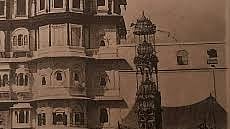
The seven-storey royal Tajia became the highlight of Muharram celebrations in Indore.
Historical records mention that the grand structure would complete seven rounds of the royal Rajwada palace. This ritual was considered a prayer for the prosperity of the Holkar state and the well-being of its people.
After the Rajwada rounds, the Tajia procession moved through Gopal Temple, Khajuri Bazaar, Bohra Bazaar, Bajajkhana Chowk and Pipli Bazaar before reaching Imamwada.
The immersion procession was held in the evening, and the Maharaja himself arrived on an elephant in a royal procession to witness the ceremony at Karbala. The Holkar Army would present a ceremonial salute to the Tajia.
A unique historical incident highlights the importance of the tradition. When telegraph lines were planned in Indore during the 19th century, Maharaja Tukojirao Holkar II ordered officials to ensure that the route did not disturb the path of the seven-storey Tajia procession.
During Muharram, Holkar police maintained strict security, while the royal band performed nightly. The grand “Alam” procession on the seventh day featured soldiers, horses, musicians, fakirs and royal officers on elephants.
The tradition also reflected social welfare. During the Holkar period, food, including 40 seers of bread and 15 seers of lentils, known as “Chanda”, was prepared and distributed among the poor and fakirs.
The Imamwada near Gopal Temple was later built by Maharaja Tukojirao Holkar III. Even today, the royal connection endures, with Holkar-era attendants in traditional turbans and attire accompanying the Tajia to Karbala.
Rare photographs preserved at the Zafar Ansari Museum, Indore, including images from 1880 and 1917, showcase the magnificence of the royal Tajia.
The tradition also influenced the legendary artist M.F. Husain, who often featured Imam Hussain's horse in his artwork.
The Holkar Government’s Tajia continues to remain a living symbol of Indore’s royal legacy, artistic richness and centuries-old spirit of unity.