Indore (Madhya Pradesh): With a lower amount of rainfall raising concerns over a possible water shortage next summer, Indore Municipal Corporation (IMC) plans to reuse around 3 crore litres of treated sewage water daily. The proposal includes four tertiary treatment plants with a combined capacity of 30 million litres per day (MLD) and a Rs 21.59 crore distribution network under the ‘Jal Hi Amrit’ project.
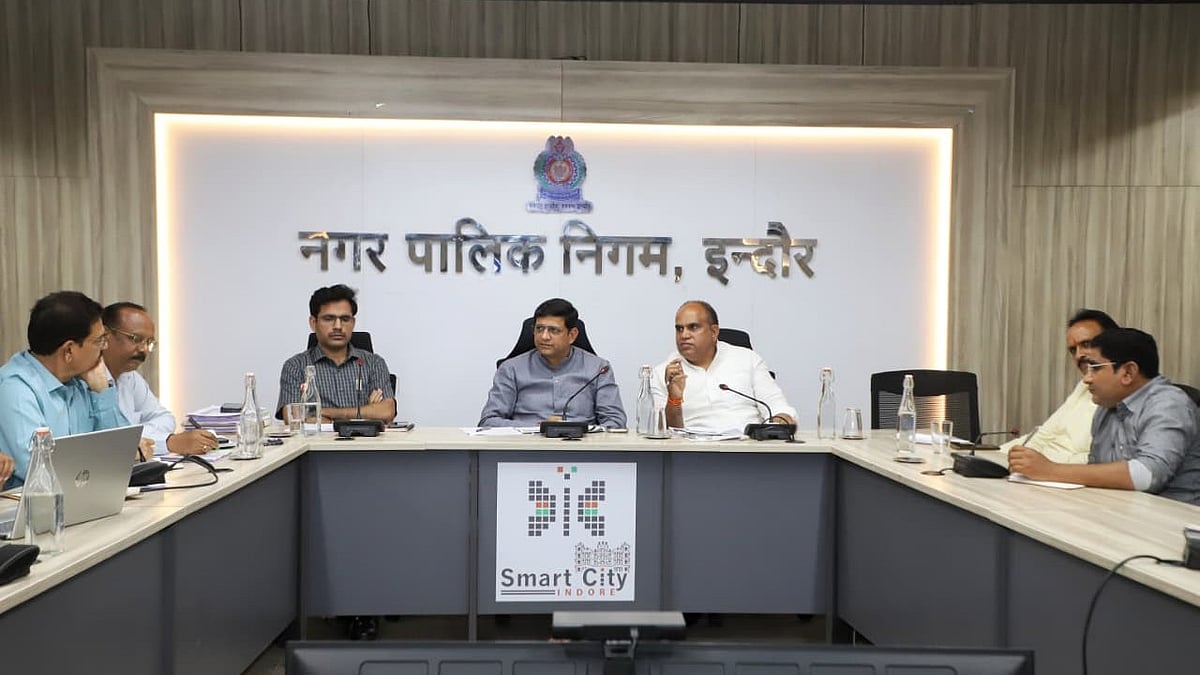
The plans were reviewed at a meeting chaired by Mayor Pushyamitra Bhargav at the City Bus Office on Wednesday. Water Works in-charge Abhishek Sharma, additional commissioner Ashish Kumar, corporator Yogesh Gedar, officials and engineers attended. Drainage projects, sewage treatment plants (STPs), pond water storage, Kanh-Saraswati river cleaning and preparations for Simhastha-2028 were also discussed.
Four plants proposed
Under the Urban Challenge Fund (UCF) project, tertiary treatment plants are proposed at Sanwer Industrial Area (3 MLD), Kanadia (8 MLD), Tigaria Badshah pond (9 MLD) and the Kabitkhedi STP complex (10 MLD), which houses an existing 245-MLD STP.
The treated water will be used for garden irrigation, road washing, construction, sewer cleaning and dust suppression. Supply to government buildings, hospitals, the airport, metro facilities and industrial areas will also be explored to reduce the use of fresh water, including Narmada water, for non-drinking purposes.
Funds for distribution network
The ‘Jal Hi Amrit’ project proposes a 30-lakh-litre overhead tank in Scheme No 78 and a 15-lakh-litre ground storage reservoir at Kabitkhedi, along with pumping facilities and pipelines. The estimated cost is Rs 21.59 crore, including GST.
The network will serve areas including Nipania, Bombay Hospital, Mahalaxmi Nagar, Dewas Naka and New Loha Mandi. Project documents mention a design length of 41.36 km and 29.27 km across different stages; the figures require clarification.
The plan aims to connect 133 gardens—23 existing and 110 new—and install 30 hydrants. Separate distribution arrangements and regular water-quality checks will be essential.
Rs 165.88 crore for sewer lines
The civic body also plans to rehabilitate or replace 162.03 km of sewer lines across 22 zones at an estimated cost of Rs 165.88 crore. The work primarily covers pipelines measuring 300–800 mm in diameter and aims to improve sewage flow to treatment plants.
Use RO waste water for mopping: Kailash
With concerns over a possible summer water crisis, Cabinet minister Kailash Vijayvargiya has urged residents to conserve water. In a video message, he said Indore received only 20–21 inches of rainfall this year, against usual 30–40 inches. He advised families to prepare water-saving charts, install tank overflow alarms and reuse RO waste water for mopping. He also appealed to people to pledge water conservation during Navratri.