Indore (Madhya Pradesh): On Tuesday, a nursery campus in Mhow will turn into a launchpad for a new, science-backed livelihood model for farmers of the Malwa region.
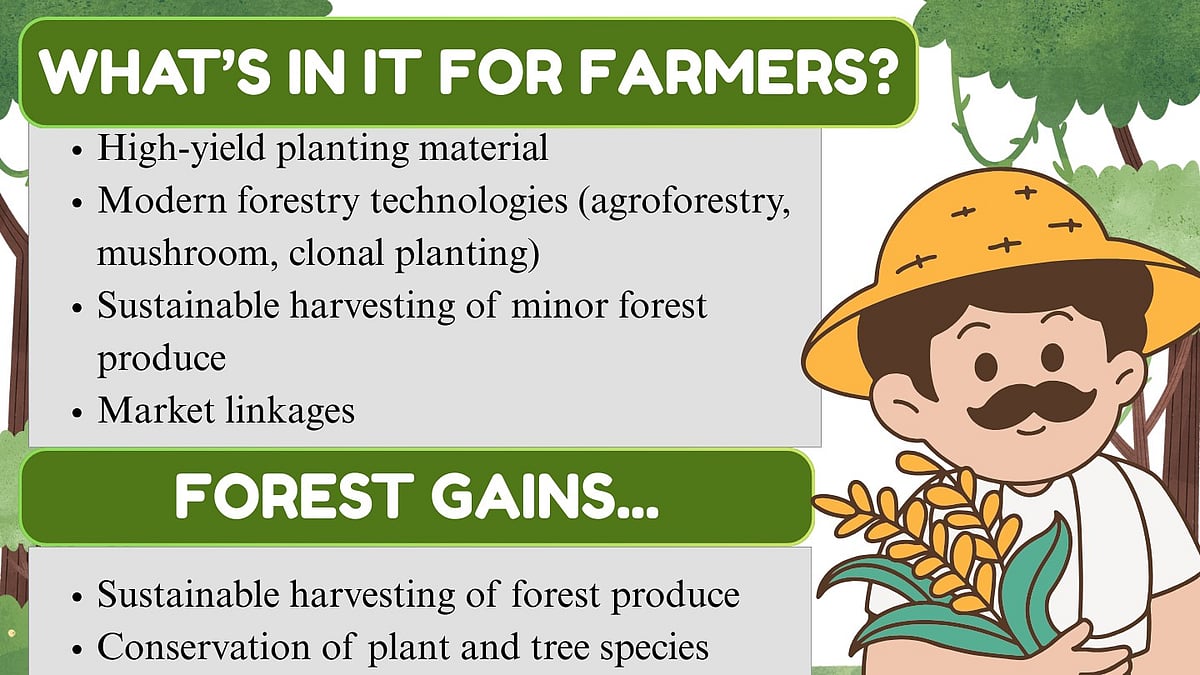
Van Vigyan Kendra (VVK), Indore, is set to open at the Social Forestry Office, Malwa Demo Nursery Campus, giving farmers access to high-yield planting material, modern forestry technologies, and assured market linkages.
The Indore Kendra joins a national network of 42 centres established by the Indian Council of Forestry Research and Education (ICFRE) since 2010, with technical support from Tropical Forest Research Institute (TFRI), Jabalpur. It becomes the seventh VVK in Madhya Pradesh and the first dedicated hub for the Malwa agro-climatic zone, where farms and forests together sustain thousands of households.
Divisional Forest Officer, Indore, Pradeep Mishra, IFS, said the Kendra will reduce the gamble farmers often face while shifting to forestry. “Van Vigyan Kendra bridges the gap between forestry research and practical application. Farmers can test plant varieties under local conditions before full adoption, reducing risk and improving returns,” he said.
To make learning practical, Badgonda Nursery, Mhow, will serve as a field demonstration and supply hub. Farmers can observe the performance of fast-growing, market-ready plant varieties before planting them on their land. “Demonstration sites help farmers make informed decisions and optimize income,” Mishra added.
Unlike conventional nurseries, VVK will push a diverse forestry economy. Farmers and self-help groups will be trained in water-efficient forest cultivation, agroforestry systems, mushroom cultivation, medicinal plant farming, charcoal production, and clonal planting. The Kendra will promote bamboo and lac value addition, encouraging processed and semi-processed product supply to boost earnings, particularly for women-led collectives.
The centre will also guide sustainable harvesting of minor forest produce such as arjun bark, tendu leaves, char chironji, palash, satavar, safed musli, and other species critical to local income. Mishra stressed the ecological balance, saying, “Income growth and forest conservation can go hand in hand.”
Market linkage will be a core strength. “Reliable market access is key to making forestry-based livelihoods stable and profitable,” he said, noting that structured engagement with private firms, institutional buyers, and industry partners will ensure demand security for rising production.
The inauguration will see participation from ICFRE, TFRI, the state Forest Department, universities, NGOs, private sector stakeholders, and farmers. For Malwa’s growers, the Kendra promises more than saplings—it offers proof, training, and market trust, creating a replicable national model for forestry-led prosperity.
