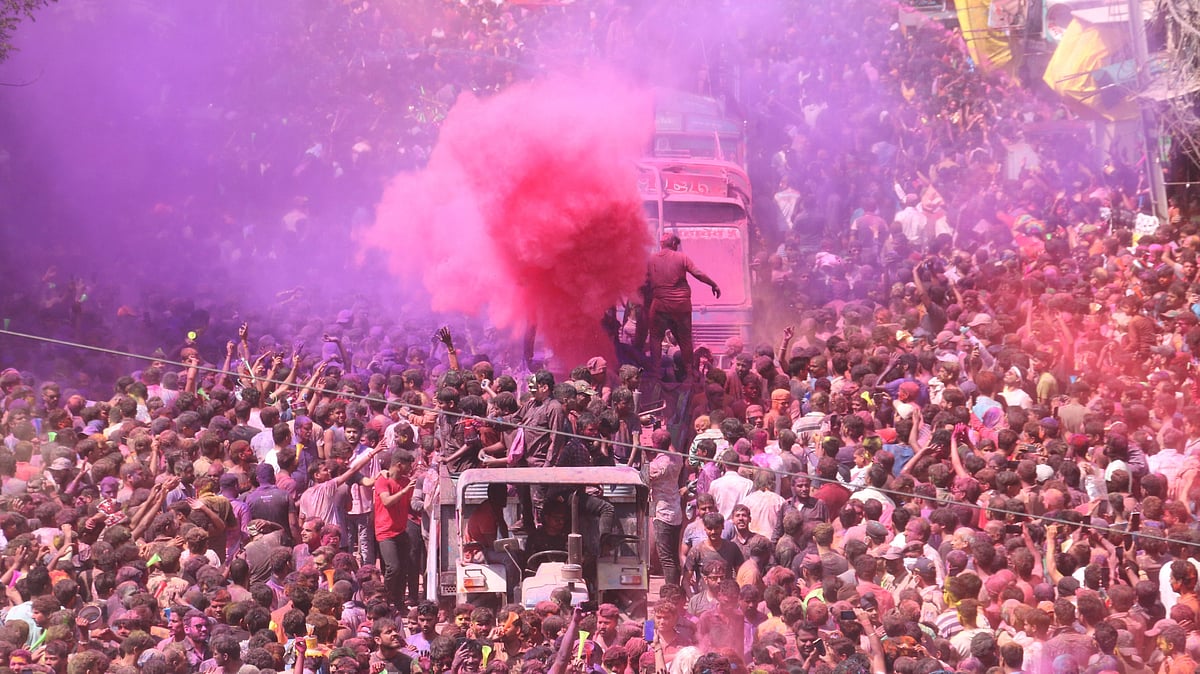
Indore (Madhya Pradesh): Indore’s famous Rangpanchami Ger procession, today recognised as one of the largest colour festivals in India, has its roots in the traditions of the Holkar era.
What is now a massive cultural celebration began in a modest way and gradually evolved into a symbol of the city’s heritage and pride.
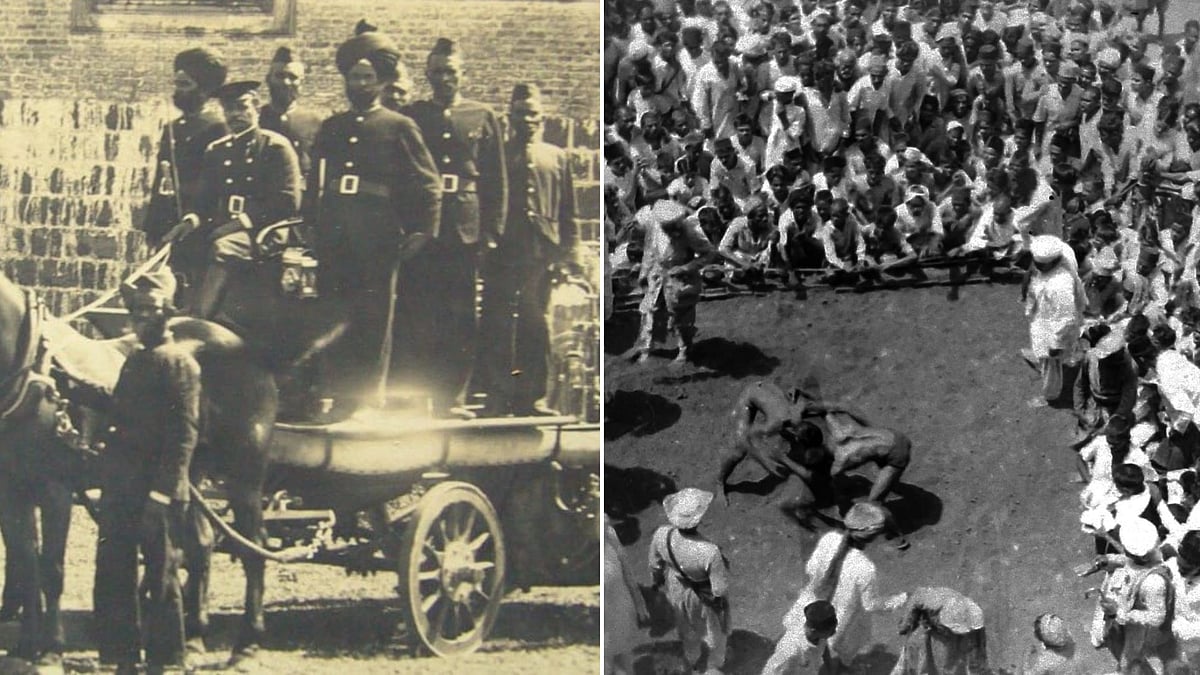
Historian Zafar Ansari said that during the Holkar princely state, Holi celebrations in Indore extended for nearly 15 days, with elaborate festivities centred around the historic Rajwada.. The celebrations included royal rituals, classical music gatherings, wrestling competitions and colourful public festivities that brought together people from across the region.
However, the Rangpanchami Ger procession, which today attracts thousands of participants and spectators, began much later. After India’s independence in the 1950s, the first Ger procession started from Tori Corner in Malharganj. At that time, it was a very small event and consisted of just two bullock carts carrying colours and participants, Ansari said.
Over time, the procession gradually expanded. One of the key factors behind its growth was the participation of Indore’s mill workers. After finishing their shifts, thousands of workers would gather at Tori Corner and join the celebrations, transforming the small procession into a large community event.
Factors behind the expansion of Ger
Another factor that contributed to the expansion of the Ger was Indore’s historic connection with surrounding regions. During the Holkar rule, the state’s boundaries extended to Nimar and parts of Rajputana, and people from these areas also began participating in the Rangpanchami festivities. As participation increased, the procession grew larger every year, Ansari said.
Holi celebrations at Palasia
Earlier Rangpanchami celebrations in Indore also reflected royal traditions. In areas like Palasia, the Maharaja of Rajgarh used Bedford trucks fitted with tanks of natural colours. The Maharaja, along with his friends — including the Maharaja of Sailana and companions from Daly College — would travel through the city spraying colours on people.
In the evening, a royal feast was hosted at Sailana Kothi, where music bands performed and fountains sprayed coloured water.
Key facts about Ger
The Ger procession began in the 1950s after Independence.
The first procession started from Tori Corner, Malharganj.
Initially, it consisted of two bullock carts.
Mill workers played a major role in expanding the celebration.
Participants from Nimar and Rajputana later joined the festivities.
Today, the Ger is one of Indore’s biggest cultural events.
Heritage Insight
Royal influence on Rangpanchami celebrations
Natural colours made from Tesu flowers and herbs.
Bedford trucks carrying tanks of colours used in royal processions.
Evening royal feasts at Sailana Kothi with live band performances.
Colour fountains and musical gatherings formed part of the celebrations.
Then vs Now
Then (1950s)
Small neighbou rhood celebration
Two bullock carts in the procession
Mostly local participation
Now
Thousands of participants
Massive public procession through the city
A major symbol of Indore’s cultural heritage