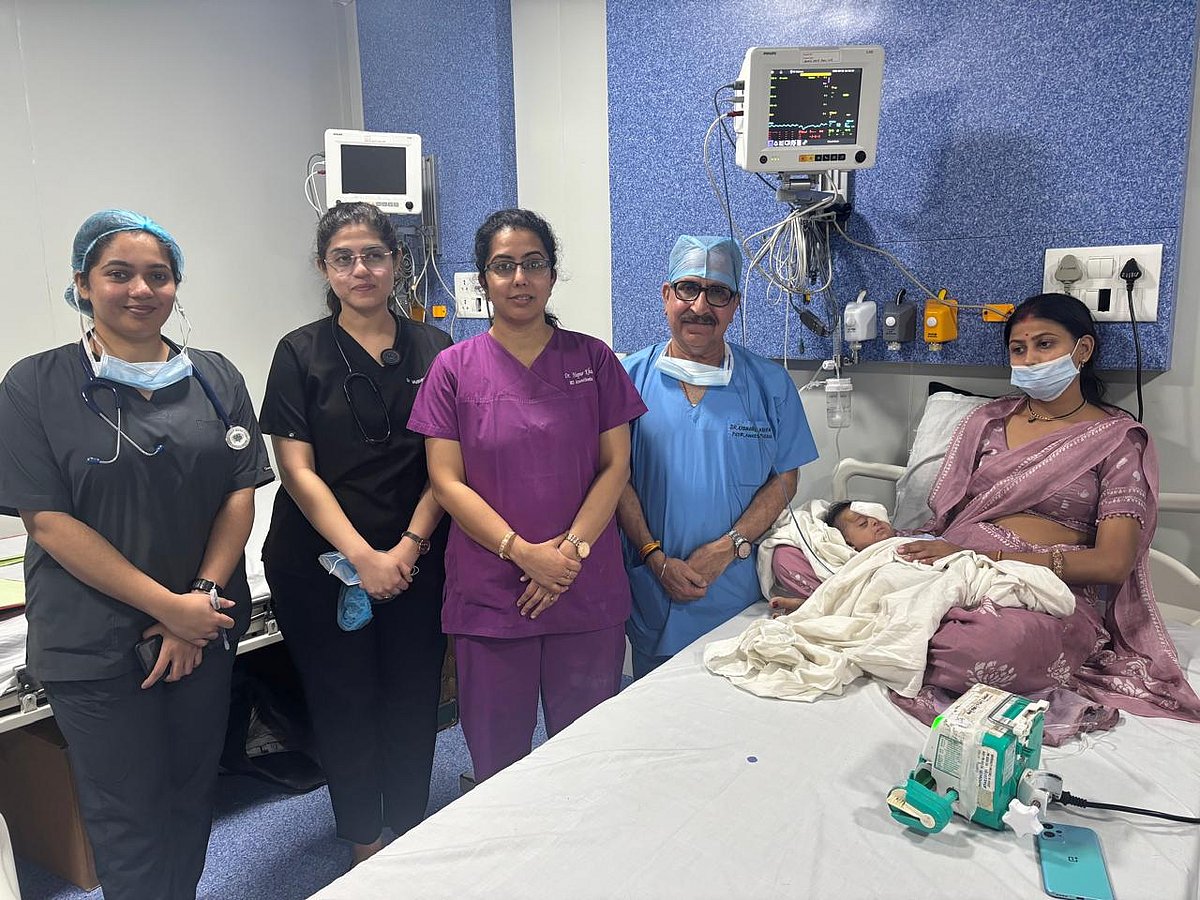
Indore (Madhya Pradesh): In a remarkable medical achievement, doctors at Sri Aurobindo Hospital successfully performed a highly complex surgery on a three-month-old infant suffering from Down syndrome and multiple severe health complications, giving the child a new lease on life.
The infant was battling several critical medical conditions, including Complete Atrioventricular Canal Defect, a large Atrial Septal Defect (ASD), a large Ventricular Septal Defect (VSD) and severe Pulmonary Artery Hypertension. In addition to these life-threatening heart complications, the baby also required urgent cataract surgery, which was considered extremely risky due to the existing medical conditions. Because of the complexity involved, several reputed hospitals had earlier declined to take up the case.
However, when the child was brought to Sri Aurobindo Hospital, the medical team accepted the challenge. After detailed discussions and careful planning involving the anaesthesia and other departments, doctors decided to proceed with the surgery with all necessary precautions.
The cataract surgeries for both eyes were successfully completed within a span of 15 days. The surgical team was led by Professor Dr Nitin Neema, and despite multiple complications, the operations were carried out successfully.
Sharing the information, managing director Dr Mahak Bhandari said performing surgery on a three-month-old infant suffering from Down syndrome along with multiple heart disorders was extremely challenging. The role of the anaesthesia team was particularly critical during the procedure.
The anaesthesia team, led by Professor Dr KK Arora and Assistant Professor Dr Nupur Khare, handled the complex case with exceptional expertise and ensured that every medical and technical aspect was carefully managed, contributing significantly to the success of the surgery.
Exceptional expertise of anaesthesia team
Head of the Anaesthesia Department, Professor Dr Sarita Gohiya, said such rare cases are seldom encountered. The team had to deal with several major anaesthetic and surgical challenges. A detailed and carefully structured anaesthesia plan was prepared to ensure the infant’s safety.
She added that the anaesthesia team demonstrated outstanding expertise by safely managing airway-related challenges and maintaining haemodynamic stability throughout the procedure, ensuring the successful completion of the surgeries.

What is CAVC, ASD, VSD and SPAH?
Complete Atrioventricular Canal Defect (CAVC): A serious birth defect where there is a large hole in the centre of the heart, causing blood from all four chambers to mix abnormally.
Atrial Septal Defect (ASD): A hole in the wall between the two upper chambers (atria) of the heart.
Ventricular Septal Defect (VSD): A hole in the wall between the two lower chambers (ventricles) of the heart.
Severe Pulmonary Artery Hypertension (SPAH): Very high blood pressure in the arteries of the lungs, making it difficult for the heart to pump blood.

