Indore (Madhya Pradesh): Bodies decomposing inside the post-mortem facility, unbearable stench, distressed families and a mortuary freezer gathering dust in a locked room - this is the situation at Indore District Hospital, where a basic facility for preserving human remains has reportedly remained dysfunctional for five to six years.
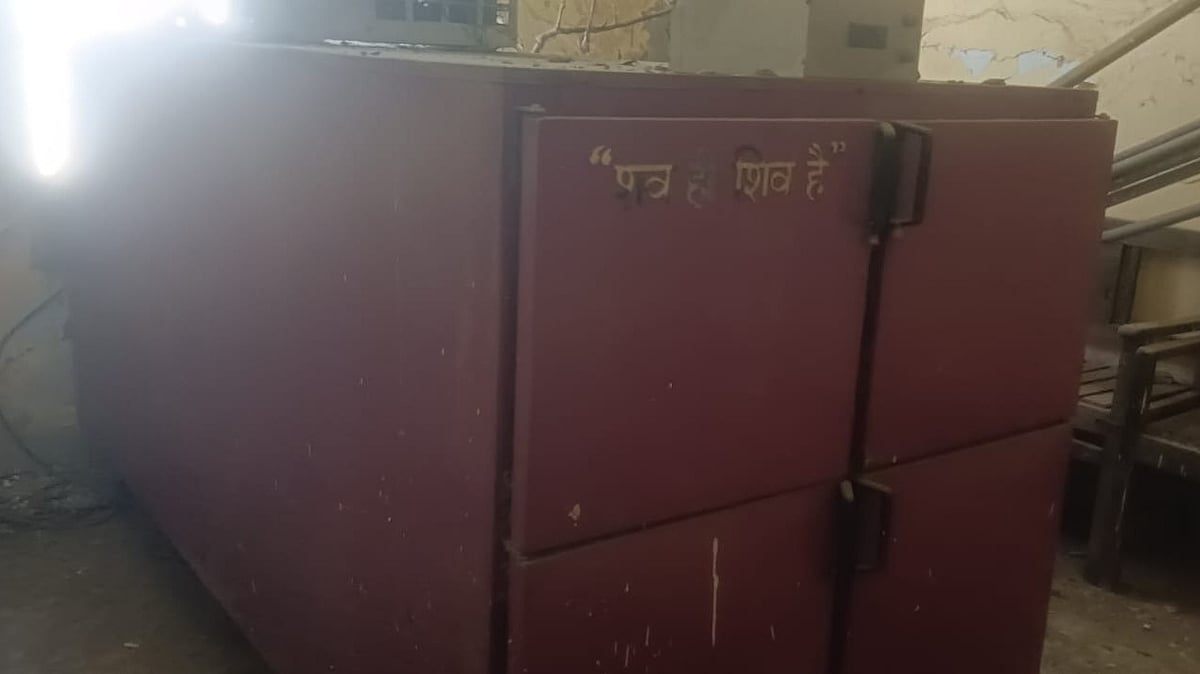
The hospital's four-body freezer, purchased by the government in 2008-09 at a cost of approximately Rs 12 lakh, has been out of order for five to six years. The district hospital conducts post-mortems for 12 urban police stations in western Indore, besides Khudel, Kshipra, Simrol, Hatod and Betma, making the absence of a functioning body preservation facility a serious concern. Instead of being repaired, the freezer was allegedly moved into a room and left unused, leaving the post-mortem facility without adequate refrigerated storage for bodies awaiting identification, investigation or funeral arrangements.
The consequences are particularly severe for unidentified bodies. According to the information provided by hospital staff, such bodies are supposed to be preserved for three days after post-mortem to facilitate identification and investigation, in accordance with court directions. Without refrigeration, however, decomposition accelerates, especially during hot weather, making identification and the handling of bodies increasingly difficult.
A hospital employee, speaking on condition of anonymity, claimed the freezer does not have a major technical fault and could potentially be restored by refilling its refrigerant gas and carrying out routine servicing.
If repaired, the unit could once again preserve four bodies at a time. Yet the facility has remained unavailable while bodies continue to be kept without adequate temperature-controlled storage.
The contrast with Maharaja Yeshwantrao Hospital (MYH) is stark. MYH has freezer capacity for more than 40 bodies, allowing remains to be preserved safely. At the district hospital, the lack of a functioning freezer has turned a preventable infrastructure problem into a recurring challenge for police, hospital staff and grieving families.
Bodies deteriorate before families arrive
Firoz Khan of 'Sultan-e-Indore Ekta Seva Samiti', which assists with the last rites of unidentified people, said his team takes one or two unidentified bodies from the district hospital for cremation almost every day.
By the third or fourth day after post-mortem, he said, many bodies are badly decomposed and emit a strong stench. The organisation has repeatedly complained to hospital authorities about the defunct freezer, but the problem remains unresolved.
In some cases, families identify the deceased only after considerable deterioration has occurred. Police then use photographs taken at the scene to help establish identity, while relatives may avoid approaching the body because of the smell and condition. Some families seek assistance from voluntary organisations to conduct the last rites.
Ice-filled ambulance becomes makeshift mortuary
In one recent case, a young man from another state died in an accident. As his family could reach Indore only after two days, Bhawarkuan police arranged for the post-mortem to be conducted the same day, in consultation with the family. With no suitable preservation facility available, an ambulance operator reportedly packed the body in a transport box filled with ice until the relatives arrived.
The episode highlights the extraordinary workarounds required when a basic mortuary facility is unavailable.
Replacement request still pending
There is a pressing need for a body freezer in the district hospital, particularly to preserve unidentified bodies. A request was sent to Bhopal five to six years ago after the existing freezer broke down, but no order or response has been received. I will send a reminder.
Bhupendra Singh Shekhawat, civil Civil Surgeonrict Hospital Indore