Indore (Madhya Pradesh): For decades, the humble auto-rickshaw has remained one of India's most affordable and accessible means of transport, ferrying students, office-goers and families through the city's streets. In Indore, auto-rickshaws are woven into everyday urban life.
However, drivers who depend on these three-wheelers for their daily bread are now struggling with dwindling passengers and rising expenses, prompting them to demand a level playing field.
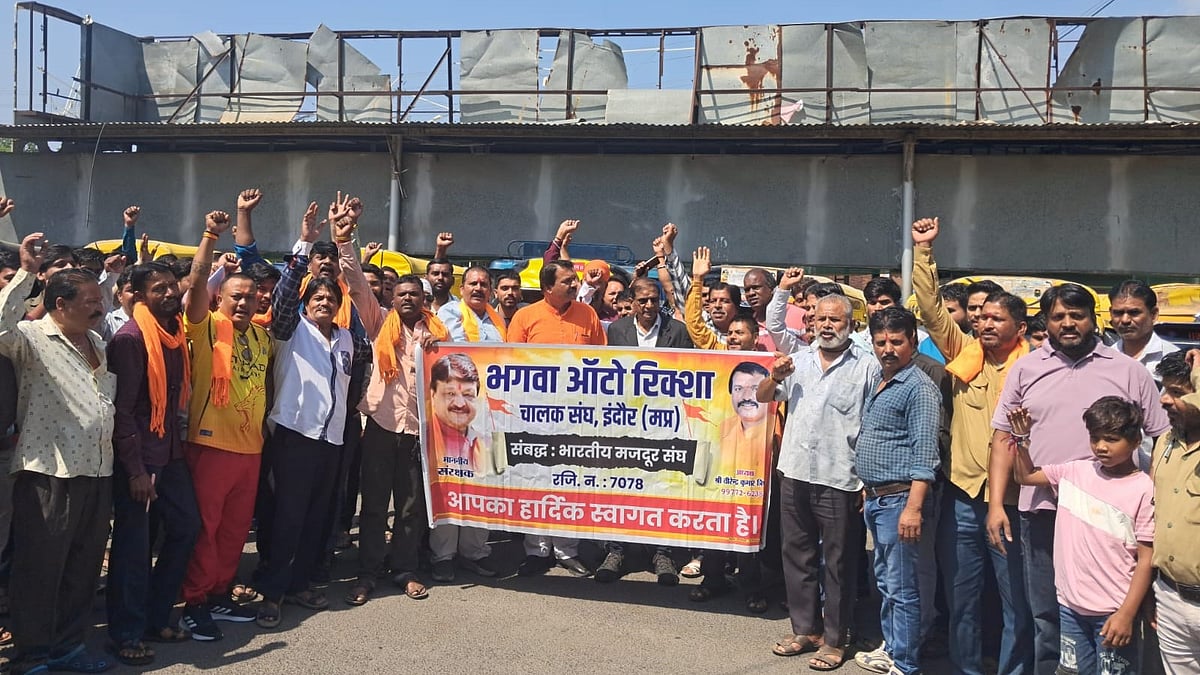
The Bhagwa Auto Rickshaw Drivers' Association staged a protest at Palasia Square on Wednesday, demanding designated routes for e-rickshaws and stricter regulation of bike taxis.
E-rickshaws taking away auto drivers' livelihoods
Association president Virendra Kumar Tripathi said e-rickshaws were taking away the livelihoods of hardworking auto drivers. He appealed to the authorities to ensure that e-rickshaws operate only within their designated zones.
He also claimed that around 60,000 bike taxis, including services such as Rapido, were affecting the rozgar of traditional auto drivers. Tripathi questioned the alleged lack of uniform enforcement, claiming that many two-wheeler taxi operators do not wear uniforms or have yellow number plates.
He alleged that traffic violations by e-rickshaws and bike taxis often go unchecked, while traditional auto drivers face frequent inspections and mounting compliance expenses.
According to him, routine government checks can cost auto drivers up to Rs 3,000, while registration-related challans and expenses can reach Rs 15,000 to Rs 20,000.
Unaddressed demands equal chakka jam
Lal Singh, an auto driver, described the uncertainty of his daily earnings. "We wait at stands from 8 am, but sometimes we do not find a single passenger throughout the day.
We want the government and authorities to be equally strict with bikers and e-rickshaws," he said. Tripathi warned that if the demands remained unaddressed, auto drivers would take to the streets and stage a chakka jam.
For these drivers, the issue extends beyond competition. It concerns the survival of families that depend on an affordable transport service long part of Indore's identity. The association is seeking uniform enforcement of rules across all passenger transport services.