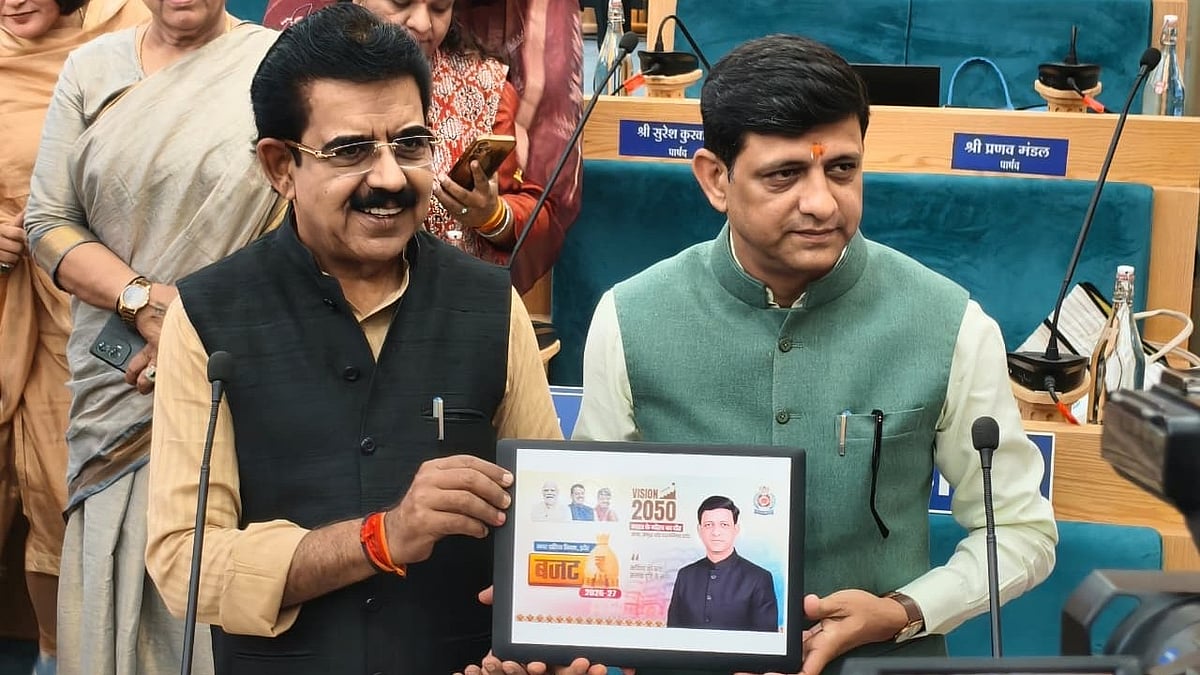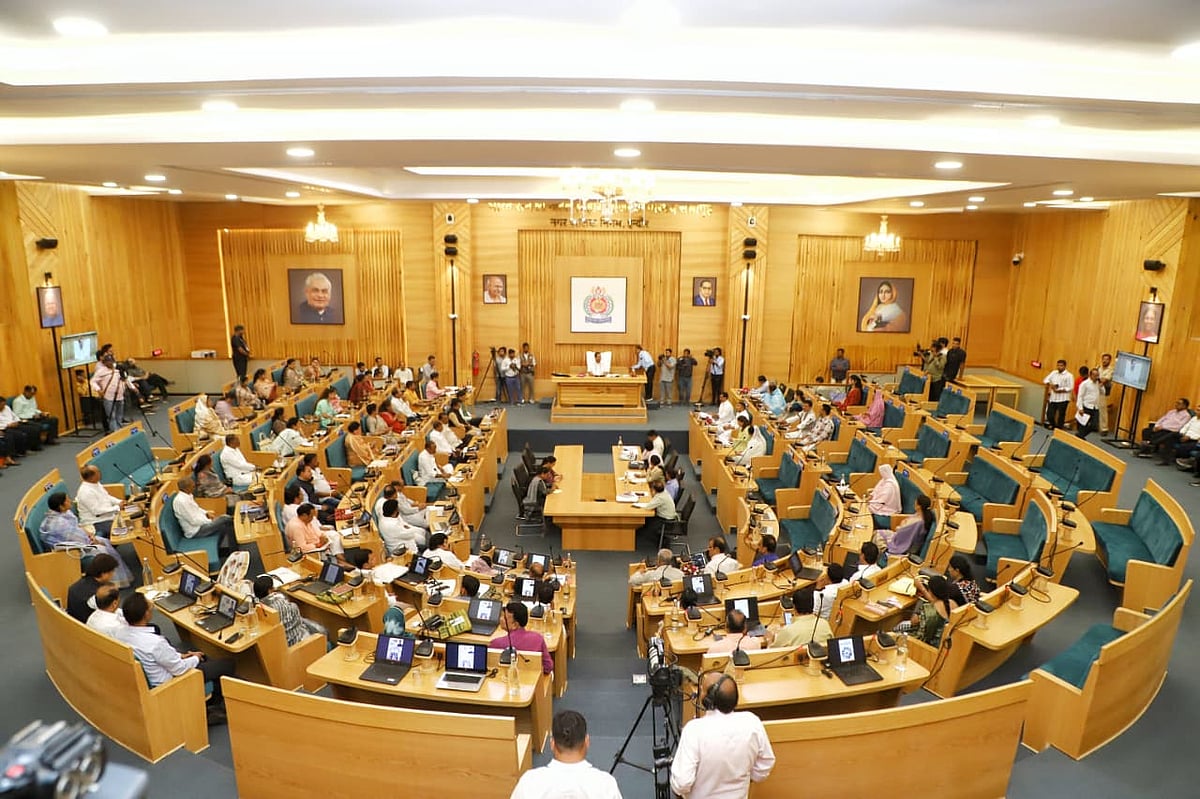
Indore (Madhya Pradesh): In a comprehensive and forward-looking budget presentation, Mayor Pushyamitra Bhargav unveiled the Indore Municipal Corporation (IMC) budget for the financial year 2026-27, outlining an ambitious roadmap for infrastructure, sustainability, and digital governance.
The Rs 8455 crore budget stands out for its strong fiscal discipline, massive development outlay, and major relief to citizens. No new taxes have been imposed, nor has any existing tax been increased.
The budget reflects a balance between rapid urban development and citizen-friendly governance, aligning with the long-term vision, Vision 2050 – Future Ready Indore.
NO NEW TAXES, NO BURDEN ON CITIZENS
The most significant and politically crucial announcement in this year’s budget is that the IMC has neither introduced any new taxes nor increased any existing tax rates. Despite planning projects worth thousands of crore, the corporation has maintained financial stability. The estimated figures include:
• Total budget size: Rs 8455 crore
• Total expenditure: Rs 8443 crore
• Balanced fiscal approach: Minimal deficit with disciplined spending
Bhargav credited citizens for this stability, highlighting that over Rs1,000 crore in revenue from taxpayers has enabled the corporation to fund development without additional burden.
REVOLUTIONARY MOVE: ON-DEMAND GARBAGE COLLECTION
One of the most innovative announcements in the budget is the introduction of a digital, on-demand garbage collection system, inspired by services like Zomato and Swiggy.
How it will work
• Citizens can request garbage pickup via digital platforms.
• Pickup will be scheduled instantly, similar to delivery apps.
• Entire process will be tracked and monitored digitally.
This initiative is expected to improve efficiency in waste collection, reduce garbage accumulation complaints, and enhance citizen convenience.
NEXT-LEVEL WASTE MANAGEMENT PROJECTS
The IMC is expanding its already-strong waste management model to include advanced processing and sustainability.
Key projects
• 200 TPD (tonnes per day) new solid waste processing plant.
• Expansion of Asia’s largest Bio-CNG plant capacity from 550 TPD to 800 TPD
• Waste-to-charcoal project using refuse-derived fuel (RDF)
• Green waste processing plant under public-private partnership (PPP) model
• Zero-waste campus initiatives for institutions
• Smart IoT-based monitoring of public toilets.
Additionally, Choithram Mandi is being developed as a zero-waste market model, and waste materials like cloth, oil, and fibre will be recycled.
INFRASTRUCTURE: ROADS, DRAINAGE & URBAN EXPANSION
Infrastructure remains the backbone of this year’s budget, with extensive expansion already completed and more planned.
Achievements (2025-26):
• 150 km roads constructed.
• 700 km drainage lines laid.
• 150-200 km water supply pipelines installed.
New proposals
• Rs 423 crore for master plan roads.
• Multiple bridges, culverts, and road widening projects.
• Development of internal roads in slums and colonies.
• Integration of 29 nearby villages into city infrastructure.
WATER SUPPLY & SEWER PROJECTS: MASSIVE INVESTMENT
Water and sewer management receive one of the highest allocations in the budget.
Major allocations:
• Rs 647 crore under AMRUT 2.0 for sewer network expansion.
• Rs 300 crore under Namami Gange Phase-1
• Rs 2000 crore for reuse of treated water.
• Rs 291 crore for drainage and sewer maintenance.
Key developments:
• Narmada Project Phase-4 underway.
• New sewage treatment plants (STPs) and pumping stations.
• Sewer lines to be extended across newly added areas.
• Restoration of lakes like Sirpur and Bilawali.
These projects aim to ensure 24x7 water supply and efficient wastewater management.
DIGITAL INDORE: SMART GOVERNANCE INITIATIVES
The IMC is making a strong push towards becoming a fully digital civic body.
Key highlights:
• Development of a dedicated IMC digital portal.
• 30 lakh documents digitised.
• 25,000 homes assigned digital addresses.
• Online tax rebates with up to 50% incentives.
• Digital tracking of civic services.
HEALTH, SPORTS & SOCIAL INFRASTRUCTURE
The budget also prioritises social welfare and public health.
Health: Eighty-five wards to get Chief Minister Sanjeevani Clinics.
Ninety-five clinic units already completed or upgraded.
Sports: New sports complexes across zones.
• Encouragement for local talent.
Public welfare:
• Free and improved sanitation facilities in slums.
• Development of basic infrastructure in underprivileged areas.
GREEN CITY & ENVIRONMENTAL FOCUS
The IMC continues to invest in making Indore environmentally sustainable.
Major initiatives:
• City forest development: 20,000 trees planted.
• Ek Ped Maa Ke Naam campaign: 14.25 lakh plantations.
• Nehru Park swimming pool redevelopment (?4 crore).
• Green belts and urban beautification projects.
• 30,000 sq metre wall painting and 2.5 lakh sq metre wall lighting.
REVENUE PERFORMANCE: STRONG WITHOUT TAX HIKE
The IMC has significantly improved its revenue collection efficiency.
Key figures:
• Rs 571 crore property tax collection.
• Rs 1086 crore total revenue.
• Rs 200 crore recovered through Lok Adalat drives.
CITIZEN PARTICIPATION & PPP MODEL
The budget places heavy emphasis on public participation and partnerships.
• Suggestions from citizens and stakeholders included.
• Public-private partnerships for toilets, waste management, and infrastructure.
• Community contribution model for road development.
KEY PROJECT HIGHLIGHTS
• Fish Aquarium project for tourism and education.
• Fifty smart toilets under PPP model.
• New garbage transfer stations.
• Modern gaushalas development.
• Yoga sheds in every ward (31 completed).
• Digital governance expansion.
• Sewer and drainage mega projects.