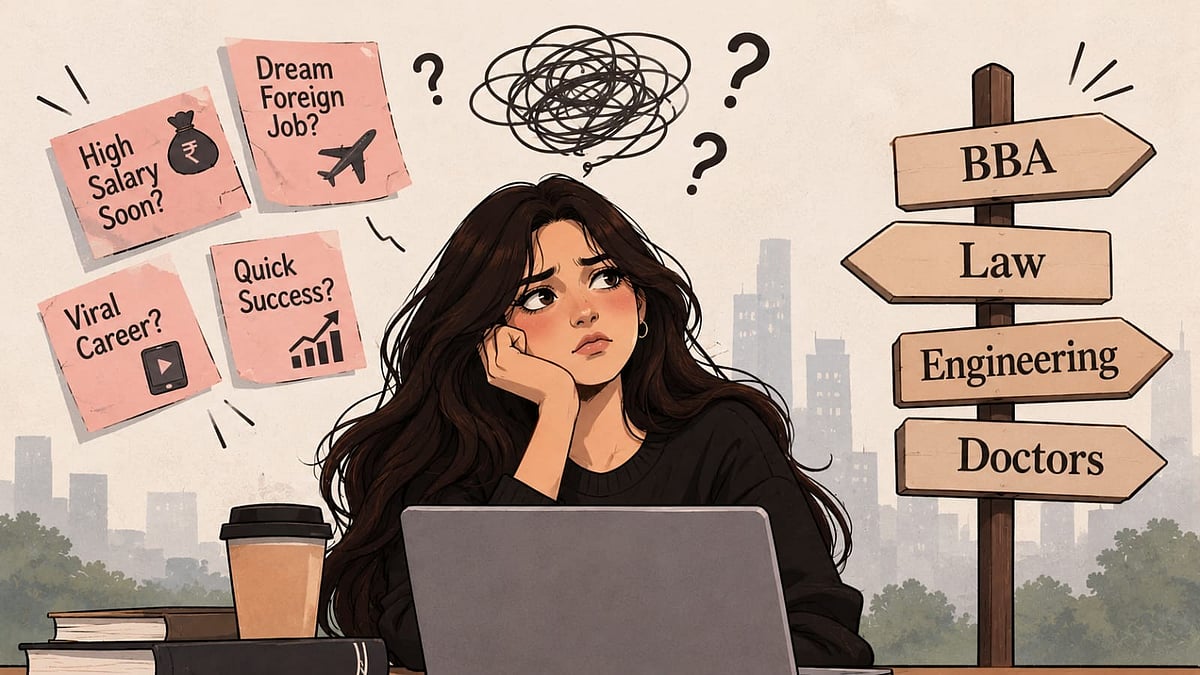
Indore (Madhya Pradesh): Preparing for civil services today, considering an MBA tomorrow and dreaming of entrepreneurship next year - career aspirations among youngsters are increasingly changing.
While exploring professions is healthy, frequently abandoning career paths without understanding their demands is raising concerns among academicians and mental health experts.
The question is whether Gen Z struggles to identify its interests or finds it difficult to commit to one goal.
The attraction of instant success
Dr Sonalee Nargunde, head of the School of Journalism and Mass Communication, has observed a shift in students' concentration since the Covid-19 pandemic. "Many students chase short-term achievements instead of investing in long-term goals.
Social media encourages them to pursue careers that appear successful rather than those matching their aptitude and abilities, resulting in frequent changes in academic and professional aspirations," she said.
Dr Suresh Patidar, head of the School of Commerce at DAVV, believes inadequate skill development contributes to this pattern. "Students sometimes realise a subject's actual demands only after enrolling.
When they encounter the hard work involved, they start looking for alternatives. Social media trends further influence these decisions," he observed.
Dr Mamta Chandrashekhar, principal of Government Atal Bihari Vajpayee College, believes career flexibility is not necessarily problematic, but excessive switching can affect professional growth.
"Youngsters can manage multiple roles, such as working as social media managers while studying law. However, pursuing one discipline systematically develops patience, expertise and professional depth," she said.
The psychological cost of indecision
Psychiatrist Dr Satyakant Trivedi identifies fear of failure, identity struggles, social comparison and FOMO (fear of missing out) as possible contributing factors. "Some youngsters repeatedly reconsider decisions, fearing they have chosen the wrong career or missed a better opportunity.
Keeping multiple options open may provide temporary relief but eventually weaken confidence and commitment," he explained. He added that career changes alone do not indicate mental illness, although persistent anxiety affecting daily functioning warrants professional assessment.
Clinical psychologist Suneeta Gupte recommended early aptitude testing, career counselling and interaction with professionals to understand different fields before making career decisions.
Experts believe the solution lies in informed choices, practical exposure and developing patience to build expertise rather than constantly chasing the next attractive opportunity.