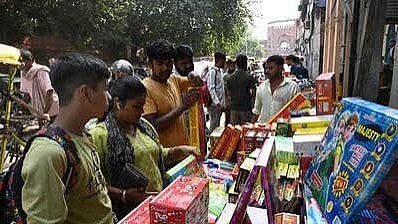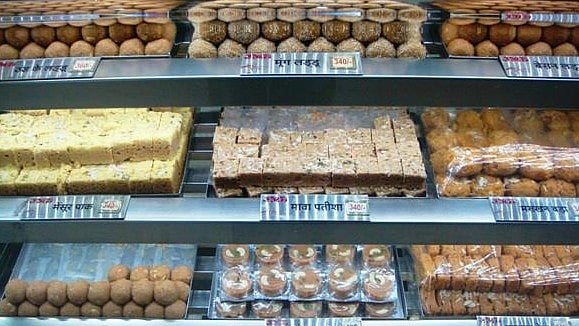
Indore (Madhya Pradesh): Celebrating Diwali with sweets and savoury snacks will cost more this year, with prices across Indore rising by 10-15% compared to last year. From 'kaju katli' and 'khoya'-based sweets to popular 'namkeen' varieties, shoppers will have to loosen their purse strings as rising raw material, fuel and packaging costs push up the overall cost of production.
'Kaju katli', which sold for around Rs 900 per kg last year, is now priced at Rs 1,100-1,200 per kg. Similarly, 'khoya'-based sweets that previously cost around Rs 500 per kg are now selling for Rs 600-650 per kg. 'Namkeen' prices have also climbed from Rs 240-260 per kg to Rs 300-350 per kg.
Despite the increase, sweet and 'namkeen' traders remain hopeful that festive demand will stay strong and sales will not suffer significantly.
Anurag Bothra, secretary of the Indore Namkeen-Mithai Association, said the cost of raw materials had been rising steadily, squeezing traders' profit margins.
Although costs had increased before 'Raksha Bandhan', traders refrained from raising prices at the time, keeping the festive season in mind. With Diwali approaching and costs continuing to rise, they have now been compelled to revise their rates according to their individual production expenses.
From milk to packaging, everything costs more
Rajendra Dhanotiya, another sweet shop owner, said higher prices of milk, sugar and dry fruits had significantly increased the cost of preparing sweets. Rising commercial LPG cylinder prices and higher PNG costs for businesses connected to piped natural gas have added to the burden.
Packaging has become another major expense. Sweet boxes that previously cost Rs 12 now cost Rs 18, while the price of carry bags has risen from Rs 3 to Rs 7, further adding to the cost of doing business.
According to sweet shop owners, the cumulative impact of these increases has made price revisions unavoidable.
Traders banking on festive demand
Diwali remains the biggest sales season for sweet and 'namkeen' businesses. Apart from household consumption, customers buy sweets and snacks as gifts for relatives, friends and acquaintances, making the festival crucial for retailers.
Traders expect this traditional demand to cushion the impact of higher prices. However, for consumers, the festive shopping bill is likely to be noticeably higher than last year, as even a box of sweets or a kilogram of 'namkeen' now comes at a steeper price.
Raw Material and Packaging Costs on the Rise
Item Earlier Price Current Price
Milk (per litre) Rs 62 Rs 70
Ghee (per kg) Rs 550 Rs 660
Sugar (per kg) Rs 55 Rs 72
Commercial Gas Cylinder Rs 1,800 Rs 2,900
Packaging Box (per box) Rs 12 Rs 18
Carry Bag (per bag) Rs 3 Rs 7
Source: Sweet shop owners