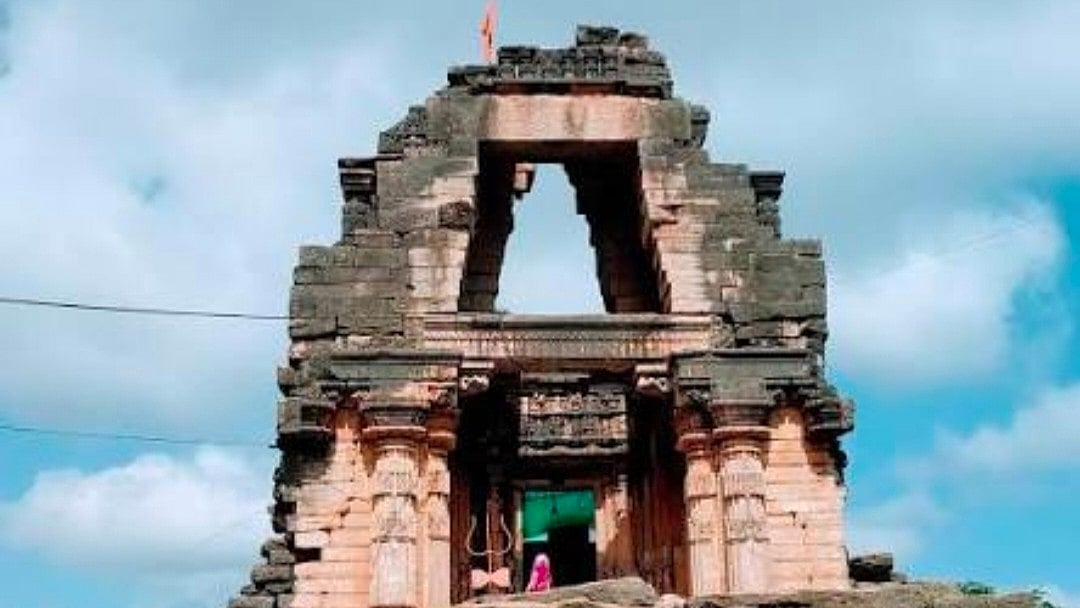
Manawar (Madhya Pradesh): Despite being declared a protected monument by the Archaeological Survey of India (ASI), the centuries-old Devara Shiva Temple on the banks of the Narmada River continues to await restoration, with locals alleging that the historic structure is steadily deteriorating due to neglect.
Believed to have been built during the Parmar era, the temple is known for its architectural significance, religious importance and massive Shivalinga.
The shrine attracts large numbers of devotees during Mahashivratri, the holy month of Shravan and other religious occasions, when pilgrims offer Narmada water to Lord Shiva.
Residents said hopes for conservation were raised after the ASI declared the temple a protected monument on Dec 6, 2022 and announced plans for its preservation and development.
However, they claim no major restoration work has begun since then. Historians note that although the temple's spire was damaged during past invasions, the structure still retains its historical identity and cultural value.
However, natural erosion and wear have reportedly affected several parts of the monument.
Locals and devotees have urged the district administration and archaeological authorities to begin restoration work at the earliest.
They also pointed out that no security personnel have been deployed at the site despite its protected status, raising concerns over the future of the region's cultural and religious heritage.