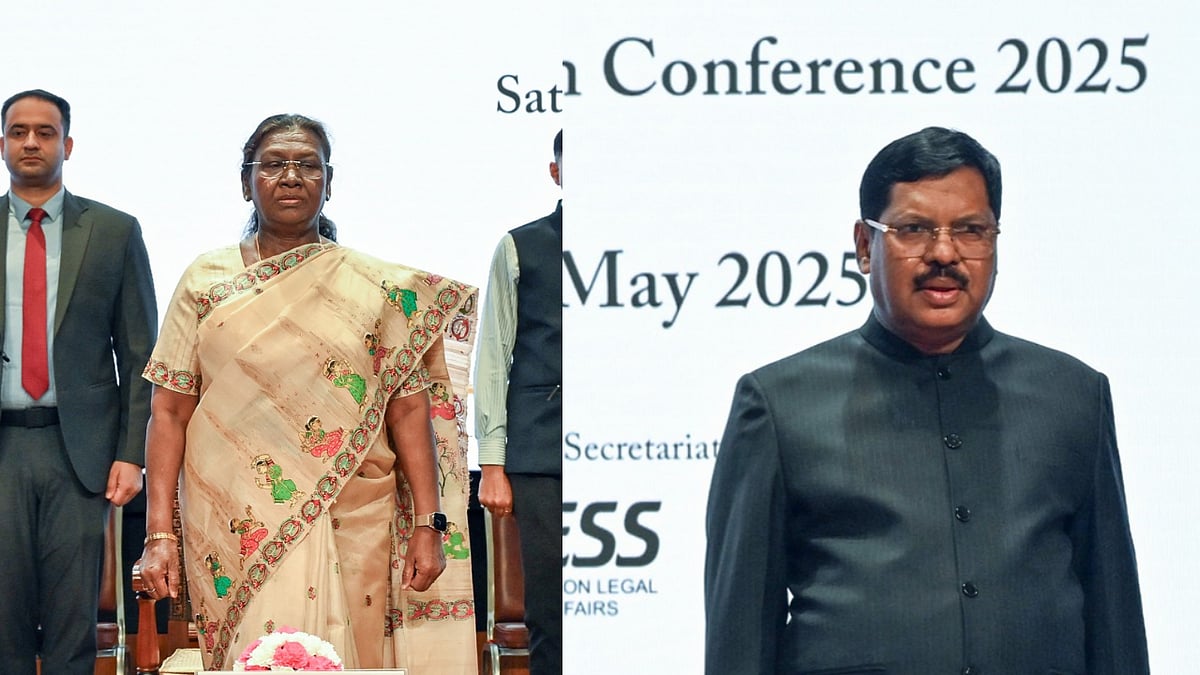
Former Chief Justice of India (CJI) BR Gavai has raised questions over alleged bias in recent Supreme Court collegium recommendations for judicial appointments and transfers, writing to President Droupadi Murmu on November 27, 2026, and calling for greater representation of marginalised communities in the higher judiciary.
In his letter, Gavai, who served as CJI from May 14 to November 23, 2025, described the recent recommendations as reflecting a “disturbing disregard” for merit, diversity and inclusivity. Writing in his capacity as a concerned citizen, he alleged that the selections appeared to be driven by an attempt to “appease and reward a single community”.
He claimed that candidates from “one particular section of the society” were being favoured for elevation, while Scheduled Castes (SCs), Scheduled Tribes (STs), Other Backward Classes (OBCs), minorities, women and even members of other forward communities were being overlooked.
Gavai Questions Representation Of Communities In Higher Judiciary
Although Gavai did not identify the community he was referring to, he pointed to a group that accounts for less than 5% of India's population but has secured more than 40% representation in the Supreme Court, according to his letter.
He further cited historical data from Professor George Gadbois's study, which found that members of the same community held over one-third of Supreme Court judgeships between 1950 and 1989, despite their relatively small share of the population.
Gavai argued that the representation of certain sections in the higher judiciary had increased substantially in recent years, raising concerns over whether appointments were being made in keeping with the principles of diversity and equal opportunity.
Appointment Data Highlights Representation Gap
The former CJI also referred to figures shared by Union Law Minister Arjun Ram Meghwal in the Rajya Sabha in March 2025. Of the 715 judges appointed to various High Courts since 2018, only 22 belonged to Scheduled Castes, 16 to Scheduled Tribes, 89 to OBCs and 37 to minority communities. The remaining appointments were largely from the general category.
Separately, data covering appointments between January 2021 and January 2026 indicated that forward communities accounted for close to 80% of appointments, while OBC representation remained below 14%, despite the community constituting an estimated 40-50% of India's population.
Questions Recent Transfers Of High Court Judges
Gavai also raised concerns over certain recent transfers of High Court judges, questioning the circumstances surrounding some of the decisions.
He referred to instances in which a Chief Justice was transferred to a smaller High Court, allegedly to make way for another appointment. He also pointed to a judge who, after being transferred on what Gavai described as punitive grounds, was subsequently appointed Chief Justice of a prominent High Court.
Gavai acknowledged that he had been part of some of the collegium decisions he questioned but said he would not elaborate on their reasons, citing propriety.
Seeks President Murmu's Intervention Under Article 124(2)
In his letter, Gavai argued that the collegium's primacy in judicial appointments does not make it immune from accountability. He also highlighted the President's constitutional role under Article 124(2), which provides for the appointment of Supreme Court judges by the President.
He urged President Murmu to intervene to ensure adequate representation of all sections of society in the higher judiciary.
Copies of the letter were also marked to Prime Minister Narendra Modi and Union Law Minister Arjun Ram Meghwal.
Gavai's intervention brings renewed attention to the debate over diversity, representation and transparency in the collegium system, which plays a central role in recommending appointments and transfers in India's higher judiciary.

