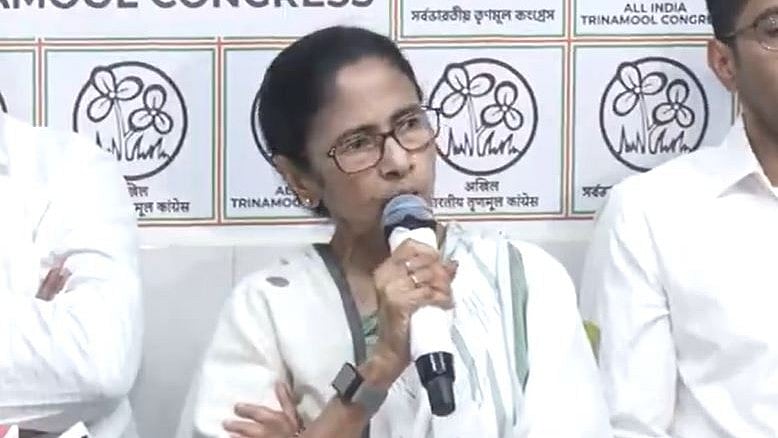
West Bengal’s election outcome has triggered a constitutional debate after Mamata Banerjee refused to accept defeat and step down as Chief Minister, despite her party losing the mandate. The BJP secured a sweeping victory with 207 seats in the 293-member Assembly, while the Trinamool Congress (TMC) was reduced to 80. Banerjee herself lost from Bhabanipur to Suvendu Adhikari.
In a press conference, Banerjee asserted that she would not resign, claiming a “moral victory” despite the official results. This raises a key question: what happens if a Chief Minister refuses to quit after losing an election?
Under Article 164 of the Indian Constitution, the Chief Minister holds office at the pleasure of the Governor. This means the Governor has the authority to dismiss a Chief Minister who has lost majority support but refuses to resign. In such a scenario, the Governor can also call a special session of the Assembly and direct a floor test.

Given the numbers, with the BJP comfortably above the majority mark and TMC far behind, proving majority in the House would be nearly impossible for Banerjee. If she fails to do so, she would be constitutionally bound to step down.
If the situation escalates into a governance crisis, it could be deemed a failure of constitutional machinery. In such cases, the Governor may recommend President’s Rule under Article 356, transferring control of the state to the Centre.
Ultimately, constitutional provisions ensure that the people’s mandate prevails over political resistance.
