
As air pollution continues to blanket northern parts of India, an X user's post describing the situation as living in a "post-apocalyptic dystopian novel" has drawn attention to the worsening air quality and the growing normalisation of smog across the region.
Sharing photographs of Jaipur's skyline covered in a thick layer of haze, the user, Ravi Handa (@ravihanda), expressed disbelief at how such conditions have become an accepted part of everyday life.
"Never amazes me that in Jaipur, or rather north India, this passes off as normal," the user wrote, questioning how residents have grown accustomed to breathing heavily polluted air during this time of the year.
The post also showed an air quality index (AQI) screenshot showing a reading of 227, categorised as 'Severe', with PM2.5 levels at 151 micrograms per cubic metre (µg/m³) and PM10 at 183 µg/m³. The figures, alongside the photographs of the city engulfed in smog, highlighted the deteriorating air quality in Jaipur.
Jaipur's Smoggy Skyline Sparks Conversation On Normalisation Of Pollution
The photographs shared by Handa showed buildings and the city skyline barely visible through a thick layer of grey haze.
The post resonated with several social media users, many of whom expressed concern over the recurring pollution crisis. While some reacted with frustration and disbelief, others resorted to dark humour and sarcasm to describe the situation.
Some users compared breathing polluted air to passive smoking, while others joked about people getting their daily dose of pollutants simply by stepping outdoors. A few also pointed to how residents often realise the severity of the problem only after experiencing cleaner air in other countries.
Others expressed resignation, arguing that severe pollution has increasingly become an expected feature of winter in northern India rather than an emergency that demands sustained attention.
Why Air Pollution Worsens Across North India In November
The beginning of November marks the onset of the annual winter pollution spike across northern India, particularly across the Indo-Gangetic Plain, which includes Delhi-NCR, Punjab, Haryana, Uttar Pradesh and parts of Rajasthan.
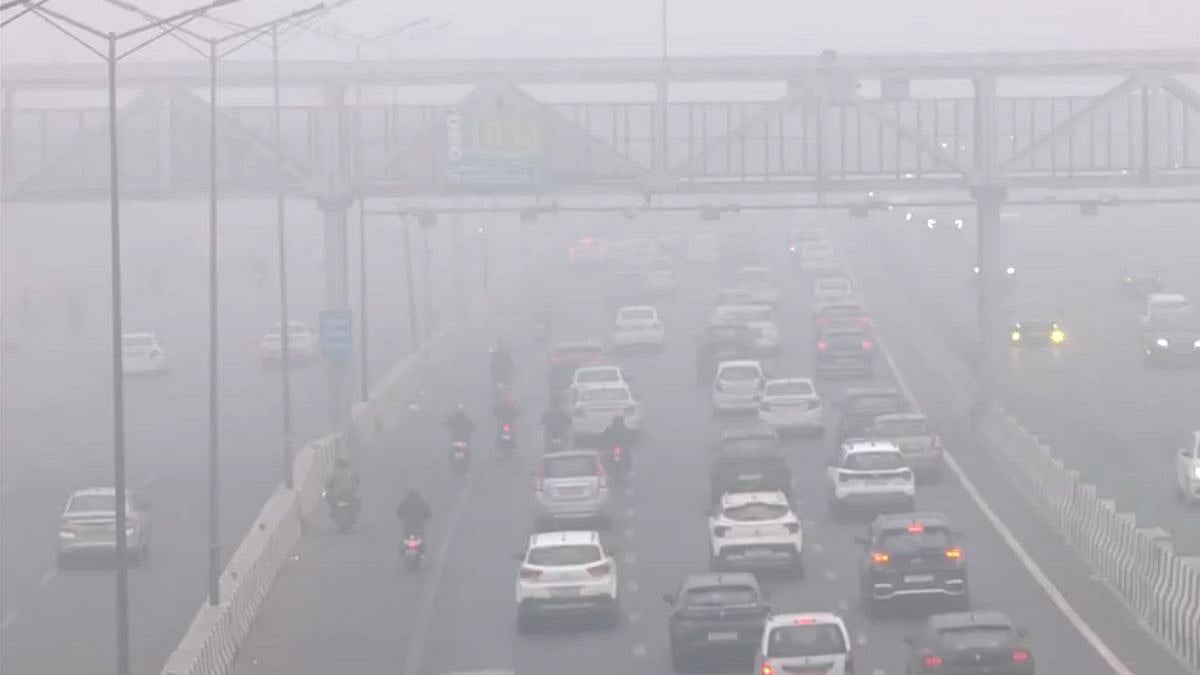
The deterioration in air quality is linked to a combination of seasonal and human-driven factors. As temperatures fall, temperature inversions trap pollutants closer to the ground, preventing them from dispersing easily.
Emissions from vehicles, industrial activities, construction dust and agricultural stubble burning further contribute to the rising pollution levels. Smoke from seasonal celebrations can also add to the existing pollution burden.
These conditions often result in thick smog, reduced visibility and deteriorating air quality across several cities. The situation can become particularly concerning between November and January, when unfavourable weather conditions allow pollutants to accumulate.

