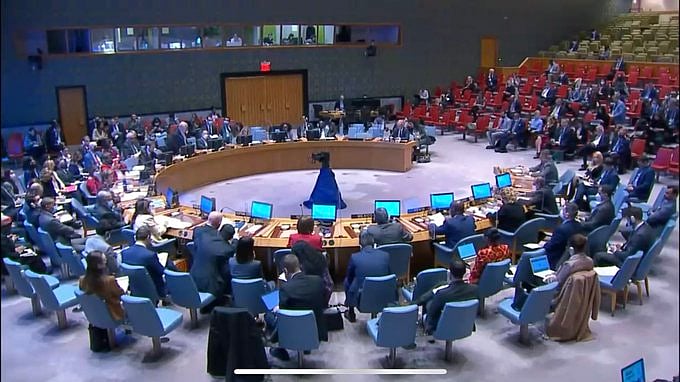
India has sharply criticised the lack of progress in reforming the United Nations Security Council (UNSC), saying the process cannot be held hostage by the "narrow, divisive interests" of a handful of member states.
The UN General Assembly (UNGA) on Tuesday decided to roll over the Inter-Governmental Negotiations (IGN) on Security Council reforms to its 81st session, continuing an annual process that has now entered its 18th year without any concrete outcome. Negotiations on reforming the 15-member Security Council will resume when the 81st session of the UNGA begins in September.
India joined the consensus to adopt the oral decision but expressed strong disappointment over the absence of tangible progress and attempts by some member states to delay meaningful reforms.
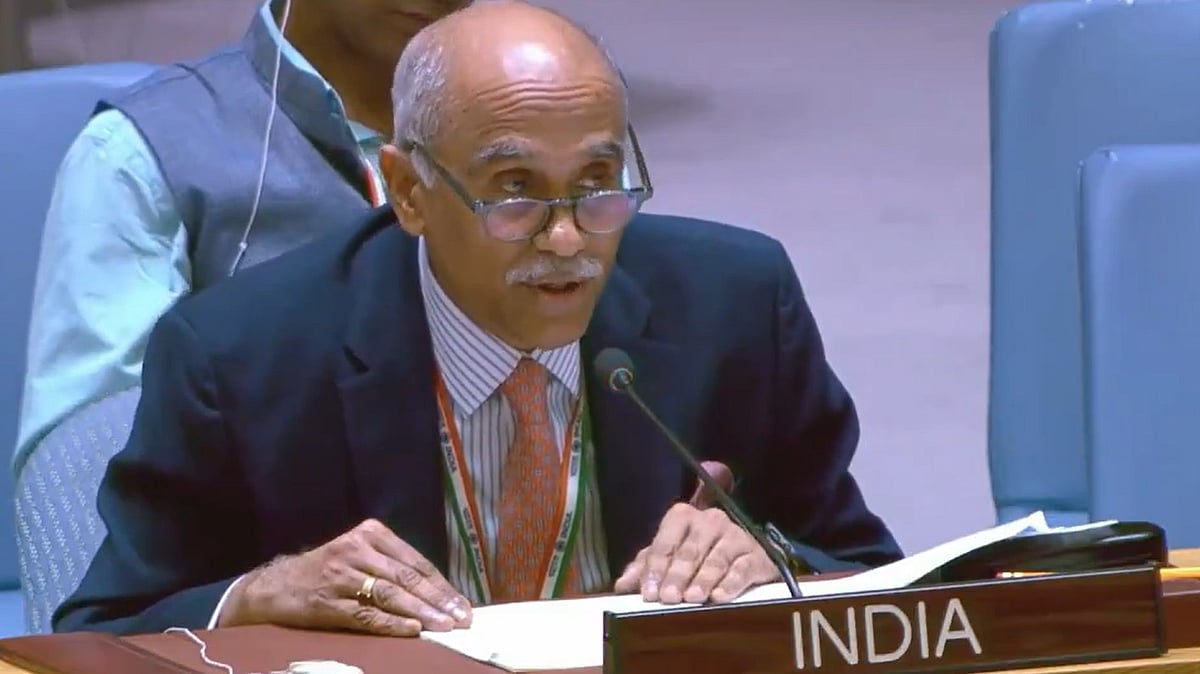
"The 80th IGN session, like the previous sessions, has not been successful in forging any outcomes or initiatives that could pave the way for implementing real reforms. The cluster debates have largely been a reiteration of known positions of member states and groups," India's Permanent Representative to the UN, Ambassador Parvathaneni Harish, said.
'No liberation in sight' after 17 rounds of negotiations
Addressing the General Assembly after the adoption of the rollover decision, Harish invoked Indian philosophy to underline the prolonged nature of the reform process.
"The IGN has been through seventeen cycles already. Sadly, however, there is no liberation in sight. How much longer should the world wait?" he said.
Harish said repeated discussions without concrete outcomes were weakening confidence in the UN's ability to address global conflicts.
"There is a palpable sense of disappointment among Member States and global citizenry regarding the inability of the Security Council to meaningfully intervene in conflicts across the globe. The need for comprehensive UN Security Council reforms cannot be more pronounced, and more urgent. It cannot be held hostage by the narrow, divisive interests of a select few Member States," he said.
Also Watch:
He stressed that meaningful reform requires text-based negotiations with clearly defined timelines and milestones.
India backs expansion of permanent and non-permanent UNSC seats
India reiterated that genuine Security Council reform must include expansion in both the permanent and non-permanent categories, with greater representation for the Global South.
"India stands fully ready to contribute to this endeavour. It is our sincere hope that the 81st IGN session would mark a new beginning on this count," Harish said.
Earlier this month, External Affairs Minister S Jaishankar launched India's campaign for a non-permanent seat on the Security Council for the 2028-29 term. Elections for the seat will be held in June next year, with India and Tajikistan contesting the single Asia-Pacific Group seat.
India last served as a non-permanent member of the Security Council in 2021-22, its eighth term on the body.
Reaffirming its long-standing position, India cautioned that expanding only the non-permanent category would amount to a failed reform because it would not "fundamentally" alter the decision-making structure of the five permanent members.
The Uniting for Consensus (UfC) group, comprising Canada, Pakistan, Türkiye and Italy, has proposed expanding the Security Council only in the non-permanent category. The group has advocated a 27-member Security Council without increasing the number of permanent members.

