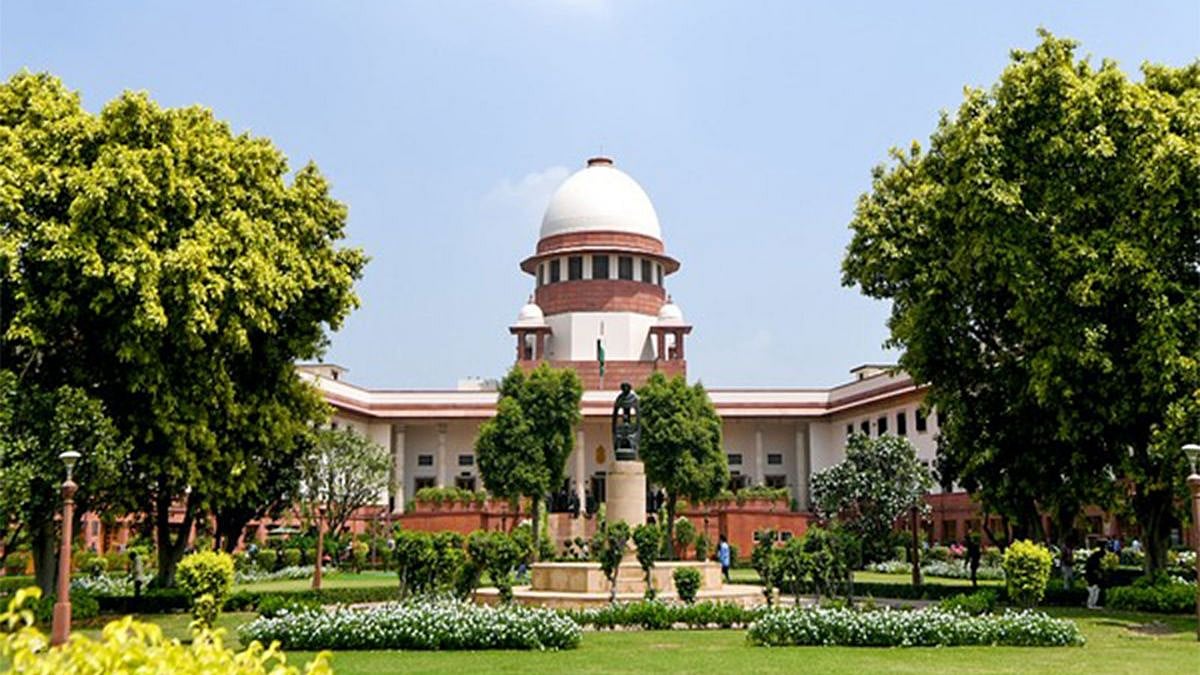
The Supreme Court has directed states to identify and demarcate wetlands and other water bodies, stressing that their protection is essential to the right to life under Article 21 of the Constitution.
The Supreme Court has expanded its directions on the identification and demarcation of wetlands to cover all water bodies across the country. The court stressed that protecting these water sources is essential as they serve the drinking water needs of people.
A bench of Justices Aravind Kumar and Vipul M Pancholi issued the directions in an October 12 order while hearing petitions seeking the preservation of wetlands. The court observed that it could not ignore the consequences of leaving precious water bodies unprotected.
Drinking Water Protection A Constitutional Concern
Highlighting the importance of preserving water bodies, the bench linked their protection to the fundamental right to life guaranteed under Article 21 of the Constitution.
“The water bodies being the source of drinking water is precious and would encompass within the four corners of right to live (Article 21), as guaranteed under the Constitution of India,” the bench said.
The observation underlines a larger concern that protecting wetlands is not merely an environmental issue but also a matter of safeguarding an essential resource for people.
States Asked To Submit Reports Within Four Weeks
The court directed all states to submit affidavits within four weeks, detailing the progress of ground truthing and demarcation of wetlands and other water bodies. Ground truthing involves physically verifying water bodies identified through satellite mapping, while demarcation involves marking their actual boundaries.
“We call upon all the states to file the affidavit indicated hereinabove within an outer limit of four weeks from today indicating the status of ground truthing being done (of wetlands) including other water bodies,” the bench said, Hindustan Times reports.
The court also asked states and wetland authorities to explain the methods they would use to complete the exercise. The matter will be heard again on November 16.
Nine Years On, Wetland Mapping Remains Incomplete
The court expressed concern that ground truthing and demarcation remained incomplete even nine years after the Wetlands (Conservation and Management) Rules, 2017, came into force.
In December 2024, the Supreme Court had directed states and Union Territories (UTs) to complete ground truthing and physical demarcation of all wetlands identified in the 2021 Space Applications Centre (SAC) Atlas within three months.
Through subsequent orders, the court sought updates from states on the physical verification of wetlands identified in the Atlas prepared under the Indian Space Research Organisation (ISRO) and the marking of their boundaries.
However, petitioners, including birder and environmentalist Anand Arya, informed the court that states and UTs had failed to complete the demarcation exercise.
Some Wetlands Cannot Be Traced, States Tell Court
Several states informed the Supreme Court that they could not trace certain wetlands identified in the 2021 Atlas. Others argued that some of these water bodies did not require protection because they fell outside the definition of wetlands under the 2017 Rules.
The responses raised questions about the progress of wetland conservation and the challenges involved in identifying and protecting water bodies across the country.
Taking note of the situation, the bench observed that the court could not remain a mere spectator or ignore the consequences of leaving water bodies unprotected.
Tamil Nadu's Four-Stage Model Draws Court's Praise
The Supreme Court described Tamil Nadu as a model state for adopting a four-stage process to identify and demarcate wetlands. It directed other states and wetland authorities to follow the approach and submit compliance affidavits within four weeks.
Tamil Nadu has 28,898 wetlands, of which it has demarcated 2,614 so far. The state sought six months to identify the remaining wetlands.
Considering the work undertaken by Tamil Nadu, the court made an exception and allowed the state four months to complete the demarcation of all identified wetlands.
Over 5.55 Lakh Small Wetlands Also Need Attention
The Supreme Court also reiterated its earlier directions concerning smaller wetlands that may otherwise remain outside conservation efforts.
In August 2025, the court had noted that the Wetlands Atlas identified approximately 5,55,557 wetlands measuring less than 2.25 hectares each. It had asked states to explain the steps being taken to protect them.
In its October 12 order, the court again directed states to identify, specify and mark these smaller wetlands.
The latest directions make it clear that the protection of water bodies cannot remain limited to those covered by existing wetland definitions. With states now required to report on their progress, the focus will be on whether the identification and demarcation exercise translates into protection on the ground.

