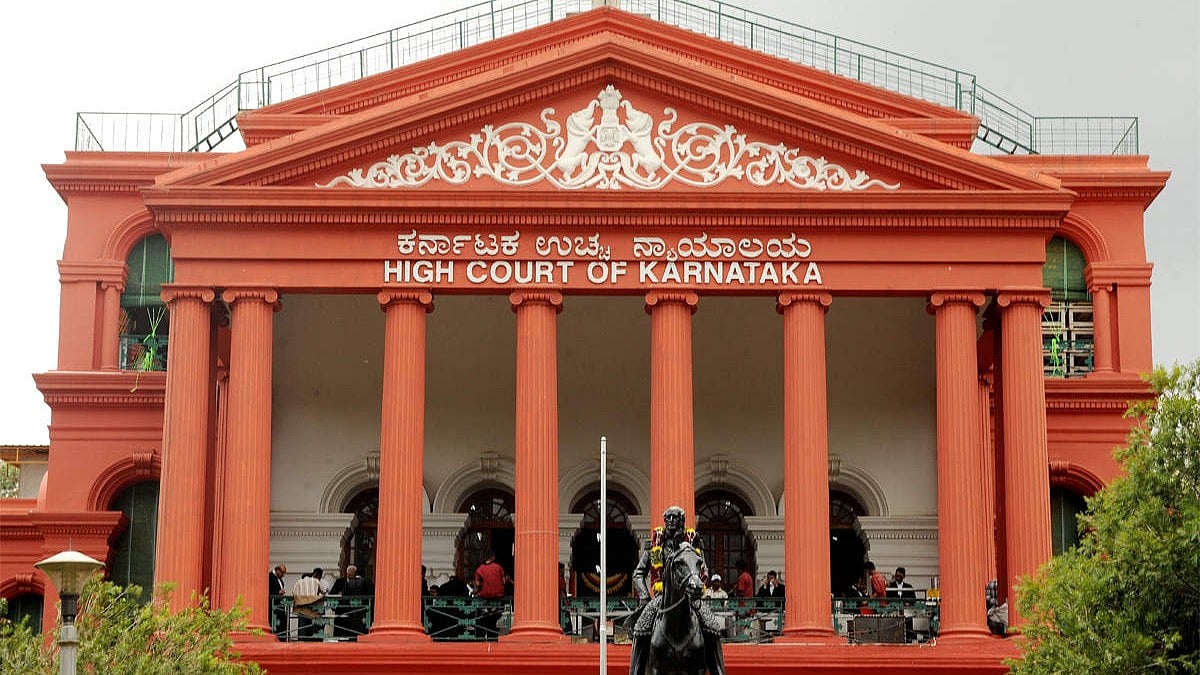
The Karnataka High Court has quashed a First Information Report (FIR) registered against the administrator of an X account for allegedly spreading communal disharmony by reposting a news report about a stalking incident in Puttur. The court also issued guidelines to prevent police from registering multiple FIRs over the same incident and making arrests without following legal safeguards.
Justice M Nagaprasanna criticised the police for registering successive FIRs over the same incident without examining whether an offence had been committed. The court observed that such actions raised serious concerns about the misuse of police powers and the failure to follow statutory and constitutional safeguards, Live Law reports.
Court Questions Multiple FIRs Over Same Incident
The court expressed shock over the registration of multiple FIRs by the same police station in connection with a single incident. It questioned how police could register cases without establishing the essential ingredients of an offence or conducting a preliminary inquiry where appropriate.
Referring to Supreme Court judgments in Satender Kumar Antil and Nalla Balu, the court said the police must not register cases mechanically or exercise their powers indiscriminately. The ruling highlights the importance of protecting individuals from unnecessary criminal proceedings, particularly when social media posts merely share information already available in the public domain.
Six Key Guidelines For Police
To prevent arbitrary police action, the High Court laid down six guidelines for police authorities.
1. Examine allegations carefully: Police must determine whether a complaint contains the essential ingredients of an offence. Simply mentioning provisions of criminal law is not sufficient to register a case.
2. Avoid multiple FIRs: When complaints concern the same incident or identical social media content, police must check whether an FIR has already been registered. A fresh case should not be registered merely because another person has filed a complaint.
3. Consider preliminary inquiries: Police should consider conducting a preliminary inquiry under Section 173(3) of the Bharatiya Nagarik Suraksha Sanhita (BNSS), wherever legally permissible. However, such inquiries must not be used to avoid registering an FIR when the law requires one.
4. Verify grounds for communal disharmony charges: Before invoking Section 353(2) of the Bharatiya Nyaya Sanhita (BNS), police must establish whether the statement meets the legal requirements of the offence, including the necessary intent and its connection to particular communities or groups. Mere criticism is not sufficient.

5. No automatic arrests: The registration of an FIR does not automatically justify an arrest. Police must follow Section 35 of the BNSS and the principles laid down by the Supreme Court in Arnesh Kumar v. State of Bihar.
6. Ensure accountability: The Director General and Inspector General of Police, Karnataka, must communicate these principles to all jurisdictional police officers and ensure compliance.What Led To The Case?The case involved Sandeep Kumar, administrator of the X account ‘Karnataka Portfolio’, who reposted a news report about an alleged stalking incident in Puttur in July 2026.According to the case details, a woman was allegedly stalked and threatened with a knife by six youngsters travelling in an SUV. The incident was reportedly captured on CCTV cameras and subsequently covered by several media outlets.Kumar shared one of these reports on his X account with the caption, “Law and Order under Fire: Six held after Hindu woman alleges knife threat in Puttur”.One of the youngsters implicated in the stalking incident subsequently approached the police, alleging that the repost contained false information intended to create communal tension. Based on his complaint, Puttur Town Police registered an FIR against Kumar under Section 353(2) of the BNS, which deals with statements conducing to public mischief.Seven FIRs Over One IncidentKumar challenged the FIR before the High Court, arguing that he had merely shared a news report already available in the public domain. According to his petition, police had registered seven FIRs against different individuals and media outlets in connection with the same incident.Advocate Girish Bharadwaj, appearing for Kumar, submitted that his client was neither the author nor the creator of the original report and could not be held criminally liable merely for reposting it.He also argued that the shared content did not target any identifiable religious group and simply reported an alleged stalking incident. Bharadwaj further alleged that similar FIRs against media outlets had been registered because of the influence wielded by one of the youngsters implicated in the Puttur case.State Defends Police ActionHigh Court Government Pleader Deepthi Alva, representing the state, defended the police action and maintained that the required procedural safeguards had been followed.Alva submitted that police had complied with the legal requirements, including issuing a notice under Section 35(3) of the BNSS. The state also argued that Kumar’s statements had resulted in social disharmony.However, the High Court examined whether the repost contained the elements necessary to attract criminal liability under Section 353(2) of the BNS.‘What Else Can Be Posted?’ Court AsksWhile examining the allegations, the court noted that the original incident involved serious accusations of stalking and threats against a woman.Questioning the criminal proceedings against Kumar, the court observed, “If this should not be reported in the social media what else can be posted.”The court pointed out that Kumar had not originally reported the incident but had only reposted information already published by media outlets, expressing concern about the law and order situation.It further noted that neither the complaint nor the social media post named any religious group with the intention of creating unrest.No Intent To Create Communal TensionThe High Court held that the existence of mens rea, or criminal intent, and an intention to create enmity between communities were essential requirements for attracting the alleged offence under Section 353(2) of the BNS.Relying on Supreme Court precedents in Bilal Ahmed Kaloo v. State of Andhra Pradesh and Javed Ahmad Hajam v. State of Maharashtra, the court found that the repost did not contain the necessary ingredients to constitute the alleged offence.The court concluded that Kumar’s post amounted to reporting an incident rather than an attempt to promote communal disharmony. It consequently allowed his criminal petition and quashed the FIR.Police Told To Follow Legal SafeguardsBefore concluding the proceedings, the High Court directed the Director General and Inspector General of Police, Karnataka, to ensure strict compliance with the guidelines and the relevant Supreme Court judgments.The ruling reinforces an important distinction between reporting an incident and deliberately promoting communal hostility. It also underlines that police must examine the contents and intent of a social media post before initiating criminal proceedings, rather than treating every complaint as sufficient grounds for registering another FIR.

