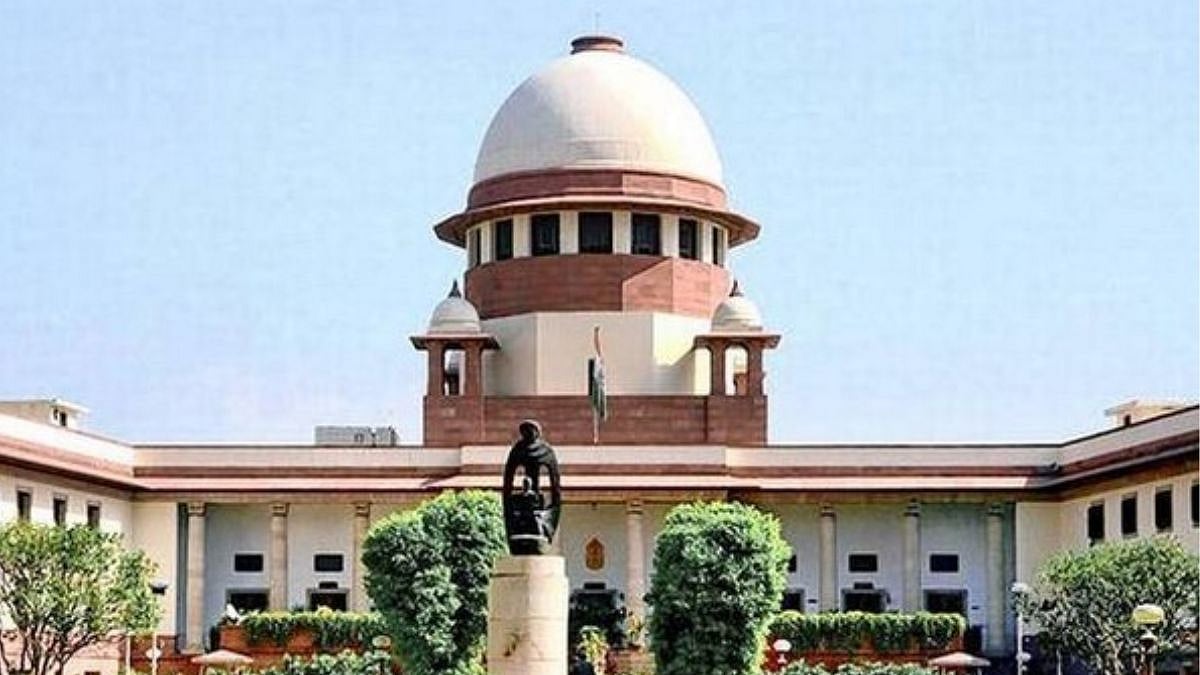
The Supreme Court on February 9 refused to interfere with a Madras High Court judgment that limits Muslim prayers at the Nellithoppu area atop the Thirupparankundram hills in Madurai district to only two occasions, Ramzan and Bakri-Id. The apex court also allowed the High Court’s ban on animal sacrifice at the site to continue.
Apex court refuses to interfere
A bench of Justice Aravind Kumar and Justice P.B. Varale described the High Court’s ruling as “balanced” and said there was no reason to interfere with it. “We do not propose to interfere with the order. Without expressing any opinion on the rights of the parties, the impugned order stands upheld,” the bench said.
Background of the dispute
The dispute centres on the Nellithoppu area, measuring 33 cents, which is owned by the Sikkandar Badhusha Avuliya Dargah. The area lies on the Thirupparankundram hill, which is also home to the Arulmighu Subramaniaswamy Thirukovil, a major Hindu place of worship. The performance of namaz and animal sacrifice on the hill has been a long-standing and sensitive issue.
SC calls HC ruling ‘balanced’
The Supreme Court was hearing a petition filed by M. Imam Hussain, a worshipper at the Dargah, who challenged the Madras High Court’s October 2025 judgment. Appearing for the petitioner, senior advocate Prashant Bhushan argued that there had never been any law and order problem at the site and that restricting prayers only to Ramzan and Bakri-Id was arbitrary.
Bhushan pointed out that the Nellithoppu land had been decreed in favour of Muslim worshippers by a trial court and that the decision was affirmed by the Privy Council. He argued that while reasonable conditions to maintain law and order could be imposed, a blanket restriction on prayers was unjustified.
Justice Kumar, however, observed that if there had been no law and order issues, the matter would not have reached the Peace Committee. “It seems to be a very, very balanced order,” he said, with Justice Varale concurring.
Faith, law and public order collide
The controversy has a long legal history. In June 2025, a two-judge bench of the Madras High Court delivered a split verdict. Justice Nisha Banu declined to interfere with the practice of animal sacrifice and upheld the rights of Muslim devotees. Justice S. Srimathy, however, took a different view, stating that the Dargah must approach a civil court to establish its right to conduct Kandoori animal sacrifice and prayers during Ramzan, Bakrid and other Islamic festivals.
Justice Srimathy also observed that the practice of offering namaz at Nellithoppu was of recent origin and that large congregations could obstruct the pathway to the Kasi Viswanathan temple, thereby encroaching upon parts of the Arulmigu Subramaniya Swamy temple.
High Court’s final directions
Due to the split verdict, the matter was referred to a third judge by the Chief Justice of the Madras High Court. On October 10, 2025, the third judge ruled that Muslim devotees have limited rights to offer namaz only during Ramzan and Bakri-Id. The court further held that animal sacrifice, cooking, and carrying or serving non-vegetarian food would not be permitted at the site until a competent civil court decides on whether animal sacrifice is a customary practice at the hill.
These directions were challenged before the Supreme Court as arbitrary and contrary to Article 25 of the Constitution, which guarantees the freedom to practise and propagate religion. However, the apex court’s refusal to intervene effectively settles the issue for now, placing public order and communal balance above unrestricted religious practice at the contested site.
Earlier flare-up
The matter had flared up again last December when the Madras High Court allowed the lighting of a lamp at a deepathoon near the Dargah, triggering fresh controversy. The High Court even initiated contempt proceedings against the State after it refused to implement the order, citing law and order concerns.
Also Watch:
With the Supreme Court backing the High Court’s approach, the message is clear: in sensitive religious spaces shared by multiple faiths, courts are likely to prioritise balance and public order over expansive claims of religious rights, at least until civil courts conclusively settle questions of custom and practice.

