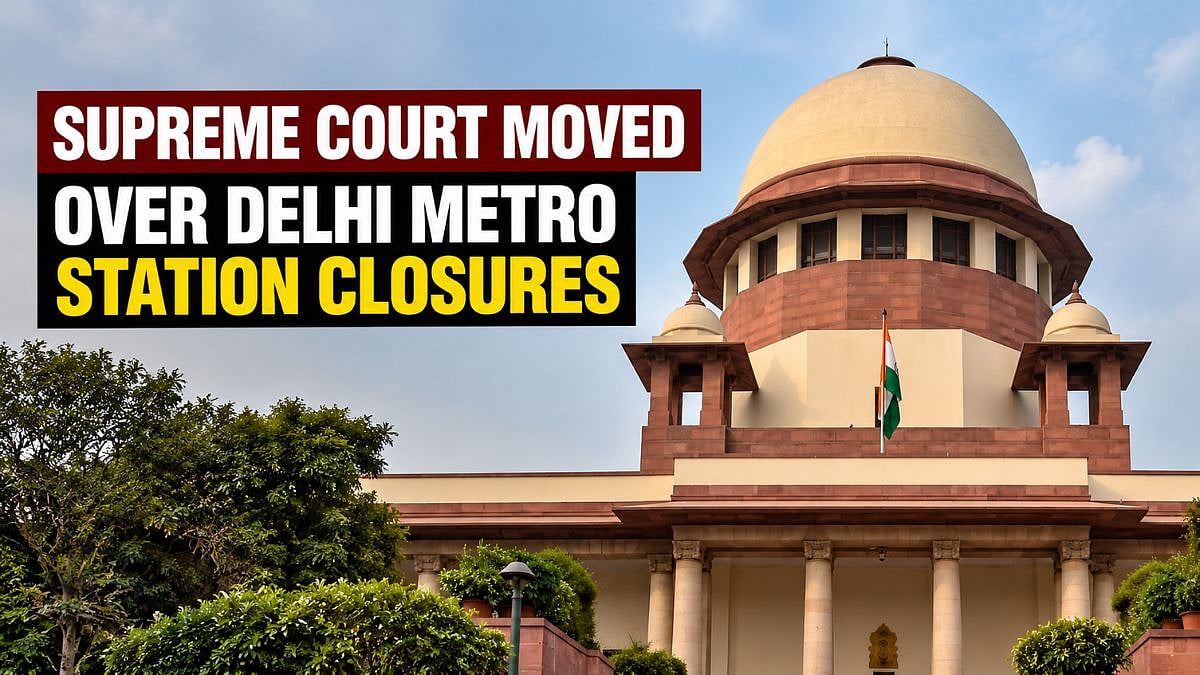
Delhi, October 10, 2026: A contempt petition has been filed in the Supreme Court alleging that authorities continued to close Delhi Metro stations and cancel train services despite the court’s October 9 order directing them not to impose a complete ban on public transport during the October 10 protests.
The petition, filed by advocate Shailendra Mani Tripathi, seeks contempt proceedings against Union Home Secretary Govind Mohan, Delhi Police Commissioner Anurag Kumar and Delhi Metro Rail Corporation (DMRC) Chairperson D Thara for allegedly disobeying the court’s directions. The protests were announced by CJP and opposition parties against the Chief Election Commissioner, Live Law reports.
Petitioner Claims Court Order Was Ignored
Tripathi alleged that the authorities continued to impose restrictions on Metro and railway services even after the Supreme Court directed that public transport should operate in a regulated manner to minimise inconvenience to Delhi residents.
According to the petition, the restrictions disrupted daily life in the national capital and caused hardship to commuters. It alleged that the authorities failed to issue clear public advisories about traffic restrictions and transport services, leaving passengers without adequate information.
Supreme Court Had Questioned Transport Ban
The contempt petition follows the Supreme Court’s October 9 order in MA Baby v. Union of India. A bench comprising Chief Justice of India Surya Kant, Justice Joymalya Bagchi and Justice V Mohana had examined restrictions imposed on Metro and railway services ahead of the proposed protests at Jantar Mantar.
During the hearing, the court took note of Delhi Police communications directing the DMRC to close 57 Metro stations. It also examined a separate communication concerning the cancellation of Mail and Express trains arriving at New Delhi and Hazrat Nizamuddin railway stations.
Court Favoured Regulation Over Complete Shutdown
The Supreme Court observed that the notifications appeared to be “overreaching” because they effectively imposed a complete ban on essential public transport services. It clarified that Metro train movement should not be prohibited entirely.
The court, however, allowed authorities to regulate services in a suitable manner while following the principle of proportionality. The direction sought to balance security requirements with the public’s need for transport, making the alleged continuation of blanket restrictions the central issue in the contempt petition.
Advocate Reports Closed Metro Gates
Tripathi claimed that he personally visited GTB Nagar and Vishwavidyalaya Metro stations around 9.30 pm on October 9 and found their entry gates closed. According to him, passengers could exit only through manually regulated gates.
At GTB Nagar Metro station, he alleged that Gate No. 2 was locked, while Gates No. 1 and 3 were either closed or regulated to allow only exits. He also claimed to have recorded a video of the situation and expressed his willingness to provide it along with real-time location details.
Metro Closures Extended Into October 10
The petition stated that the DMRC announced on its official X account that entry and exit at the affected Metro stations would remain closed from 9 pm on October 9 until 6 pm on October 10, subject to a review by security agencies.
According to Tripathi, the authorities subsequently reduced the number of stations facing closure from 57 to 45. However, he argued that the continued restrictions, despite the Supreme Court’s directions, amounted to wilful and deliberate disobedience of the court’s order.
Heavy Security Presence Raises Questions
Tripathi also claimed that he visited Jantar Mantar and nearby areas around 8.30 pm on October 9 and found only police and paramilitary personnel present. He questioned the need to continue widespread restrictions on Metro station access under these circumstances.
The petition alleged that the authorities maintained a blanket shutdown across transport corridors, continued unwarranted train cancellations and failed to provide transparent traffic and transport advisories. It claimed that these actions had severely disrupted public life and stranded essential travellers.
Plea Seeks Immediate Restoration Of Services
As an interim measure, Tripathi has requested the Supreme Court to direct authorities to withdraw blanket prohibitory orders affecting Metro and railway operations and ensure that services run according to a regulated schedule.
Also Watch:
The petition also seeks immediate public notification of transport arrangements so that commuters can plan their journeys without unnecessary disruption. Tripathi, who was earlier among the petitioners seeking an independent investigation into violence during the July student protests at Jantar Mantar, filed the contempt petition through Advocate-on-Record Chand Qureshi.
To get details on exclusive and budget-friendly property deals in Mumbai & surrounding regions, do visit: https://budgetproperties.in/

