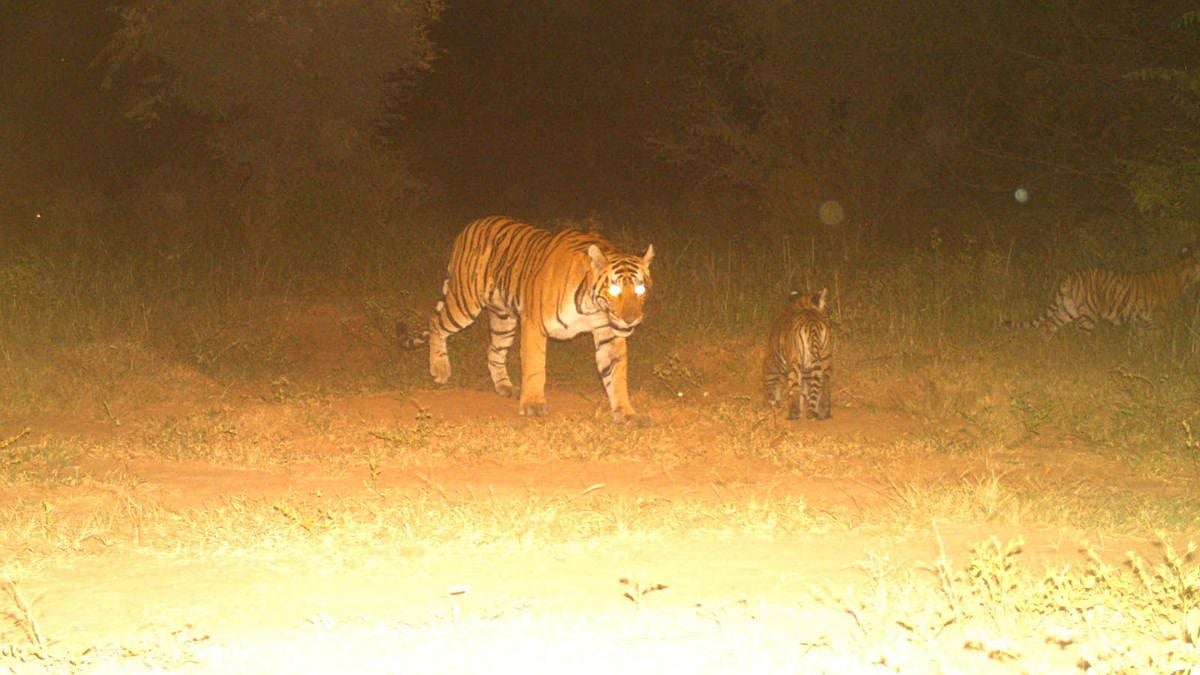
Jaipur: Wildlife enthusiasts have reason to rejoice as tigress ST-26 has been captured on camera for the first time with her two cubs at Rajasthan’s Sariska Tiger Reserve. Both cubs appeared healthy in the camera-trap images, marking a significant milestone in the reserve’s tiger conservation efforts.
With the successful breeding of ST-26, a tigress born in Sariska, the reserve’s tiger population has reached to 58. More than half of the tigers in the reserve are cubs, offering hope for further growth in the coming years.
Sariska Chief Conservator of Forests (CCF) Sangram Singh Katiyar said ST-26 is around six to seven years old and the offspring of tigress ST-14. She has become a mother for the first time and occupies territory in the Talvriksh and Akbarpur ranges.
Following the camera-trap confirmation of the tigress and her cubs, the Forest Department has directed field staff to intensify surveillance and patrolling in the area.
Monitoring through camera traps and regular patrols will be strengthened to ensure their safety and minimize human interference, allowing the cubs to develop naturally.
Katiyar said protection measures were being reinforced in accordance with the Wildlife (Protection) Act and the guidelines of the National Tiger Conservation Authority (NTCA). He urged tourists, villagers, and the public to maintain a safe distance from wildlife and follow tourism regulations. Any sighting of a tiger near villages should be reported immediately to the nearest forest office.
The increasing tiger population has also led to greater movement as young tigers begin exploring and establishing their territories, Katiyar said. The Forest Department is focusing on monitoring their movements, ensuring safe dispersal and reducing the risk of human-wildlife conflict.

Meanwhile, Sariska has been witnessing encouraging tiger sightings since the beginning of the tourism season. Katiyar said a large number of tourists visited the reserve during the first week of the season, with visitor numbers expected to rise further during the upcoming festivals and holidays.
To improve visibility during safaris, the Forest Department is clearing vegetation along both sides of safari tracks, covering a width of three to six metres. The measure is intended to help tourists spot tigers resting in bushes near the tracks and enhance the overall safari experience.
According to Katiyar, 11 tigers currently inhabit Sariska’s buffer zone, highlighting its importance as a habitat for the reserve’s growing tiger population.

