
Ayodhya: Interest earned on investments has overtaken public donations as the biggest source of income for the Shri Ram Janmabhoomi Teerth Kshetra Trust, reflecting the rapid growth of its financial corpus since the consecration of the Ram Temple.
According to the trust's unaudited accounts for the financial year 2025-26, interest income stood at Rs 151.80 crore, exceeding voluntary donations of Rs 149.36 crore. The figures indicate that the trust's growing investments are now generating higher annual returns than fresh contributions from devotees.
The accounts show the trust has accumulated a total corpus of Rs 1,876.30 crore. Of this, Rs 1,771.22 crore has been parked in fixed deposits, accounting for nearly 94 percent of the total corpus. The trust also owns 2.57 acres of land, holds 323 kg of gold, 751.98 kg of silver and has physical cash of Rs 7.74 lakh at the end of the financial year.
The financial details have come into focus amid the ongoing Special Investigation Team probe into the alleged theft of donations at the Ram Temple. The report notes that while the probe primarily concerns the donation counting process, the trust's audited financial statements provide a broader picture of its finances, investments and expenditure.
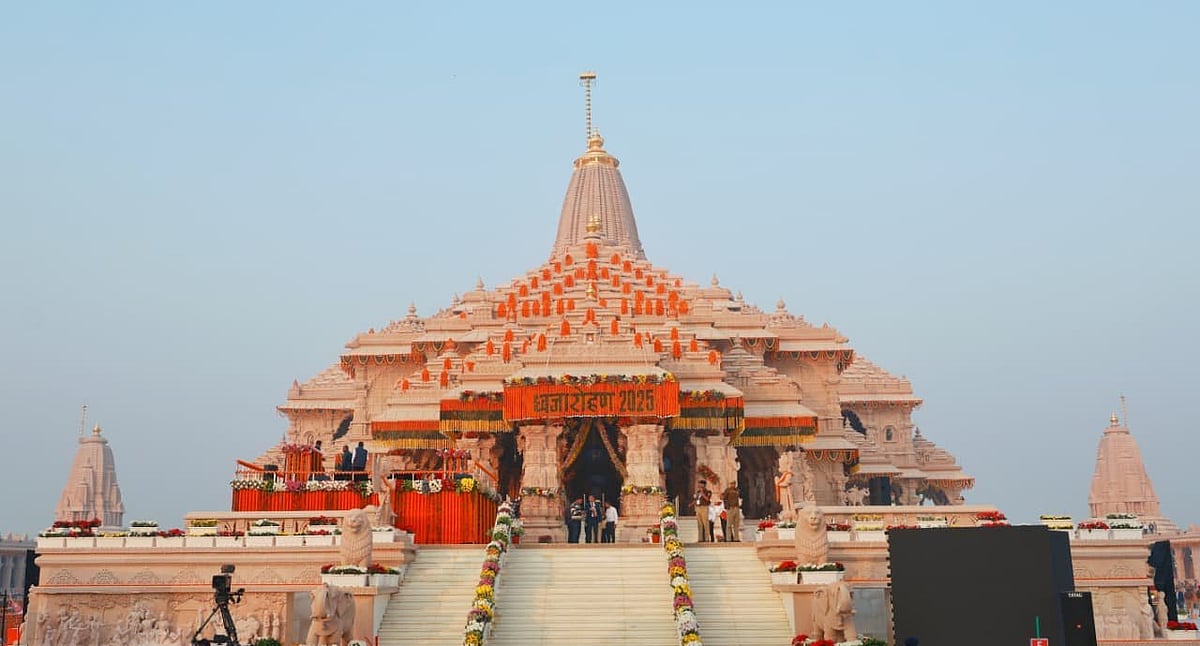
The accounts indicate that the trust received Rs 398.24 crore during the year from all sources. Of this, Rs 149.36 crore came through physical donation boxes, online donations and offerings. Interest from investments contributed Rs 151.80 crore, while the remaining income came from grants and other receipts.
The trust has invested Rs 562.88 crore in Punjab National Bank, Rs 327.30 crore in Bank of Baroda and Rs 791.04 crore in State Bank of India. Another Rs 90.10 crore is held in mutual funds, while savings bank accounts contain Rs 24.77 crore.
Temple construction remains the trust's largest expenditure. During 2025-26, it spent Rs 237.54 crore on construction work, including Rs 42.42 crore on the main temple, Rs 38.81 crore on land acquisition, Rs 21.52 crore on the Parikrama Marg and temporary structures, and other infrastructure within the temple complex.
Operational expenses linked to the increasing number of pilgrims also rose. The trust spent Rs 91.76 crore on maintaining the temple precincts. Major expenses included Rs 31.48 crore on security arrangements, Rs 17.49 crore on cleaning and sanitation, Rs 23.08 crore on electricity and Rs 8.96 crore on operating the Ann Kshetra.

The trust also continued to expand its land bank. During the year, it spent Rs 15.74 crore on acquiring properties around the temple through 14 purchase agreements and eight donation deeds.
The report notes that the ongoing SIT investigation has drawn attention to alleged lapses in donation counting and financial controls. It says the case has highlighted the need for stronger oversight and mandatory safeguards in handling cash donations at one of the country's most prominent religious institutions. However, the trust's accounts also underline the scale of its financial resources and its increasing dependence on investment income to support construction and daily operations.

