
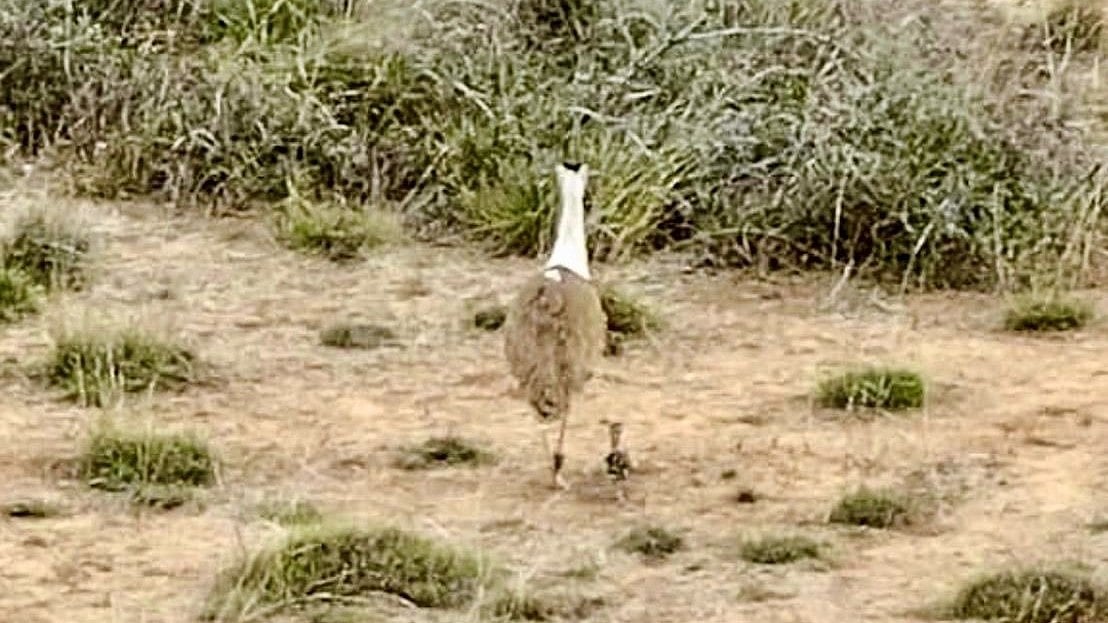
Jaipur, April 11: The Great Indian Bustards (GIB) that were being raised under human supervision and through artificial insemination have now taken charge of the process themselves.
This year, out of 11 new chicks, three have been born through 'natural mating.' It signifies that these birds are now capable of increasing their population on their own.
Chicks born under conservation programme
Under the ongoing Great Indian Bustard conservation programme at Jaisalmer's Desert National Park, 11 chicks have been born this year.
Previously, the entire focus was on eggs retrieved from the wild; however, the birds currently housed at the conservation centres (Ramdevra and Sudasari) are now pairing up and laying eggs naturally.
Officials highlight breakthrough
DFO Brijmohan Gupta said, “When we embarked on this journey in 2019, the challenge was immense. Today, in addition to our 33 founder birds, we have 46 birds that were born right here. The greatest success is that scientists now serve merely as caretakers; the birds themselves are fulfilling the responsibilities of parenthood. If this pace continues, the Great Indian Bustard population will reach a safe and secure level within the next five years.”
Plans for release into the wild
The Forest Department is now preparing to release these 79 Great Indian Bustards into the open environment. It was initially believed that birds bred in captivity would be unable to withstand the external environment; however, the robust health of the chicks has reassured scientists that they are ready to fly high.
Also Watch:
Safety measures in place
Predator-proof enclosures have been constructed within the grasslands, and special 'bird diverters' have been installed on high-tension power lines to ensure their safety.

