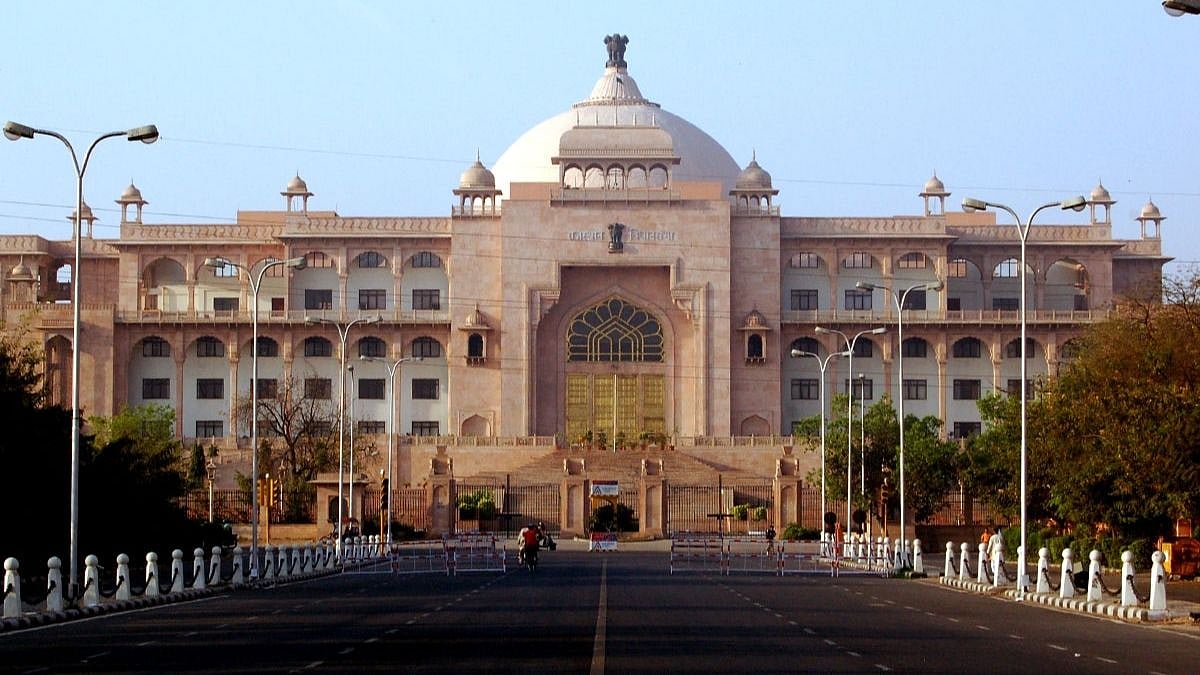
Jaipur, March 7: Amid strong opposition from Congress and some independents, the Rajasthan Legislative Assembly passed the “Rajasthan Prohibition of Transfer of Immovable Property in Disturbed Areas and Provision for Protection of Tenants from Eviction from Premises Bill, 2026” by voice vote on Friday late in the evening.
There was a heated five-hour debate on the Bill, with 18 of the MLAs demanding to send the Bill to the select committee of the House, while Congress said that it will abolish the Bill in case it gets back to power in 2028.
Rajasthan becomes second state after Gujarat
With the passage of the Bill, Rajasthan becomes the second state in India, after Gujarat, to implement such a Bill. The Bill aims at preventing distress sales of property and forced migration in areas experiencing communal tension or demographic imbalance.
Government says bill not aimed at any community
However, the Parliamentary Affairs Minister Jogaram Patel said that the Bill does not refer to Hindu, Muslim, or any religion; particular class; majority; minority; sect; community; or method of worship.
“For us, everyone is equal. This Act has been formulated based on the current circumstances, needs, and suggestions received from legal experts,” claimed the minister, responding to the debate on the Bill in the House.
Patel assured the House that the implementation of this Act will further strengthen brotherhood and social harmony in the state. It symbolizes social justice, security, and constitutional balance. He said that efforts will be made to maintain the Ganga-Jamuni culture in the state.
Government cites communal tension and distress property sales
The Parliamentary Affairs Minister stated that riots and communal tensions create social imbalance and mutual distrust. “Increase in the population of a particular community has impacted mixed population areas, leading to demographic imbalance, communal tension, and a lack of public harmony. Based on incidents of communal tension and violence in many parts of the country, it has been observed that during such times, fear, insecurity, and social pressure force people for distress sale of their property. This Act will prevent migration and ensure a fair selling price for property,” said the minister.
Congress and independents oppose bill
While during the debate, the Congress and some independent MLAs strongly opposed the Bill and said that it would impact the communal harmony and peace of the state.
Congress state president and MLA Govind Singh Dotasara said, "Why does BJP want to burn Rajasthan by bringing such a Bill? You wish to target a particular community. What is your intention? The intention needs to be made clear in the law, which is not the case. The provisions of the Bill will open the doors to corruption, and one will not even be able to go to court.”
Dotasara claimed that if Congress comes to power in 2028, it will abolish the Bill.
Also Watch:

Major provisions
. Based on facts, reports, administrative grounds, and other inputs, the state government may declare an area a disturbed area by issuing a notification. Such a notification will remain in effect for three years.
. An application must be submitted to the district administration to sell property in disturbed areas. Subsequently, an investigation will be conducted by the competent authority to ascertain that it is not a distress sale.
. A monitoring and advisory committee will be formed to ensure compliance with the provisions of the Act.
. Disobeying an order issued by the competent authority mentioned in the Act is punishable with a fine and imprisonment for a term of 3 to 5 years.

