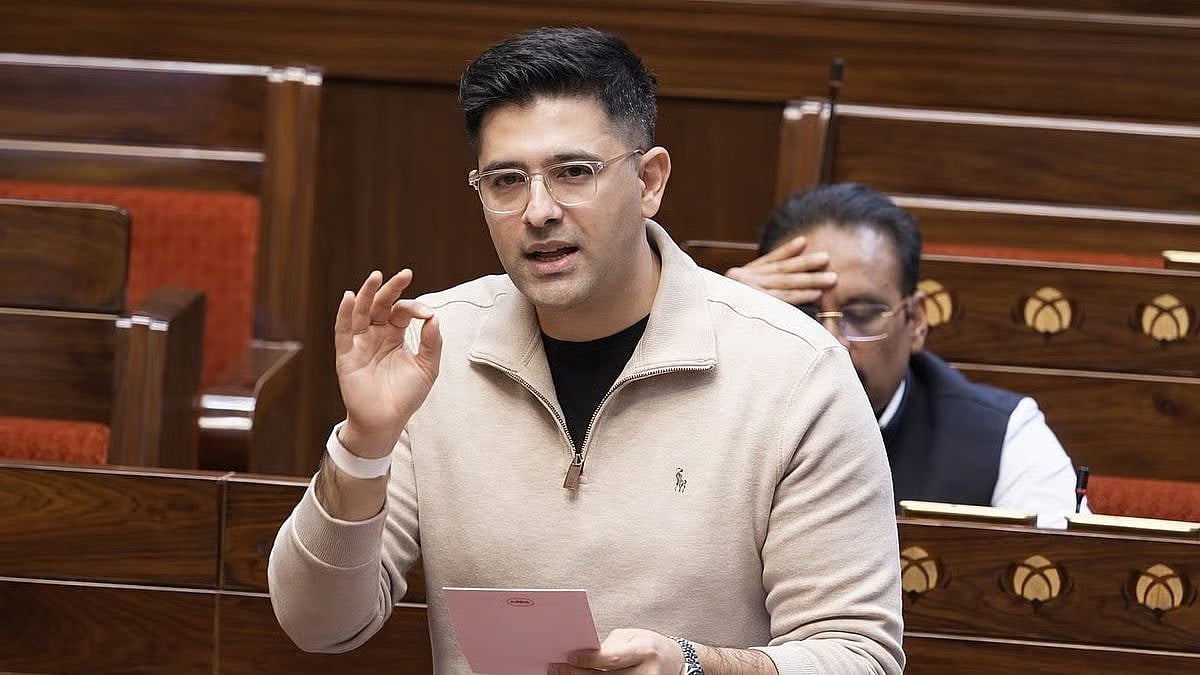
As one of the youngest politicians in the country, Raghav Chadha seems to be looking at a long political horizon if he plays it well. As of now, it looks as though he is making all the right moves. On Thursday, he broke ranks with his parent party and joined the BJP. In doing so, he has also broken the back of the fledgling AAP in the Rajya Sabha. Until about two years, Chadha was your average celebrity, with his cleanshaven looks and a glamorous wife. Almost overnight, a name that evoked curiosity as actress Parineeti Chopra’s husband is being celebrated as the messiah of the youth. Check him out on any social media platform and you will find gushing feeds for this boy wonder. Is his mysterious stardom serendipitous or a carefully chiselled act? As of now, Chadha has logged 1.5 crore followers on Instagram, ten lakh followers on Twitter and 81 lakh followers on Facebook. For a measure, his estranged mentor, Arvind Kejriwal, has 29 lakh followers on Instagram and 95 lakh followers on Facebook. Chadha has metamorphosed from a young AAP leader to a national youth leader waiting for greatness to be bestowed upon him. His sudden popularity has surprised many but it did not happen in a day. Raghav Chadha 2.0 appears to have been launched with professional funnelling, probably with story boards, pin-stuffed soft boards on ICP, hypergrowth models and PPTs on ROI and SEO.
.jpg)
Beginning early at 25 years, Chadha grew wings under Kejriwal’s fond patronage and seemed content to soak in the glory of his political rise quietly until he decided to go viral. He repurposed himself into a youth icon by speaking in Rajya Sabha on issues that appeared hand-picked from a pool of everyday concerns, issues which get short shrift from the political class but which resonate with the young and the upwardly mobile. Not all his ideas are ingenuous. Take his discovery of the exorbitant rates of tea and snacks at Indian airports. The first Udaan yatri café, offering a cup of tea for Rs 10 and a samosa for Rs 20, was inaugurated at Kolkata airport in December 2024 and eventually in 23 other airports. It was perhaps no coincidence that Chadha took up this matter noisily in Parliament just a few days prior to the inauguration. Social media space feted him loudly. “Best MP,” said one. “The power of one,” raved another. Legacy media was not far behind in hailing the newly minted hero; one of them ran a heart-warming video on “how he fought for the rights of air travellers.” On his part, the media management was consummate. Search “Udaan yatri café” or “food prices at airport” on the web, and his face and his name will pop up in every result. Videos of his speech and of a subsequent visit to a café triumphantly brandishing a Rs 10 invoice for a cup of tea went quickly viral. Fact did not separate from fiction. It has escaped most of his followers and admirers that a government does not plunge into action the moment a Parliamentarian makes a suggestion and drum up 24 airport cafes in four months.
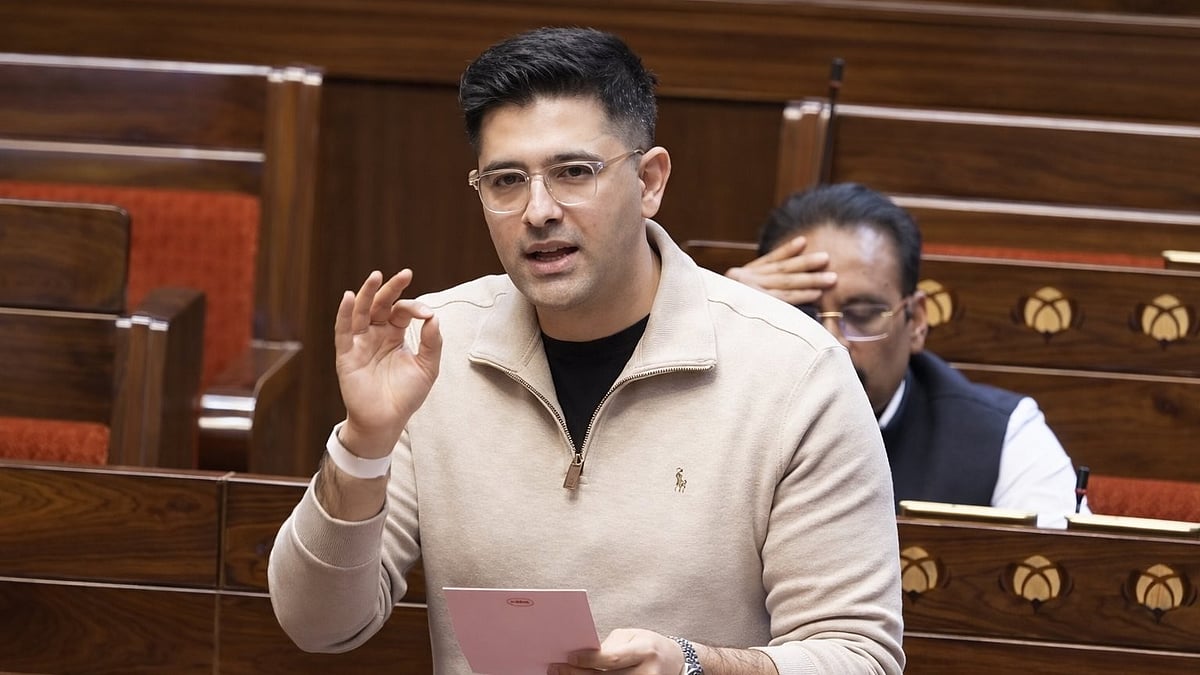
In January, Chadha staged a similar manoeuvre. After gig workers struck work in December, union labour minister Mansukh Mandaviya held talks with delivery platforms a week later and coerced them to drop their 10minute delivery promise in the interest of the safety of their workers. Blinkit agreed first, followed by others. Around that time, Chadha went to work a day as a delivery boy, seeking to make common cause with the growing delivery community. To this day, the relief for gig workers is touted as a Chadha win. Apparently, the Chadha algorithm finds issues on the verge of resolution and carpet-bombs the media space. His Rajya Sabha speeches revolve around the youth, especially the urban youth: mobile/digital issues (recharge, daily data expiry, digital assets, incoming call charges, data privacy leak, copyright), airports (high air fares, baggage charges, expensive food, overcrowding), toll plazas, gig workers’ issues, health insurance, tax payer issues, traffic congestion, inflation-indexed wages, etc.
Some issues are frivolous or specious, intended to touch a chord with the target audience rather than to address a felt need, such as his argument against the practice of daily data expiry, incoming call charges, digital copyright strikes and his espousal of paternity leave. Even if they carry no heft in Parliament, they work to the script by powering up his popularity ratings. Chadha kick-started his career at the top of the ladder as a national spokesperson of the Aam Aadmi Party (AAP) in 2013. He became a treasurer, then financial advisor to deputy chief minister Manish Sisodia, and advisor to Punjab chief minister Bhagwant Mann, followed by his selection for the Rajya Sabha seat in 2022. A couple of years later began the rise in his public profile and an anticipated fall in his political party. Now that AAP has caught him slightly unawares by muting him in the Raja Sabha, he might just take his battle to the air waves. While he is at it, Chadha would do well to remember that Kejriwal maxed out his charm in a similar way riding high on a popularity wave that is not holding up. In the long term, even in politics, honesty could be the best strategy.
(The author is a senior journalist)

