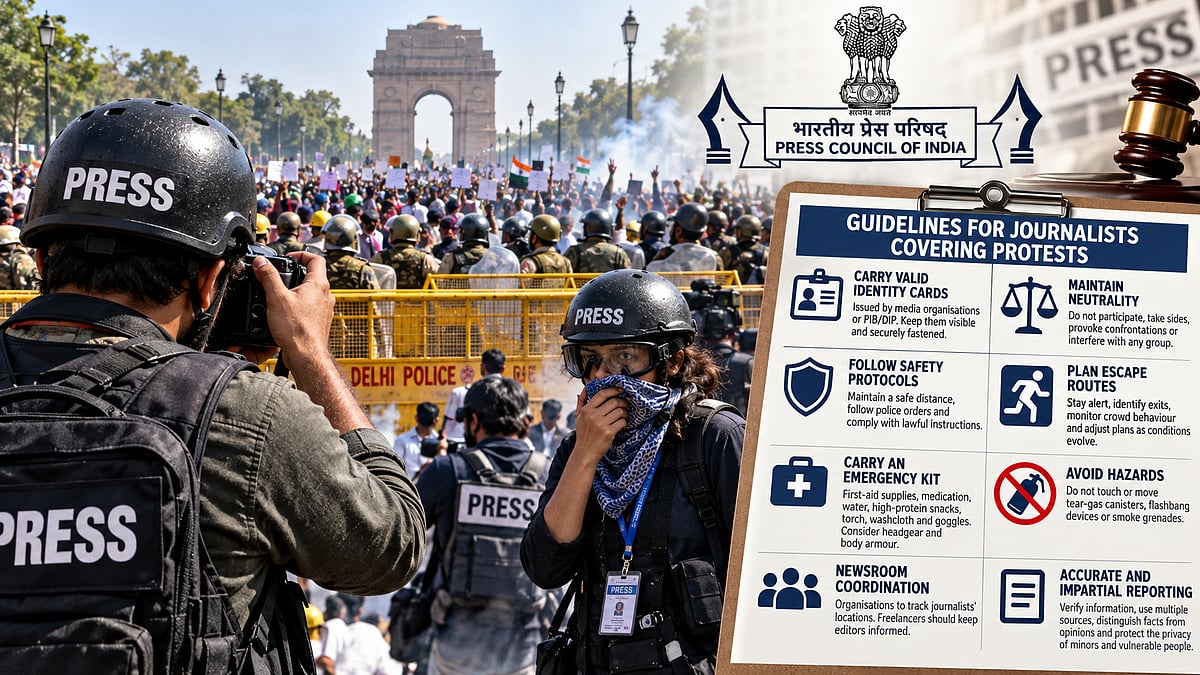
The Press Council of India (PCI) has issued guidelines for journalists covering protests, focusing on personal safety, professional neutrality, ethical reporting and coordination with newsrooms and law enforcement agencies.
The statutory and quasi-judicial body, tasked with safeguarding press freedom, released the guidelines on Thursday to “facilitate orderly and effective media coverage of protests” while protecting journalists and promoting responsible reporting.
Guidelines Issued Amid Protests In Delhi
The guidelines come against the backdrop of massive protests in Delhi, where tens of thousands of people took to the streets demanding the removal of Chief Election Commissioner Gyanesh Kumar and the scrapping of the Special Intensive Revision (SIR) of the electoral roll.
Authorities ordered Metro closures and internet shutdowns, imposed prohibitory orders and deployed 40,000 security personnel, turning the national capital into a virtual fortress.
Several protesters were dragged, manhandled and detained. On Sunday, at least 12 journalists covering the second day of demonstrations were also detained.
Journalists Asked To Maintain Neutrality And Follow Safety Protocols
The PCI, whose jurisdiction is limited to print media under the Press Council Act of 1978, has advised journalists to carry valid identity cards issued by their media organisations or accreditation from the Press Information Bureau (PIB) or Directorate of Information and Publicity (DIP).
Journalists have been asked to keep their press identification clearly visible while ensuring that identity cards and lanyards are securely fastened to prevent entanglement during crowd movements or confrontations.
Emphasising professional neutrality, the council instructed journalists not to participate in demonstrations, take sides, provoke confrontations or interfere with protesters, counterprotesters or police personnel.
It also urged media professionals to remain respectful, follow police orders and comply with lawful instructions issued for immediate safety, while calmly asserting their identity as journalists when necessary.
PCI Recommends Emergency Kits And Escape Plans
The guidelines advise journalists to maintain a safe distance from confrontations, particularly when tensions rise or police action is expected. They should also avoid attaching cameras or recording equipment to police barricades, vehicles or other equipment if doing so could obstruct movement or cause damage.
The council stressed the need for constant situational awareness, careful movement through crowds and advance planning of escape routes.
Journalists have been advised to monitor changes in crowd behaviour, identify nearby exits, open streets and safe locations, and adjust their escape plans as conditions evolve.
In areas affected by smoke or tear gas, they should rely on visible landmarks and safe routes to leave without moving further into the crowd.
The PCI also recommended carrying an emergency kit containing basic first-aid supplies, essential personal medication, drinking water, high-protein snacks, a torch, a washcloth or hand towel, and protective eyewear or goggles.
Depending on the level of risk, journalists may consider wearing protective headgear and body armour. The council cautioned them against touching or moving tear-gas canisters, flashbang devices or smoke grenades.
Newsrooms Urged To Monitor Journalists And Ensure Impartial Reporting
The PCI has asked news organisations to designate a contact person responsible for tracking journalists’ locations and responding to emergencies.
Freelance journalists have been advised to keep a trusted editor or contact informed about their whereabouts, assignment plans and expected return time.
On reporting standards, the council emphasised accuracy, objectivity and impartiality. It called for verification through multiple sources and equal scrutiny of statements and claims made by protesters, organisers, police and government authorities.
Journalists have also been instructed to clearly distinguish verified facts from allegations and opinions, refrain from disclosing sensitive police movements in real time, and protect the privacy of minors, injured people and other vulnerable individuals.

