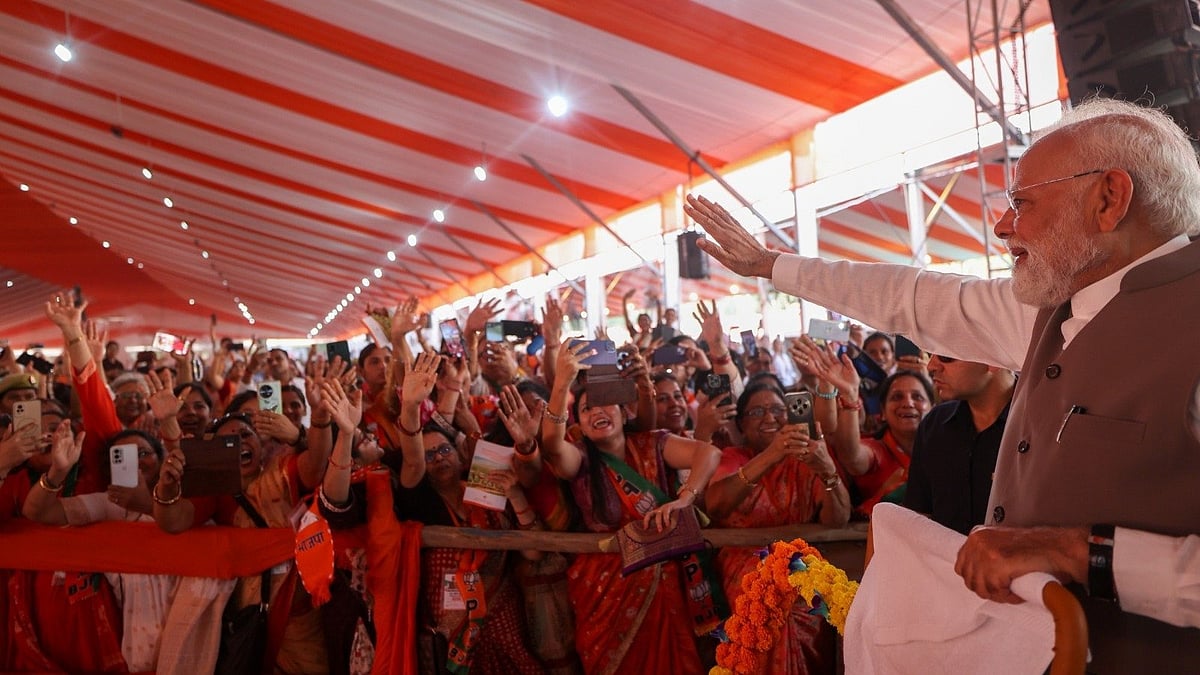
Varanasi: Prime Minister Narendra Modi on Tuesday centred his address at a Nari Vandan rally around an attack on dynastic politics, accusing opposition parties of deliberately stalling women’s reservation and preventing daughters of the country from entering Parliament and state assemblies.
Modi said parties driven by family control and appeasement had kept the Women’s Reservation Bill pending for nearly four decades and were afraid of women’s empowerment. He named the Samajwadi Party, Congress, Trinamool Congress and DMK, alleging they had “betrayed women” and acted as obstacles to their political participation.
He said his government passed the Nari Shakti Vandan Act in 2023 to ensure reservation for women in the Lok Sabha and state assemblies and described its implementation as a key national objective. Calling it a major mission, he said he had come to seek blessings from the people of Varanasi to carry it forward.
“India is moving continuously towards becoming a developed nation and women are its strongest pillar,” Modi said, adding that empowering women strengthens families and in turn the nation. He said he would leave no stone unturned to ensure the implementation of women’s reservation despite political hurdles.
The Prime Minister said recent efforts could not succeed due to opposition from parties like the Samajwadi Party and Congress, but asserted that such resistance reflected a deeper fear among dynastic parties of losing control if women gained greater representation.
Referring to social attitudes, Modi said women in Varanasi and across the country had long faced discouragement and were often told they did not need education or employment. He said many were not even consulted and were simply told what they could or could not do, adding that such thinking had been normalised over time.
He said that during his tenure as Gujarat chief minister about 25 years ago, he had tried to break these stereotypes by promoting girls’ education and providing financial support. He added that women’s welfare had remained central to policy decisions, citing the construction of around 12 crore toilets as part of efforts to improve dignity and living conditions.
Highlighting government initiatives, Modi said new opportunities had been opened for women in the armed forces and other sectors. He said women were excelling in every field and their participation must increase further.
He said economic empowerment was key to social change, noting that over the past 11 years, around 10 crore women had been linked to self-help groups and nearly three crore had become “Lakhpati Didis”. He also pointed to schemes related to housing, electricity, water supply and financial inclusion, saying many assets were now being registered in the name of women.
The Prime Minister said initiatives like the Sukanya Samriddhi Yojana had strengthened women’s financial independence and contributed to broader social stability.
Also Watch:
Targeting previous governments in Uttar Pradesh, Modi said there was a time when women felt unsafe stepping out of their homes, but added that the situation had changed and strict action against crime had improved security.
Reiterating his attack on dynastic politics, Modi said such parties did not want women to rise in public life as it would challenge entrenched power structures. He said women voters had responded strongly in recent elections in states such as Assam, West Bengal, Tamil Nadu, Kerala and Puducherry, sending a message against those who tried to block their empowerment.
He urged women to continue supporting efforts aimed at making them self-reliant and increasing their role in decision-making at all levels.
