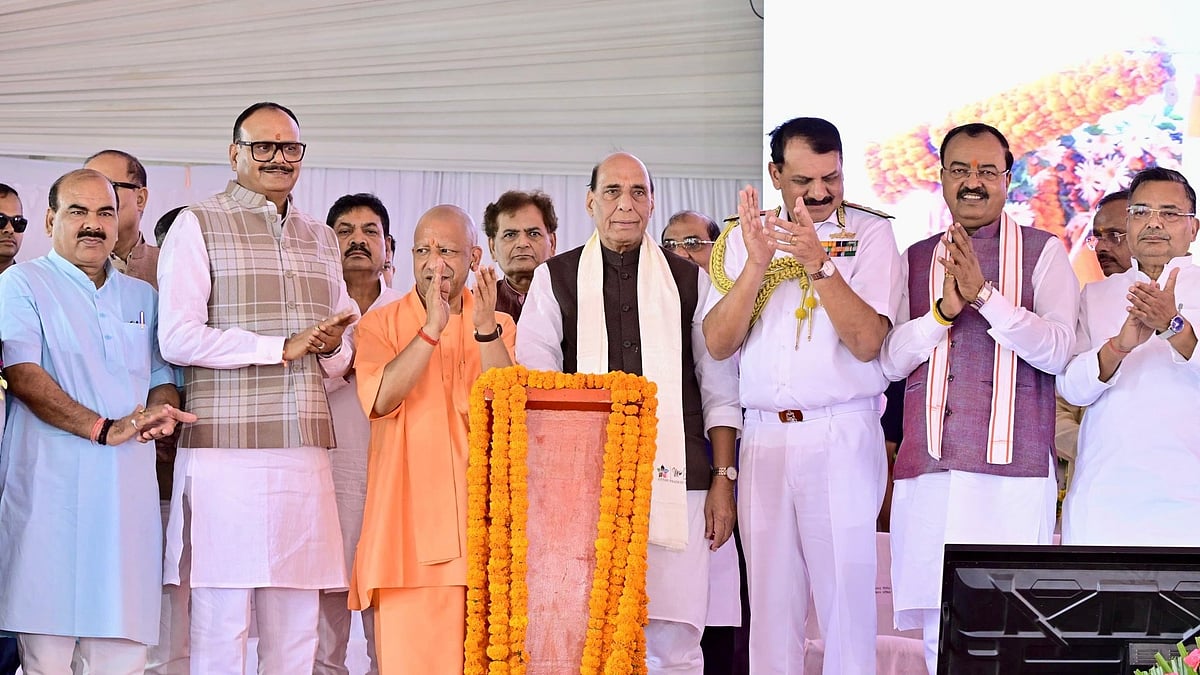
Defence Minister Rajnath Singh on Saturday said the Indian Navy played a decisive role during Operation Sindoor, asserting that sustained naval deployment and operational readiness prevented Pakistan's naval forces from venturing out during the conflict.
Speaking in Lucknow, Singh said the Indian Navy maintained continuous pressure in the Arabian Sea, creating a strategic environment that restricted Pakistan's maritime movements.
'Pakistan Navy Remained In Its Ports'
According to Singh as quoted by news agency PTI, the Navy's forward deployment during Operation Sindoor significantly strengthened India's military posture and contributed to the broader pressure exerted on Pakistan.
He stated that the force remained fully prepared throughout the operation, helping maintain deterrence and ensuring that Pakistan's naval assets largely stayed confined to their bases.
Museum Dedicated To Naval Legacy Opens In Lucknow
The remarks came during the inauguration of the Nausena Shaurya Vatika, an open-air naval museum developed to showcase the history, achievements and operational capabilities of the Indian Navy.
The facility was inaugurated by Singh alongside Yogi Adityanath and Dinesh K Tripathi in Lucknow's CG City area.
Jointly developed by the Indian Navy and the Uttar Pradesh Tourism Department, the museum is designed to introduce visitors to India's maritime heritage and naval achievements.
Why A Naval Museum In A Landlocked City?
Addressing questions about establishing a naval museum far from the coastline, Singh stressed that maritime security affects every Indian citizen regardless of geography.
He noted that India's trade, economy and energy security are closely linked to the Indian Ocean, making the Navy's role relevant to people across the country, including those living in inland cities such as Lucknow.
INS Gomati Takes Centre Stage
One of the museum's major attractions is the decommissioned warship INS Gomati, which served the Indian Navy for decades before being retired in 2022.
Singh highlighted the symbolic connection between the ship and Lucknow, noting that the vessel was named after the Gomti River and even featured the city's iconic Chhatar Manzil on its crest.
Other exhibits include naval equipment, the ship's anchor, propeller, mast and displays explaining maritime operations and naval technology.
A Centre For Inspiration, Not Just Tourism
The Defence Minister described the Shaurya Vatika as more than a tourist attraction, saying it would serve as a living tribute to the sacrifices and dedication of India's armed forces.
According to him, the museum is expected to educate future generations about national security, military service and the importance of safeguarding the country's interests.
Push For Indigenous Defence Manufacturing
Singh also used the occasion to underline India's growing defence manufacturing capabilities, pointing to the sharp rise in defence exports over the past decade.
He said India's defence exports, which were below Rs 1,000 crore before 2014, have now expanded to nearly Rs 40,000 crore, reflecting the country's progress in indigenous defence production and global outreach.
Uttar Pradesh's Transformation Highlighted
Praising the state government, Singh credited Chief Minister Yogi Adityanath for supporting the museum project and facilitating its development at a prime location near Ekana Stadium.
He also spoke about Uttar Pradesh's economic and administrative transformation, saying the state has moved from being associated with law-and-order concerns to becoming a hub for development and investment.

Plans To Add A Submarine Display
Looking ahead, Singh announced efforts to further expand the museum's attractions by bringing a retired submarine to the site.
The addition, he said, would enhance the visitor experience and provide a deeper understanding of the Indian Navy's underwater warfare capabilities.

