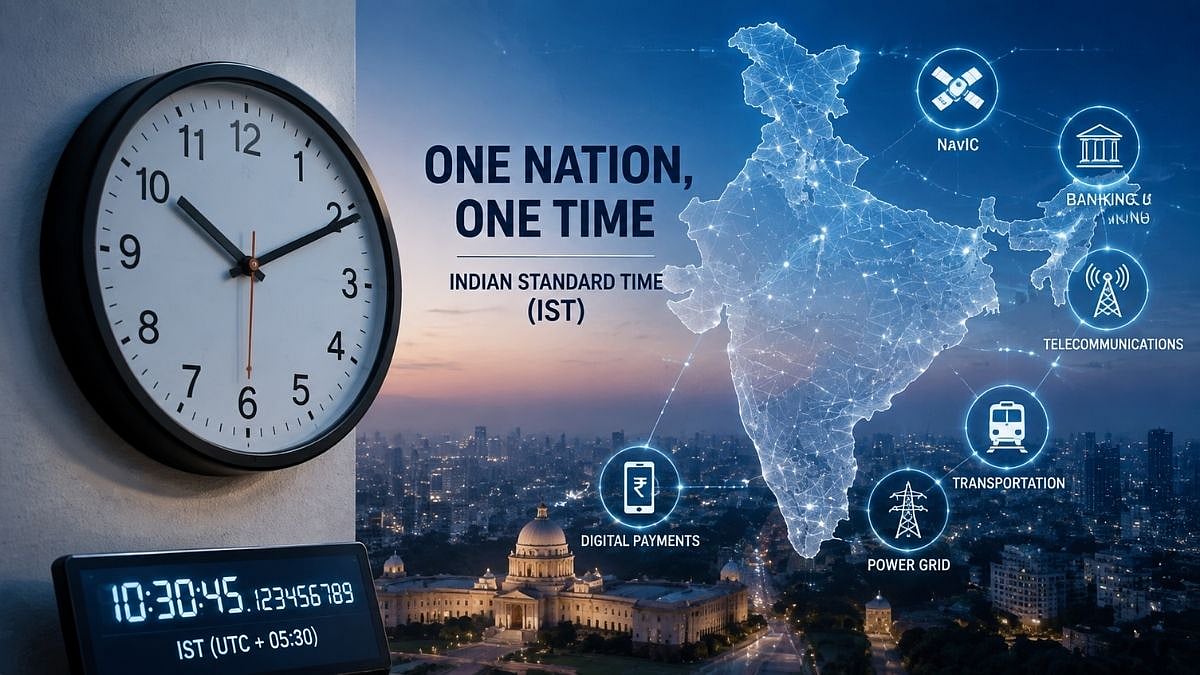
New Delhi, August 31, 2026: India is moving towards a single, legally recognised time reference for official, commercial and digital activity from March 2027, in a significant change aimed at making the country's critical systems more precise, secure and synchronised.
The Centre has notified the Legal Metrology (Indian Standard Time) Rules, 2026, making Indian Standard Time (IST) the common reference for legal, administrative, commercial and other official purposes across the country.
The rules were notified on August 27 and will come into force 180 days after their publication in the Official Gazette, giving organisations time to upgrade and synchronise their systems.
One Country, One Clock
The move is part of the Government's broader One Nation, One Time initiative. India already officially follows IST, so the change is not about introducing a new time zone.
Instead, it seeks to ensure that critical systems, networks and transactions are synchronised with an authoritative Indian time source rather than depending on different or foreign sources.
For ordinary people, the change may barely be noticeable. But behind a phone screen or a digital payment, precise timekeeping matters enormously.
In banking, telecommunications, power grids, transportation and other high-speed systems, even tiny differences in timestamps can matter when establishing exactly when an event or transaction took place.
How India Keeps Time
IST is India's official civil time and is five hours and 30 minutes ahead of Coordinated Universal Time (UTC). But IST is not simply a clock set to UTC+5:30. It is based on a highly precise national time scale maintained by the CSIR-National Physical Laboratory (CSIR-NPL) in New Delhi.
NPL's timekeeping infrastructure uses caesium atomic clocks and hydrogen masers. According to NPL, its caesium clocks are precise enough to gain or lose roughly one second over about three lakh years. India's national time scale, UTC(NPLI), is also traceable to international UTC maintained through the global network of national metrology laboratories.
IST is derived by adding five hours and 30 minutes to UTC(NPLI). The current system has a systematic uncertainty of around ±2.8 nanoseconds relative to UTC, illustrating the extraordinary precision involved in modern national timekeeping.
Why Nanoseconds Matter
For most people, a difference measured in nanoseconds is meaningless in everyday life. For a stock exchange, telecom network, power grid or high-speed digital system, however, precise timestamps can be critical.
As India's economy becomes more dependent on instant digital transactions and interconnected systems, having one authoritative source of time is more than a technical exercise. Time itself is increasingly becoming part of the country's critical digital infrastructure.
What Changes From March 2027
Under the new rules, IST will become the common time reference for legal, administrative, commercial and official purposes. Government departments, businesses, institutions and other entities will have to align relevant time-dependent systems with the authorised Indian time reference.
The 180-day transition period is important because the change involves much more than adjusting clocks on office walls. Organisations may have to review computer networks, servers, databases, transaction systems and other infrastructure that generates or records timestamps.
The rules also provide for authorised timing sources and traceable dissemination of IST. This means organisations will not simply be left to independently determine what the correct time is.
Will Your Phone Clock Change
No. India is not changing its time zone, and there is no proposal to move IST forward or backward.
Phones will continue to display the same Indian time. The real change will happen behind the scenes, in systems responsible for generating, synchronising and recording time.
This could matter for banking and digital payments, telecommunications, railways, airports, power systems, government records and other time-sensitive infrastructure. Consistent timestamps can help different systems agree on precisely when a transaction or event occurred.
Cutting Dependence On Foreign Sources
Another important part of the initiative is India's effort to strengthen its own timing infrastructure. The Government has pointed out that several systems currently rely on foreign satellite-based time sources, including GPS, creating dependence on external infrastructure for a function that can be critical to national networks.
India is therefore working towards disseminating accurate IST through Indian infrastructure. NavIC, India's satellite navigation system developed by the Indian Space Research Organisation (ISRO), is among the technologies that can play a role in providing authorised timing sources.
The Government has also been testing White Rabbit, a high-precision time-distribution technology. In July 2026, a White Rabbit-based IST dissemination demonstration network was commissioned at the Regional Reference Standards Laboratory in Bengaluru.
The technology has been demonstrated for banking, telecommunications, power, transportation and digital governance. This included a secure IST transmission demonstration between Bengaluru and the National Stock Exchange (NSE) in Chennai.
One Time, With Exceptions
The new framework does not mean every specialised activity will be forced to use only IST. The rules recognise that scientific, astronomical and navigational applications may require specialised time references or arrangements.
One Nation, One Time, therefore, does not mean scientific instruments or global operations must abandon international time standards. Instead, the framework establishes IST as India's common legal and official reference while allowing specified exceptions and authorised arrangements where required.
For most Indians, March 2027 is unlikely to bring any visible change to the clock on their phones or walls. The bigger shift will take place deep inside India's digital and physical infrastructure.
Also Watch:
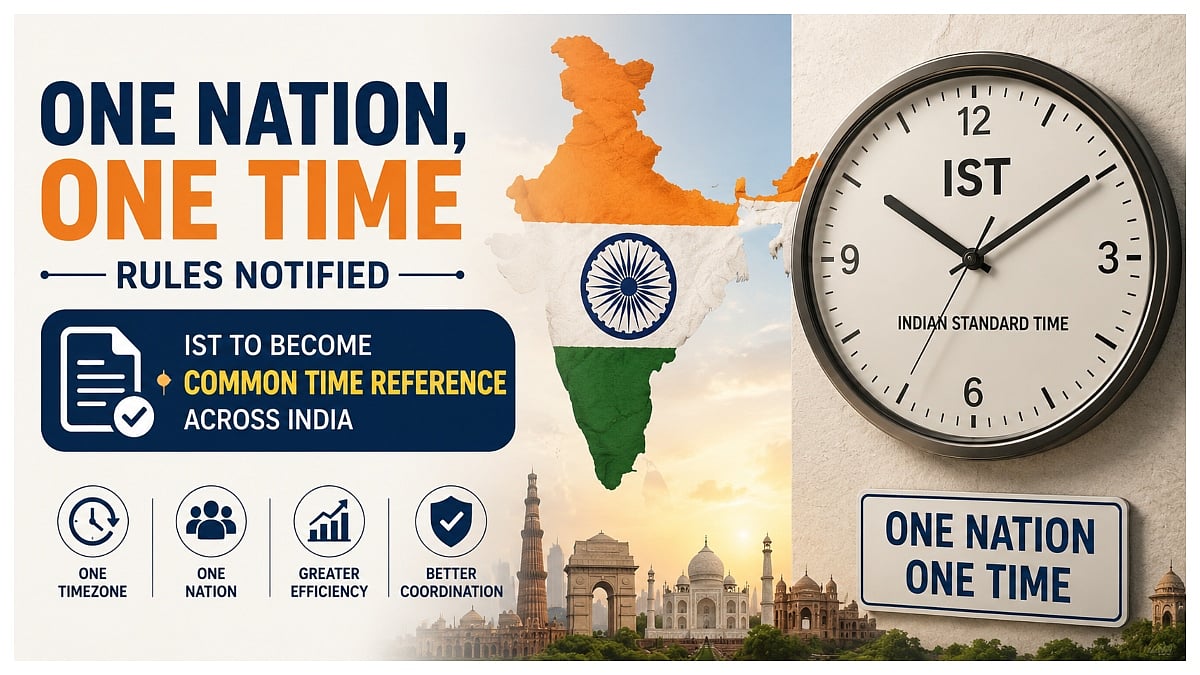
The idea is simple even if the technology behind it is complex: when banks, telecom networks, government systems, transport networks and other critical infrastructure need to know the time, they should be able to rely on the same precise, traceable and secure Indian source.
In an economy increasingly driven by instant transactions, automated systems and connected networks, that consistency could be far more important than the clock suggests.
To get details on exclusive and budget-friendly property deals in Mumbai & surrounding regions, do visit: https://budgetproperties.in/

