
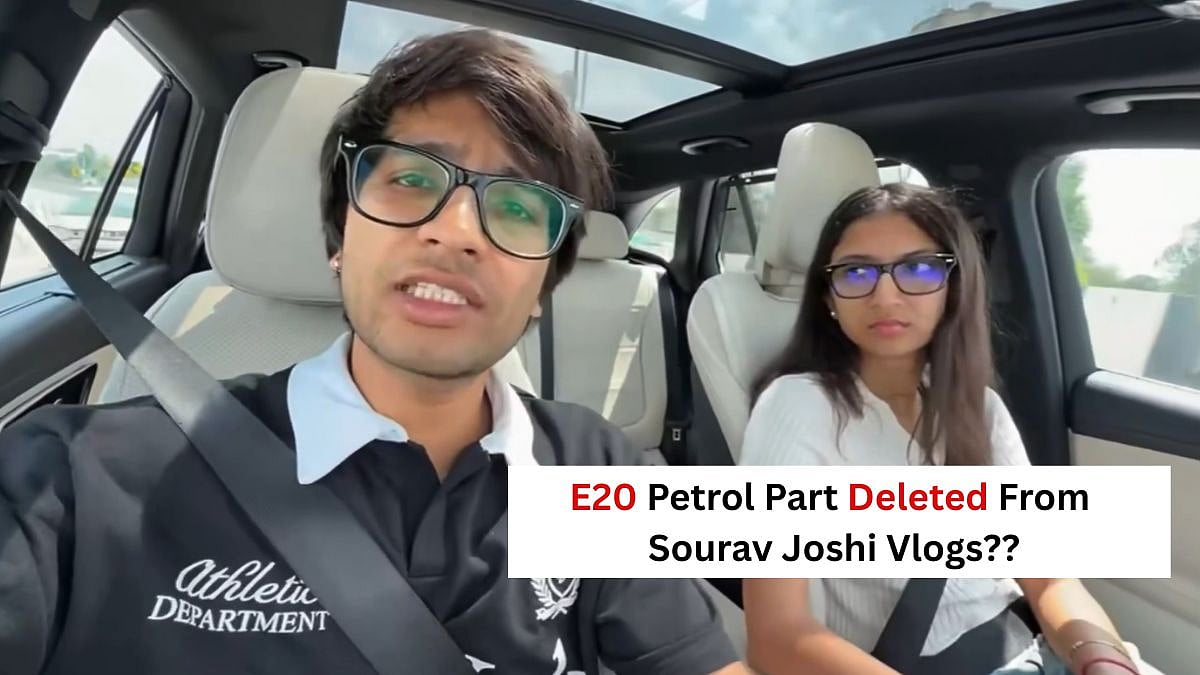
An old video from YouTuber Sourav Joshi's vlog has gone viral soon after a clip from his vlog criticising E20 petrol went viral.
In the viral clip from 2024 that is going viral, Joshi can be heard saying, "Isme pata hai kitne ka petrol aata hai, guys? ₹6,000 se upar ka petrol aata hai ek baar mein, aur woh chalta bhi bahut kam hai," which roughly translates to: "Do you know how much petrol this takes, guys? It costs more than ₹6,000 to fill the tank once, and even then, it doesn't last very long."
The vehicle in question is a Mercedes GLC 300, which Joshi purchased in 2024.
Viral mileage claims
The controversy began after a clip circulated online showing Joshi expressing concern over a sharp drop in his Mercedes SUV's fuel efficiency. In the video, he claimed the vehicle's mileage had fallen from 17 kmpl to just 5 kmpl and appeared to attribute the issue to ethanol-blended fuel.
"Yesterday I showed you that our car's mileage had dropped from 17 straight to 9. And today it has become 5. What has happened because of ethanol?" Joshi is heard saying in the viral clip. He also expressed concern that if the vehicle developed a fault, repairs could become expensive and inconvenient, as the car would need to be taken from his hometown in Uttarakhand to Delhi.
However, the remarks are reportedly missing from the currently available version of the vlog.
Mercedes-Benz responds
Amid the growing online discussion, Mercedes-Benz India issued a customer advisory reaffirming that all its petrol BS VI vehicles are fully compatible with E20 fuel. The company stated that customer safety, reliability, and vehicle performance remain its top priorities and clarified that all Mercedes-Benz petrol BS VI models are materially compatible with E20 fuel and certified by the relevant authorities.
The luxury carmaker also reiterated its commitment to sustainable mobility and assured customers that it remains available to address technical queries related to fuel compatibility.
Government's E20 push
The Centre has been promoting E20 petrol, a fuel blend containing up to 20 per cent ethanol, as part of its broader strategy to reduce crude oil imports, lower carbon emissions, and support domestic ethanol production. Automobile manufacturers have simultaneously introduced E20-compatible vehicles across multiple segments in line with the policy.

