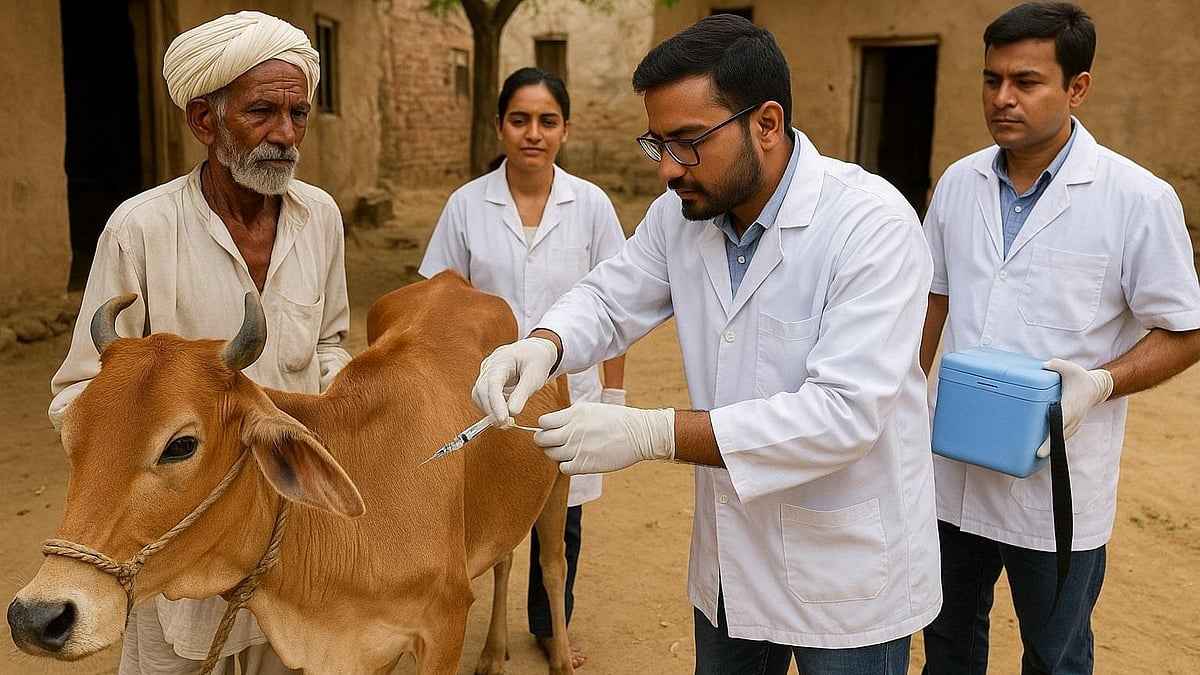
Jaipur: Lumpy skin disease, a viral infection affecting cattle, has spread to 10 districts in eastern Rajasthan, with 10,403 cases reported so far, according to the state Animal Husbandry Department.
Disease spread and recovery
Of the affected animals, 6,905 have recovered, while authorities have stepped up surveillance, treatment, and containment measures to prevent the disease from spreading to unaffected districts.
Animal husbandry officials have been directed to maintain heightened vigilance in districts where no cases have been reported. Veterinary teams have been asked to conduct door-to-door surveys in affected areas to identify sick cattle and ensure timely treatment.
Restrictions and containment measures
The department has also imposed restrictions on animal fairs and cattle markets to limit the movement of livestock. Temporary restrictions have also been ordered on the movement of animals through other channels in affected areas.
Isolation centres have been established in all affected districts, where infected cattle are being quarantined and treated. Officials have also been instructed to focus on sanitation, disinfection, spraying, and fogging in affected areas.
Emergency arrangements underway
Special budgets are being allocated at the district level for essential medicines and emergency arrangements. Officials have been told to ensure uninterrupted availability of medicines and other treatment supplies.
Control rooms have been established at the state and district levels, while rapid response teams have been formed at the block level to ensure prompt treatment of infected animals. Officials have been asked to strengthen coordination between the control rooms and response teams.
Officials monitor situation
Animal Husbandry Department Director Dr. Suresh Chand Meena said the department's priority was to prevent the disease from reaching unaffected districts and ensure early recovery of infected cattle.
“Quarantine centres have been established in all affected districts, where infected animals are being kept and treated,” Meena said, adding that the number of infected animals was declining.
He said no fresh cases had been reported in most affected districts, except for some new cases in Deeg and Bharatpur.
Also Watch:
Awareness and surveillance efforts
Department teams are visiting villages to treat infected cattle and educate livestock owners about prevention and control measures. Meena said increased awareness among livestock owners and continuous surveillance by the department are helping contain the disease.

