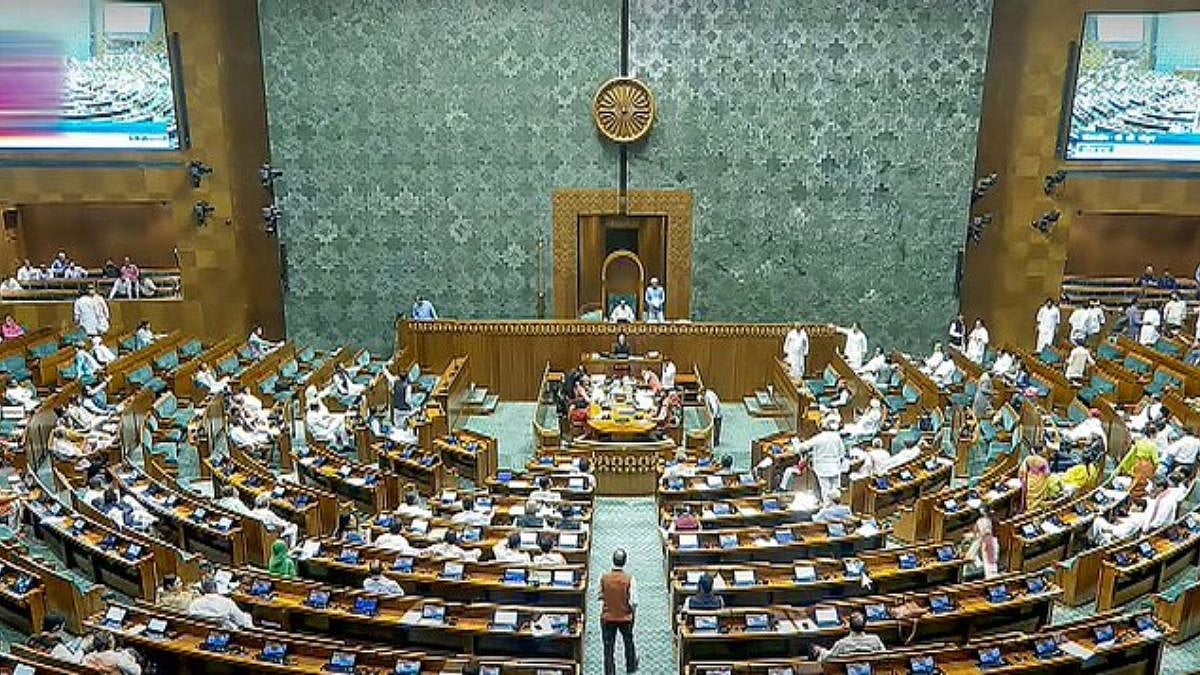
New Delhi, August 6, 2026: The Lok Sabha on Thursday passed the Taxation and Other Laws (Amendment) Bill, 2026, without a debate amid persistent sloganeering by Opposition members over various issues, including the alleged theft of donations at the Ram temple in Ayodhya.
The Bill seeks to attract more foreign capital, boost domestic electronics manufacturing, and make it easier for foreign cloud companies to use Indian data centres by providing greater process certainty. After its passage, the House was adjourned for the day.
Big Push For Electronics Manufacturing
One of the key proposals is an extension until 2040-41 of the income tax exemption available to foreign companies that engage contract manufacturers in India to produce electronic goods. The move is aimed at encouraging domestic manufacturing by providing greater policy certainty.
The specified electronic products include mobile phones, laptops, personal computers, tablets, and servers, along with their key parts and accessories.
The Bill also proposes a 15-year income tax exemption until 2040-41 for foreign companies that store components in customs warehouses for onward supply to contract manufacturers in India. The measure is intended to support the component supply chain for electronics factories.
Taken together, these provisions underline the government's effort to make India a more attractive manufacturing base for global electronics companies while offering them longer-term certainty on taxation.
Easier Rules For Foreign Investors
The legislation replaces the June 5 Ordinance that provided income tax exemption on interest income and capital gains earned by foreign portfolio investors (FPIs) from investments in government securities (G-Secs).
It also seeks to make it easier for fund managers to relocate to India by reducing the number of conditions that funds must meet to ensure their global income is not taxed in the country.
Finance Ministry sources said the proposals have a common objective of making India a more attractive and predictable destination for global capital, manufacturing, and business.
The changes indicate that tax certainty and simpler rules are being used as important tools to attract foreign investment and encourage companies to expand their operations in India, PTI reported.
Cloud Companies Get More Flexibility
The Bill removes approval and notification requirements for foreign cloud companies using Indian data centres. It also proposes allowing Indian data centres to operate on a leased basis instead of requiring only direct ownership.
The change could give foreign cloud companies greater flexibility in using data centre infrastructure in India while reducing some of the regulatory requirements they currently face.
Government Gets Say On UPI RuPay Charges
The Bill also amends the Payment and Settlement Systems Act, 2007, and proposes removing its linkage with the Income Tax Act.
It gives legal backing to the government to modify the zero merchant discount rate (MDR) framework governing Unified Payments Interface (UPI) and RuPay card transactions.
At present, banks and payment-system providers cannot directly or indirectly charge users for payments made through UPI and RuPay debit cards. Under the proposed changes, the Central Government would be able to decide through notification which electronic payment modes or transactions must remain free.
This provision is significant because it gives the government greater flexibility to determine how the zero-MDR framework should apply to different electronic payment transactions.
Passed Without Debate
When the Chair called Revolutionary Socialist Party (RSP) member N.K. Premachandran to move a statutory resolution disapproving the Ordinance, he did not speak. The Bill was subsequently put to a voice vote and passed without a debate.
It became the seventh Bill passed by the Lok Sabha during the ongoing Monsoon Session and the fifth to be cleared without a debate.
The House had earlier discussed for 10 hours a Bill to amend the anti-paper leak law. Another Bill seeking to make insult to the national song Vande Mataram a punishable offence was discussed briefly, with two members participating in the debate.
Question Hour Disrupted Again
Earlier in the day, Speaker Om Birla adjourned the House until 2 pm soon after proceedings began because of persistent sloganeering by Opposition members.
Thursday marked the 14th day on which the Lok Sabha could not complete Question Hour during the session, which began on July 20.
Also Watch:

The passage of another Bill without debate also highlights the continuing impact of disruptions on legislative business during the Monsoon Session. While the House has continued to clear legislation, five of the seven Bills passed so far have gone through without a debate.
To get details on exclusive and budget-friendly property deals in Mumbai & surrounding regions, do visit: https://budgetproperties.in/

