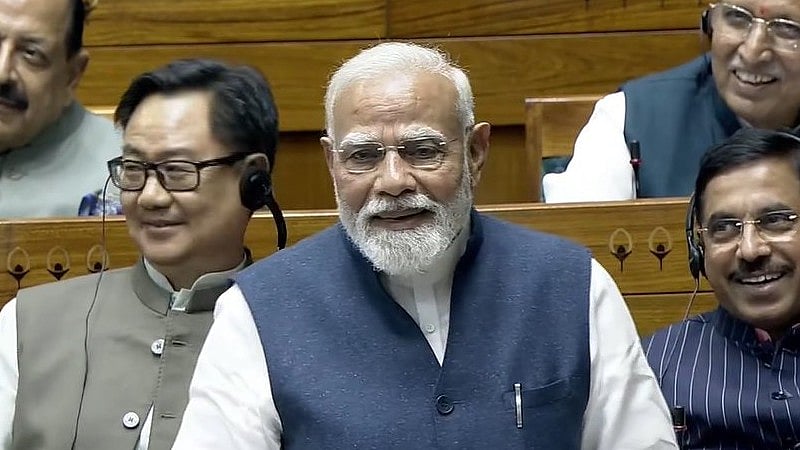
Prime Minister Narendra Modi on Thursday concluded his Lok Sabha address on the Women’s Reservation Bill with a sharp political remark, thanking opposition members in a symbolic manner for what he described as helping protect the legislation from the “evil eye.”
His comments came amid protests by opposition lawmakers, particularly members of the Dravida Munnetra Kazhagam (DMK), who attended the session dressed in black to register their opposition to provisions related to the delimitation process linked to the bill. Without naming the party directly, the Prime Minister used cultural imagery, referring to the tradition of applying a “kala tika” to ward off negativity. He remarked that just as people apply a black mark to prevent evil influence, he thanked those protesting in black attire for symbolically safeguarding the legislation.
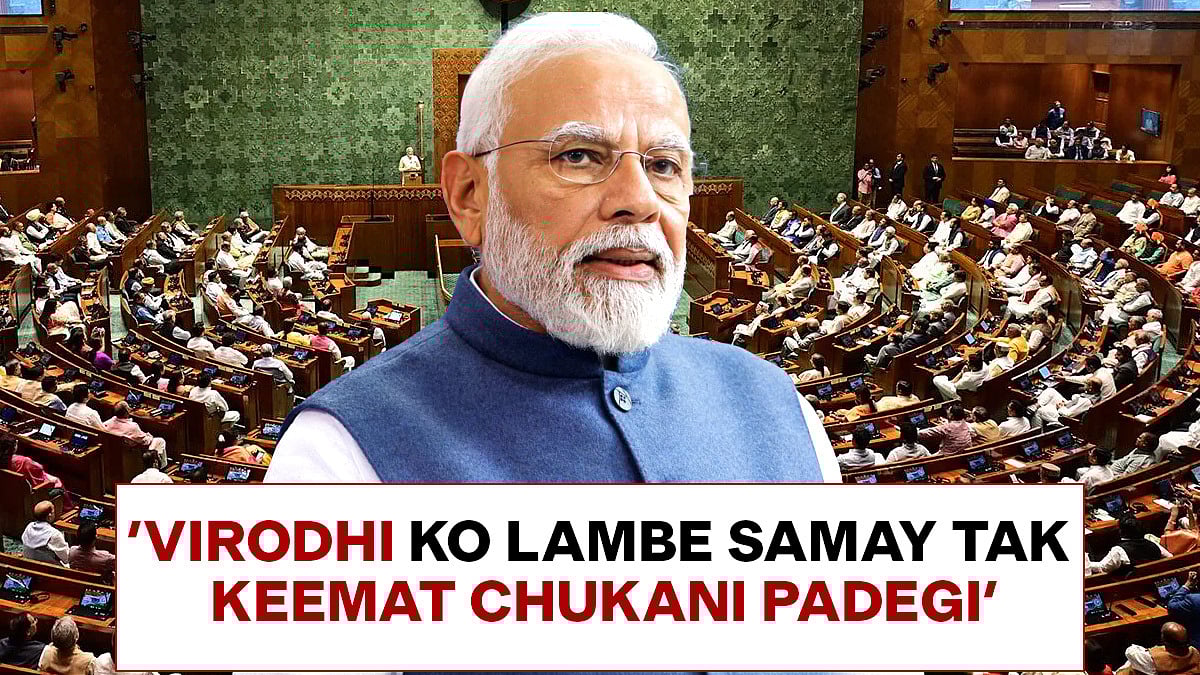
Throughout his speech, Modi described the Women’s Reservation Bill as a transformative step toward strengthening gender equality and empowering women in governance. He called the legislation a landmark moment in India’s democratic journey and urged political parties across the spectrum to support it in the spirit of national interest rather than partisan politics.
The Prime Minister stressed that the bill was aimed at increasing women’s representation in legislatures and ensuring that women play a greater role in shaping the country’s policies. He framed the initiative as a long-awaited reform that would have lasting benefits for governance, inclusion, and social development.
During the high-stakes debate, Modi also sought to build consensus by adopting a conciliatory tone toward the opposition. He said the government was not focused on claiming credit for the bill’s passage and was willing to acknowledge contributions from all parties. In a notable gesture, he stated that if the legislation was passed with support from all sides, he would be prepared to publicly give full credit to opposition leaders.
At the same time, the Prime Minister issued a political warning, stating that those who oppose measures aimed at enhancing women’s rights could face long-term political consequences. He noted that in the past, parties that resisted women-centric reforms had faced public backlash.
The debate over the Women’s Reservation Bill continues to remain politically charged, with the government presenting it as a historic reform while sections of the opposition raise concerns about its implementation and the linked delimitation provisions.

